The best non hardening modeling clay is designed to stay pliable, allow endless reshaping, and be easy to clean up after projects. This guide highlights top non-drying clays suited for kids, beginners, hobbyists, and professional artists. Each product listed offers lasting work time, safe ingredients, and distinct advantages for different projects. Use this overview to pick the right clay for sculpting, stop-motion animation, or quick craft sessions.
Overview Of Top Picks
The following table compares five leading non hardening modeling clays. It highlights who each product is best for, along with sizing and key notes to help you decide at a glance.
| Product | Best For | Size / Color | Notes |
|---|---|---|---|
| Pepy Plastilina Reusable and Non-Drying Modeling Clay (24 Bars) | Families and classroom projects | 24 bars, 1.4 oz each, 12 colors | Vegetable-based, non-staining, reusable |
| Pepy Reusable and Non-Drying Oil-Based Plasticine (Cream, 2 Lbs) | Artists and beginners needing larger blocks | 2 lbs, cream | Never hardens, sulfur-free, high-density |
| Van Aken Plastalina Modeling Clay (Gray, 1 lb) | Detailed sculpture and color studies | 1 lb, gray | Oil-based, very smooth, never hardens |
| Crayola Modeling Clay in Bold Colors (2 lbs) | Kids and classroom use | 2 lbs, 8 colors | Non-drying, sticks to itself, easy cleanup |
| ReArt Non-Drying Oil-Based Modeling Clay (White, 2.6 Lbs) | Professional projects and stop-motion | 2.6 lbs, white | Non-toxic, high-density for fine detail |
Pepy Plastilina Reusable and Non-Drying – 24 Bars

Best for families and classrooms needing a versatile, non-drying clay that’s easy to clean. The product is vegetable-based and designed to deliver high volume per ounce, reducing the amount needed for multi-color projects. It’s non-staining, which minimizes mess on clothes and desks. Ideal for art stations, school crafts, and repeat-use projects where you reshape often. A potential limitation is color variety that may require mixing for specific shades.
Who it’s best for and why
- Best for: Kids, teachers, and hobbyists who want a reusable, colorful clay that won’t dry out quickly.
- Why: Non-drying formulation supports continuous reshaping without waste and staining is minimized for easier cleanup.
Practical considerations
- Containment: Keep sealed between uses to maintain pliability.
- Color management: Plan color combinations to minimize mixing time.
Pepy Reusable Non-Drying Oil-Based Plasticine (Cream) – 2 Lbs

This large block clay is oil-based, non-drying, and designed to hold fine details. The high-density material makes it suitable for sculpting, prototypes, and stop-motion work where lasting form is important. It is sulfur-free, which helps prevent discoloration on metals and reduces odor. The main caveat is the heavier weight and larger size, which may be less convenient for quick, small projects.
Who it’s best for and why
- Best for: Artists and beginners who want a resilient lump of clay for bigger sculptures or animations.
- Why: Never dries out, so you can work over multiple sessions without re-wetting or remaking forms.
Practical considerations
- Storage: Ensure a clean, cool place to preserve pliability.
- Detailing: The density supports fine lines but requires proper tool setup for precision.
Van Aken Plastalina Modeling Clay – Gray

Best for color studies and smooth, detailed modeling. This oil-based clay never hardens, ensuring long-term workability for crafts that require subtle variations in texture and form. While it’s excellent for detailed work, some users may prefer lighter or more vibrant colors than the gray base color offers, necessitating color mixing for certain projects.
Who it’s best for and why
- Best for: Students and professionals focusing on precise sculptural details or color swatches.
- Why: The smooth consistency supports fine textures and consistent shading across models.
Practical considerations
- Color: Gray may require exterior color additions for bright scenes.
- Texture: Works well with sculpting tools for crisp edges and soft transitions.
Crayola Modeling Clay in Bold Colors – 2 Lbs
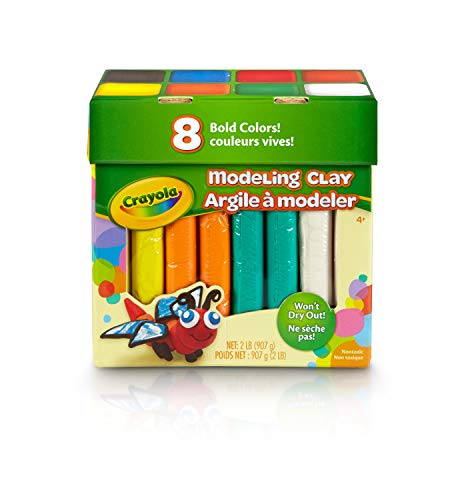
Best for kids and classroom settings that need quick access to a non-drying, colorful clay. The product is designed to stick to itself rather than hands, facilitating easier shaping and reshaping. It comes in eight classic colors, offering a broad palette for simple scenes or mixed-media projects. A limitation is that color intensity may vary between batches, necessitating color adjustments for precise artwork.
Who it’s best for and why
- Best for: Teachers and parents seeking a kid-friendly option with reliable pliability.
- Why: Non-drying formula reduces frustration from dried pieces and allows repeated posing of models.
Practical considerations
- Color management: Plan for color mixing if your project needs specific hues.
- Workspace: Use a mat or tray to keep surfaces clean during activities.
ReArt Non-Drying Oil-Based Modeling Clay (White) – 2.6 Lbs

The ReArt clay offers professional-grade sculpting with non-toxic, non-drying performance. The higher density helps capture fine detail and maintain shapes over longer sessions. It’s well-suited for artists, hobbyists, and animation work where stable forms and clean lines are essential. A potential limitation is the heavier weight for smaller projects, which can be cumbersome for young children.
Who it’s best for and why
- Best for: Sculptors and animators needing reliable, reusable clay with lasting detail.
- Why: Non-drying, safe, and capable of precision without baking or drying times.
Practical considerations
- Detail work: Use appropriate sculpting tools to maximize texture accuracy.
- Storage: Keep away from heat to preserve pliability.
Buying Guide: How To Choose The Right Non-Hardening Clay
What makes non-drying clay different?
Non-drying or non-hardening clays stay pliable, allowing ongoing reshaping. They are often oil-based or vegetable-based, offering varying textures and ease of cleanup. Consider odor, sulfur content, and safety for kids when choosing.
Which features matter most for you?
- Working time: How long you need to shape before you set a design.
- Detail retention: Whether you require fine texture for sculpture or stop-motion models.
- Cleanability: Whether the clay stains skin or surfaces and how easy cleanup is.
- Color assortment: Do you need many colors or a few core hues?
Best practices for using non-hardening clays
- Store properly in airtight containers to maintain pliability between sessions.
- Work on a protected surface and use clay tools for precision.
- Test color blending on a scrap piece before committing to a design.
Safety and suitability
Look for non-toxic formulations and sulfur-free options, especially for children. Non-drying clays are generally safe for classroom and home use, but always supervise younger users to avoid ingestion or prolonged skin contact with any material.
Frequently Asked Questions
- What is non-hardening modeling clay best used for? It’s ideal for demos, stop-motion animation, prototyping, and art projects that require reshaping over multiple sessions.
- Can non-drying clay stain skin or furniture? Some clays are designed to be non-staining or easy to wipe clean; always check the product features and use a protective work surface.
- Is non-drying clay safe for kids? Most products are non-toxic and sulfur-free, but supervise use and follow packaging guidelines for age recommendations.
- Do these clays harden over time? No, true non-drying clays stay pliable and do not harden unless intentionally baked or cured, depending on the product.
- Which clay is best for detailed sculpture? High-density oil-based clays like Pepy Cream and ReArt offer excellent detail retention.
- How should I store non-drying clay? Keep in airtight containers in a cool, dry place to maintain softness and extend usability.
Add a Comment