If you’re searching for silk screen printing ink that delivers vivid color, smooth coverage, and dependable results, you’re in the right place. This guide highlights top inks suited for t-shirts, fabrics, and canvas where wash-fastness and long-term color are important. The selections below are best for beginners learning the craft, hobbyists creating unique prints, and small studios producing small runs. We compare ink types by base (water-based vs. acrylic), compatibility with fabrics, and curing requirements to help you pick the right option.
Summary table of chosen products
| Product | Base | Best For | Notes |
|---|---|---|---|
| Speedball Fabric Screen Printing Ink, 8-Ounce, Black | Water-based | Light to dark fabric projects | Soft hand after heat setting |
| Speedball Fabric Screen Printing Ink, 8-Ounce, White | Water-based | Dark fabrics with white ink highlights or contrast | Same versatility as black |
| Speedball Fabric Screen Printing Ink Starter Set, 6-Colors | Water-based | Beginner color palettes and mixes | Includes Black, White, Red, Yellow, Blue, Green |
| Speedball 004657 Acrylic Screen Printing Ink, Black | Acrylic | Graphic designs with bold, opaque color | Great on paper, wood, cardboard |
| Speedball Acrylic Screen Printing Ink Starter Set (4503) | Acrylic | Starter set for acrylic ink users | Primary colors included |
Speedball Fabric Ink, Black — Ideal for Garment Printing

Best for: hobbyists and small shops printing on cotton, polyester blends, linen, and other synthetics. The ink offers vibrant coverage and a soft hand after heat setting, which is essential for comfortable wear. It performs well on paper and cardboard too, making it versatile for mixed-media projects. The main advantage is consistent workability with strong color payoff in one pass. A limitation is that accuracy in heat setting affects permanence, so follow curing guidelines carefully.
Speedball Fabric Ink, White — Crisp Light-on-Dark Prints

Best for: high-contrast designs on dark fabrics or when white ink is needed for highlights. White ink underlines vibrant colors and adds visibility on black or navy textiles. It shares the same features as the black variant—great coverage, a soft hand after curing, and compatibility with a wide range of fabrics. A caution is to ensure even application; thicker layers may require longer curing to avoid cracking or peeling.
Speedball Fabric Ink Starter Set — 6 Colors

Best for: beginners and color lovers who want a ready-to-use kit. The set includes Black, White, Red, Yellow, Blue, and Green inks in 4 oz bottles, enabling quick color experiments and custom mixing. It uses water-based ink with easy cleanup and low odor. The kit is ideal for learning blends and layering. A potential limitation is that the mixability relies on proper thinning for optimal print flow, especially on dense fabrics.
Speedball Fabric Ink, Blue Denim — Comfortable for Garments

Best for: projects requiring a cool-toned blue that reads as denim in finished prints. This ink maintains color integrity across multiple passes and on fabrics like cotton and blends. It shares the soft-hand benefit after heat setting and is suitable for both beginners and experienced printers. Caution: color accuracy can shift slightly with different fabrics, so test swatches before a final run.
Speedball Acrylic Screen Printing Ink, Black — Acrylic Advantage
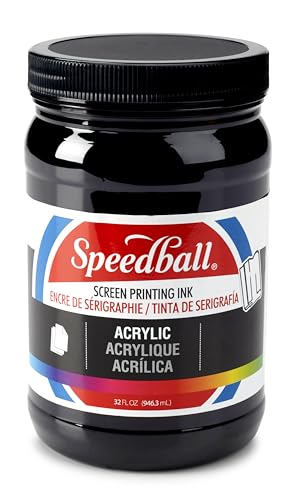
Best for: projects that benefit from a bold, opaque finish on paper and cardboard. Acrylic inks offer permanence and a wide color range, including process colors and specialty finishes like glow-in-the-dark. They’re well-suited for more graphic, poster-style prints. A limitation is that acrylic inks may require a longer cure time and heat setting to ensure maximum adhesion on porous materials.
Speedball Acrylic Screen Printing Ink Starter Set

Best for: anyone starting in acrylic screen printing who wants the core colors to build custom palettes. The set covers essential primaries and provides a straightforward entry into acrylic screen printing. Choose this if you want to experiment with opacity, layering, and more graphic approaches. A note: acrylic inks can be less forgiving on very smooth surfaces; swatch tests are advised.
Buying Guide: Key Purchase Considerations For Silk Screen Ink
- Ink base: Water-based inks are easier to clean and generally more fabric-friendly; acrylic inks offer richer opacity and durability on multiple surfaces.
- Fabric compatibility: Check fabric types—cotton, blends, linen—and whether the ink dries with a soft hand after heat setting.
- Curing and heat setting: Proper curing ensures permanence; follow manufacturer guidelines for time and temperature.
- Color strategy: Starter sets help build a palette; consider white and black for contrast and readability on colored fabrics.
- Safety and odor: Water-based inks usually have lower odor; check for certifications if needed for classrooms or studios.
- Clean-up and maintenance: Water-based inks typically clean up with soap and water; acrylics may require solvents for clean-up on certain projects.
- Storage and shelf life: Seal containers tightly; avoid prolonged exposure to air to prevent premature drying.
Frequently Asked Questions
- What is the main difference between water-based and acrylic screen printing inks?
Water-based inks are generally easier to clean and softer on fabrics; acrylic inks tend to be more opaque and durable on paper and cardboard. - Can these inks be used on synthetic fabrics?
Yes, many listed inks are formulated for blends and synthetics, but always test swatches to confirm adhesion and wash-fastness. - Do I need a separate setup for white ink on dark fabrics?
White ink is often used as a base or highlight on dark fabrics; plan your design to maximize contrast and readability. - Is heat setting required for all inks?
Most inks require cure steps to achieve permanence; follow the product’s curing guidelines for best results. - Which ink is best for beginners?
Water-based starter sets are typically easiest for beginners due to simple cleanup and forgiving workflow. - Can I mix colors to create custom shades?
Yes, color mixing is a common practice, especially with starter sets; test blends before full prints.
Add a Comment