Answering buyers’ needs: choose non-toxic, water-based wood fillers that sand smoothly, take stains evenly, and won’t shrink or crack. The top picks below are ideal for DIYers and professionals who want safe, easy-to-use solutions that work across furniture, trim, and cabinetry. The list highlights which filler is best for small repairs, large fills, indoor use, or outdoor projects.
| Product | Best For | Key Benefit |
|---|---|---|
| Goodfilla Neutral Base (8 oz) | General wood repairs and staining | Excellent adhesion; reconstitutes with water; stainable and tintable |
| Gorilla All Purpose Wood Filler Natural Finish (16 oz) | Indoor/outdoor repairs | Water resistant; does not shrink or crack; smooth natural finish |
| Boncart Wood Filler (9.87 oz) White | Dents, holes, and scratches on furniture | Repair kit included; non-toxic; easy to apply and sand |
| Gorilla All Purpose Wood Filler Natural Color (6 oz) | Quick small fixes with natural color | Water resistant; easy to spread; indoor/outdoor use |
| Goodfilla White (8 oz) | White wood repairs and lighter finishes | Stainable, tintable; unlimited shelf life when reconstituted |
Goodfilla Neutral Base, 8 oz
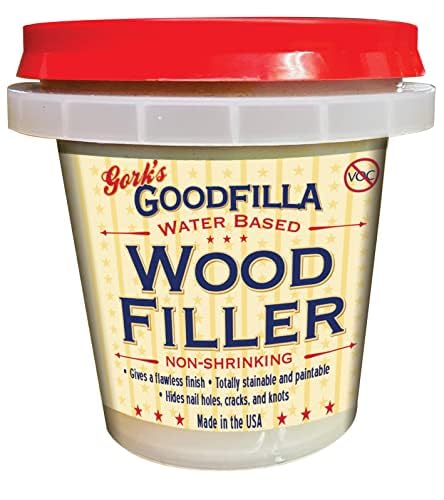
Product overview: A non-toxic, water-based wood filler designed for professional-grade results. Key features include no shrinkage, no sinking, and no cracking, with strong adhesion that accepts any finish or stain. It can be mixed with pigments, tint, stain, or dye to match borders and grain.
- Best for: General woodworking and projects requiring precise color matching with finishes.
- Why selected: It offers a flexible tinting option and seamless finish, making it suitable for visible repairs on furniture and fixtures.
- Caution: Reconstitution with water is required after drying to renew consistency for repeated use.
Goodfilla Maple/Beech/Pine, 8 oz

Product overview: A versatile, stainable wood filler designed for practitioners who work with light-colored woods. It shares the same non-toxic, water-based formula that resists shrinkage and supports stain compatibility.
- Best for: Light wood species repairs where precise grain matching is important.
- Why selected: Its color family aligns well with maple, beech, and pine, reducing the need for heavy tinting.
- Caution: Accepts finishes well, but color matching may require minor tinting depending on stain depth.
Gorilla All Purpose Wood Filler, Natural Finish, 16 oz

Product overview: A robust, water-resistant wood filler designed for indoor and outdoor use. The natural finish allows for a smooth application with a natural look that blends into most wood tones.
- Best for: Repairs exposed to moisture or temperature shifts, including furniture and exterior trim.
- Why selected: Its water resistance helps prevent cracking and shrinking over time in varied environments.
- Caution: For explicit color matching, colorant or stain might be necessary to achieve a perfect blend with the surrounding wood.
Boncart Wood Filler, 9.87 OZ White

Product overview: A white wood putty with a complete repair kit included. The set contains putty, scrapers, and sandpapers, designed for quick, long-lasting repairs on various wood surfaces.
- Best for: DIYers who want an all-in-one repair solution for furniture and trim.
- Why selected: Non-toxic materials and a complete kit reduce the need for additional purchases.
- Caution: White color may require staining or color-matching in darker woods for a seamless finish.
Goodfilla White, 8 oz
Product overview: A white variant of Goodfilla’s stainable, tintable filler family. It shares the same non-toxic, water-based formula with a strong finish and easy finish acceptance.
- Best for: Projects requiring a bright white repair base before sealing or staining.
- Why selected: Consistent shelf life and reusability after reconstitution ensure long-term value.
- Caution: White shade may require tinting to match darker woods and stains precisely.
Buying Guide
What should I consider when choosing a non-toxic wood filler?
Look for water-based formulas that dry hard, resist cracking, and accept stains well. Non-toxic ingredients reduce exposure during use, especially in living spaces and workshops. Consider the wood species you repair and whether you need tintable or paintable options to match grain and color.
Finish and color matching
Choose fillers that advertise stainability or tintability if you plan to stain after filling. Some products offer natural finishes that blend with common woods, while others come in white or neutral bases for easier color matching with dyes or stains. Color matching may require minor tinting for deeper hues.
Indoor vs outdoor use
Indoor repairs often benefit from fillers with a smooth finish and minimal odor. Outdoor projects require water resistance to withstand humidity and precipitation. Check the product claims for shrinkage resistance and weather tolerance.
Application and workability
For small holes and nail dents, a fine, easy-to-apply filler is ideal. Larger repairs benefit from a thicker paste that can build up the surface. Consider whether the product includes a repair kit or requires separate tools like scrapers and sandpapers.
Shelf life and reusability
Some fillers reconstitute with water and can be stored for long periods. Freeze-thaw stability is a helpful feature for workshop storage. If you expect long intervals between uses, prioritize products with extended shelf life.
FAQ
- What is non-toxic wood filler best used for? — Ideal for home projects, furniture repair, and DIY cabinetry where low odor and safety are priorities.
- Can non-toxic fillers be stained after drying? — Yes, many are stainable or tintable to match surrounding wood, though color matching may require slight tinting.
- Are these products suitable for outdoor use? — Some fillers are designed for indoor and outdoor use due to water resistance; check product specifics for your project.
- Do non-toxic fillers shrink or crack? — Reputable water-based fillers are formulated to resist shrinking and cracking after curing.
- Should I have a repair kit on hand? — A kit can simplify repairs and ensure you have tools for finishing and sanding, especially for DIYers.
- Is color matching essential for all woods? — It depends on the wood species and the stain; lighter woods often need less tinting, while darker woods may require color adjustment.
Add a Comment