Yes, etching primer spray paints provide a corrosion-resistant base that bonds well to bare metal, aluminum, fiberglass, and select plastics. This guide highlights top options to match common project needs, from automotive restoration to industrial prepping. The best choices vary by surface, coating goals, and spray control, so consider your metal type, desired topcoat, and job size when selecting. The following products are practical, widely available, and designed to improve adhesion and rust resistance right from the can.
| Product | Best For | Surface | Notes |
|---|---|---|---|
| Rust-Oleum Automotive Self Etching Primer Spray, Dark Green | Bare metal cars and trucks | Bare metal, aluminum, fiberglass | Fast-drying; topcoats in 30 minutes |
| Seymour 20-1675 PBE Professional Primer | Professional metal prep | Steel, aluminum | One-step etching and priming |
| LAUCO Self Etching Primer Grey Aerosol | Difficult substrates | Bare metal, galvanized steel, aluminum | One-step adhesion and etching |
| Rust-Oleum Automotive Self Etching Primer Custom Spray 5-in-1 | Multiple spray patterns | Bare metal, aluminum, fiberglass | Five spray patterns for control |
| Rust-Oleum Automotive Stops Rust Filler & Sandable Primer | Prepped metal and wood | Wood, metal, fiberglass | Filler and sandable with rust resistance |
Rust-Oleum Automotive Self Etching Primer Spray, Dark Green

The Rust-Oleum Self Etching Primer Spray rightfully targets bare metal, aluminum, and fiberglass surfaces. It uses an oil-based Stops Rust formula to create a rust-resistant base coat for cars, trucks, and other vehicles. This option dries quickly—touch in about 10 minutes—and is ready for topcoats in roughly 30 minutes. Best for do-it-yourself automotive projects where rapid re-coating is beneficial. Consider this when your project involves bare metal restoration and you prefer a single-step etch-and-prime approach.
Who it’s best for: DIY automotive restorers, hobbyists, and anyone needing a fast, durable rust-prevention base on exposed metal. Caution: over-application can lead to runs; ensure light, even coats for best adhesion. This product is selected for its direct emphasis on etching bare metal and its compatibility with common automotive topcoats.
Rust-Oleum 249322 Automotive Self Etching Primer Spray Paint, 12 oz
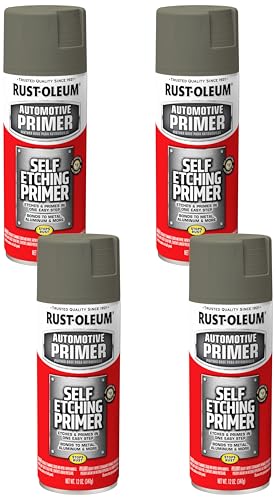
This per-pack variant serves multiple small to mid-size projects where repeated etching and priming are needed. The self-etching primer primes bare metal, aluminum, and fiberglass surfaces, using an oil-based Stops Rust formula to deliver a rust-resistant base coat for vehicles. It’s a practical choice when you work in a shop or garage and want to stock up. Best for: quick turnarounds on several metal parts with limited downtime. Limitation: per-pack information means coverage per can should be checked for precise planning.
Seymour 20-1675 PBE Professional Primer, Self Etching/Weld Through Gray

In one step, Seymour’s professional primer etches and primes without a separate acid etch or sanding primer. It’s a robust, zinc-enhanced coating that adheres to all metal surfaces and defends against rust. Even if scratched, the electrochemical galvanic action continues to offer protection. Best for: professional prep and projects requiring strong, long-lasting adhesion across varied metals. Consider this when you need a proven one-step solution with strong corrosion resistance.
LAUCO Self Etching Primer Grey Aerosol Spray Can
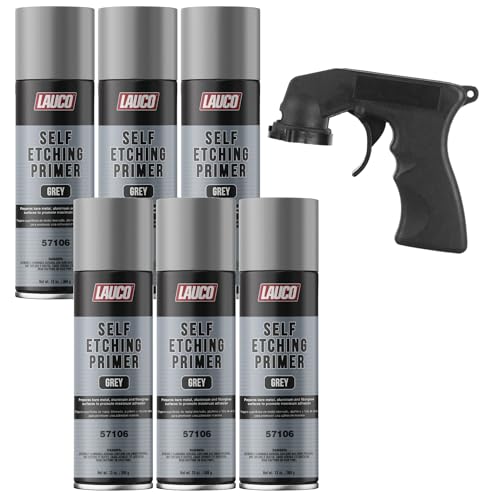
LAUCO’s all-in-one self-etching primer is ideal for prepping bare metal surfaces before applying truck bed liners or other coatings. It emphasizes excellent adhesion even on galvanized steel and aluminum, offering superior corrosion protection. Best for: projects where you face difficult substrates and need a single-step primer that both etches and primes for a solid bond. Caution: aerosol coverage can vary with spray technique; use consistent passes to avoid missed areas.
Rust-Oleum Automotive Stops Rust Filler & Sandable Primer, Gray

This gray primer blends filler capabilities with a rust-resistant base, suitable for wood, metal, and fiberglass surfaces. It’s designed to save time by combining filler and primer in one step, then sandable for topcoat preparation. Best for: projects that require smoothing and priming in one pass, especially where surface irregularities exist. Limitation: while it offers rust resistance, it may not be as aggressive at etching deeply as dedicated self-etching primers.
Buying Guide: Key Considerations For Etching Primer Sprays
Surface type: Bare metal, aluminum, fiberglass, and galvanized steel respond differently. Self-etching formulas chemically bite into metal, reducing prep time, while some primers offer better performance on rust-prone surfaces after rougher prep.
Topcoat compatibility: Check drying time and whether the primer supports immediate topcoating or requires a specific re-coat window. Oil-based systems often need longer to cure before final coats.
Application control: Some primers offer multiple spray patterns or built-in adhesion features. Pattern flexibility helps in reaching tight corners or larger flat panels without runs.
Rust prevention: Zinc-enhanced or chemically active formulations improve long-term corrosion resistance. For vehicles and outdoor metal, prioritize rust-defense features and scratch resistance.
Surface compatibility: For difficult substrates like galvanized steel, aluminum, or fiberglass, choose primers described as suitable for those materials to maximize adhesion and longevity.
Size and coverage: Larger jobs benefit from 12 oz cans or multi-pack options. Estimate coverage per can and plan re-coats to achieve a uniform finish while avoiding over-spray.
FAQ
- What makes a primer “etching”?
Etching primers chemically bite into metal surfaces to improve adhesion, reducing or eliminating the need for sanding on bare metal. - Can I use etching primer on wood or plastics?
Etching primers are primarily for metal. For wood or plastic, use a dedicated adhesion promoter or plastic primer designed for those substrates. - How long should I wait before topcoating after applying an etching primer?
Drying times vary by product; many can be topcoated within 30 minutes to an hour if the surface is dry and dust-free, but always follow label directions. - Is a filler primer necessary when I plan to fill dents?
Filler primers can help even out surface irregularities before applying color coats, improving final smoothness. - Which product is best for galvanized steel?
LAUCO self-etching primer and similar products designed for galvanized substrates are typically best for galvanized steel surfaces.
Add a Comment