Looking for fingering weight sock yarns that balance softness, strength, and color. This guide covers five top picks, each suited to a specific project style—from everyday socks to lace shawls. Each option highlights who it’s best for and why it stands out, plus a practical caveat to consider before you buy. Use the table below to compare at a glance and then dive into detailed sections to see which yarn fits your next project.
Summary Table of Chosen Products
| Product | Fiber Blend | Yardage (per skein) | Best For |
|---|---|---|---|
| Woolweave Fingering Weight Yarn | 75% Extrafine Merino Wool, 25% Polyamide | 438 yards | Socks, shawls, light garments needing durability |
| KnitPro Symfonie Fingering Weight Merino Wool Yarn | 75% Extrafine Merino Wool, 25% Polyamide | 100 g skein | Hand-dyed colorwork socks and accessories |
| Lion Brand Mandala String Fingering Yarn | Acrylic | 350 yards | Colorful lace, baby items, quick projects |
| 45% Bamboo Rayon, 40% Wool, 15% Nylon | 244 yards per 50 g skein | Lightweight socks and delicate accessories | |
| YarnArt Forza Festival Self-Striping | 75% Wool, 25% Polyamide | 459 yards | Self-striping socks and gradient shawls |
Woolweave Fingering Weight Yarn

Best for softness and everyday durability, this yarn blends 75% extrafine merino wool with 25% polyamide. It offers a generous 438 yards per skein, making it economical for socks, lace shawls, and lightweight garments. The merino provides warmth and a smooth hand, while polyamide adds resilience for frequent wear and washing. Caution: colors may bleed slightly in first washes with highly acidic detergents.
KnitPro Symfonie Fingering Weight Merino Wool Yarn
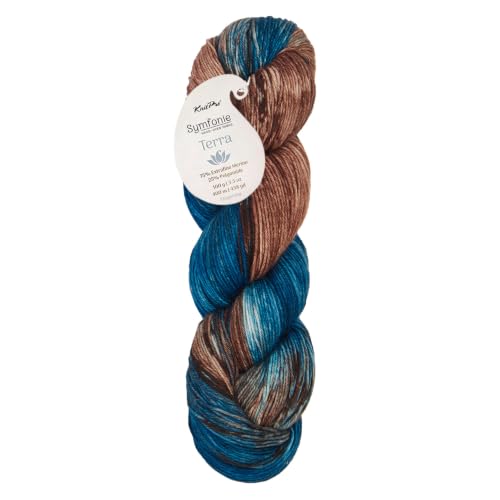
Premium, hand-dyed sock yarn crafted from 75% extrafine merino wool and 25% polyamide. It’s designed for long-lasting strength and colorfastness, ideal for socks, shawls, and lightweight garments. The Terra colorway “Cabin in the Woods” combines blues, browns, and greys for a rustic look. Caution: hand-dyed batches can show subtle tonal shifts between skeins.
Lion Brand Mandala String Fingering Yarn

Self-striping, 100% acrylic fingering weight yarn. Each 100 g skein delivers about 350 yards, making it a practical choice for lacework, shawls, baby items, and garments. Best for projects that benefit from automatic color transitions without managing multiple skeins. Caution: acrylic softness varies by brand; may lack the natural drape of wool blends.
JubileeYarn Soft and Slim

Lightweight blend designed for fingering projects. Each 50 g skein yields about 244 yards, combining 45% bamboo rayon, 40% wool, and 15% nylon for a soft yet structured knit. Best for delicate socks or baby items where a softer texture is desired. Caution: bamboo rayon can feel slick on very smooth needles and may require careful tension control.
YarnArt Forza Festival Self-Striping

Self-striping fingering yarn with a premium wool base—75% wool and 25% polyamide—providing warmth and durability. A gradient color flow creates vivid transitions across socks and shawls. Best for gradient socks and color-rich shawl patterns. Caution: self-striping effect can shift differently across skeins; consider planning color blocks ahead.
Buying Guide
Key purchase considerations for fingering weight sock yarns include fiber blend, yardage, durability, and color behavior. The right choice depends on project type, washing needs, and desired finished look.
- Fiber blend: Merino wool with polyamide provides soft texture plus durability. Acrylic blends are budget-friendly and easy care but may lack the same hand feel as wool.
- Yardage: Higher yardage per skein reduces the need for multiple skeins in larger socks or shawls.
- Care: Machine washable merino blends offer convenience but may require gentler cycles to preserve loft and color.
- Color changes: Self-striping and hand-dyed options reduce the need to switch yarns for stripes, but check how each dye lot matches.
- Texture and warmth: Wool blends add warmth and stretch; bamboo and rayon blends yield softer drape with a lighter feel.
Frequently Asked Questions
- What weight is fingering yarn typically used for? Fingering weight, or sock weight, is ideal for socks, shawls, lace, and lightweight accessories.
- Is merino wool safe for machine washing? Many merino blends are machine washable, but always follow the label and use a gentle cycle.
- What’s the difference between self-striping and variegated yarns? Self-striping yarns automatically create color blocks, while variegated yarns show varied color patches without planned stripes.
- Can I substitute any fingering yarn in a pattern? Substitutions should match the gauge and fiber strength to maintain fabric integrity, especially for socks and lace.
- How much yarn do I need for a pair of socks? Most fingering weight sock patterns use 400–450 yards per pair, depending on size and stitch pattern.
- Are hand-dyed yarns colorfast? Dye fastness varies by brand and dye technique; check care instructions and plan for slight tonal shifts between skeins.
Add a Comment