Answering the question “which 3D pen filament refills are best for my pen,” this guide highlights five strong options designed for a variety of printers and pens. Each product targets a common buyer type, from beginners seeking easy flow to seasoned creators needing a broad color range. The selections emphasize 1.75mm PLA and compatible options, along with a low-temp or safe alternative for kids. Use the quick comparison table to spot key differences at a glance before diving into detailed sections.
| Product | Diameter | Colors | Total Length | |
|---|---|---|---|---|
| DO3D 15 Bright Colors PLA | 1.75mm | 15 colors | 150 ft | General PLA projects, beginners |
| SCRIB3D Pen Filament Refills | 1.75mm | 20 colors | 328 ft | Versatile, wide color range |
| YEETIN 15 Colors PLA | 1.75mm | 15 colors | 240 ft | Wide compatibility, affordable pack |
| Orkan 300 x Rainbow Colors | 2.5mm | 15 colors | 300 strands | 3Doodler Start+ users, high color variety |
| MIKA3D 32 Colors PLA | 1.75mm | 32 colors | 320 ft | Large color exploration |
Best for a Bright, Easy-Start PLA Pack
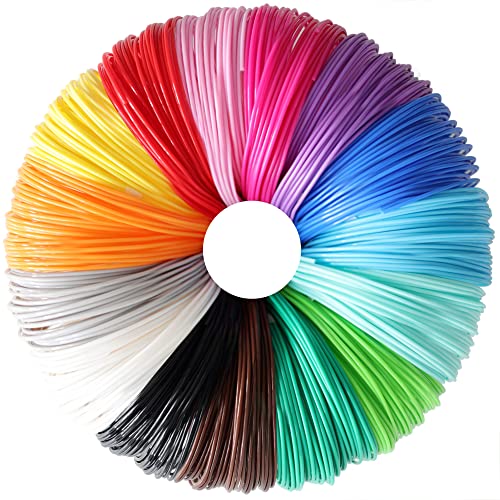
The DO3D pack delivers 1.75mm PLA in 15 bright colors, totaling 150 feet. This assortment is well-suited for beginners or classrooms where a wide color variety helps teach basic concepts without changing colors constantly. PLA is user-friendly, with smooth printing and low odor. Notably, it’s compatible with MYNT3D and SCRIB3D pens but not 3.0mm models such as certain 3Doodler pens. Best for: new users and kids’ projects that benefit from clear, vibrant color options.
- Pros: Consistent diameter, non-toxic, easy printing
- Limitations: Not compatible with some 3Doodler 3.0mm pens
Best All-Purpose 1.75mm Colors Refills

SCRIB3D’s 20-color PLA refill pack covers 328 feet and works with most 1.75mm pens, including SCRIB3D, MYNT3D, and PIKA3D. It’s designed for easy extrusion with minimal clogging and a broad color range for detailed drawings. A note: it isn’t compatible with 3Doodler Create+. Best for: versatile users who switch between multiple pens and want a wide palette for art projects.
- Pros: Broad color range, good extrusion consistency
- Limitations: Not compatible with some 3Doodler models
Best Compatible 1.75mm Pack With Varied Colors

YEETIN offers 15 colors at 16 feet per color, totaling 240 feet. The filament’s compatibility centers on common 1.75mm pens, including SCRIB3D P1/ADV and MYNT3D. It clearly notes incompatible models to avoid ordering errors. Best for: budget-conscious buyers who want a reliable range for general doodling and color experiments.
- Pros: Clear compatibility notes, good color spread
- Limitations: Some pens are not supported
Best 2.5mm Color Set For Doodler Start+

Orkan’s rainbow pack provides 15 colors across 300 strands in 2.5mm diameter, designed for 3Doodler Start+. The set emphasizes color variety and long strands to minimize refills. It’s BPA-free and low-temperature friendly, suitable for safer sample work. Best for: kids and educators using Doodler Start+ who want a large color library in a compact package. Caution: 2.5mm diameter means it won’t fit 1.75mm pens.
- Pros: Large color variety, long strands
- Limitations: Only compatible with 2.5mm pens like Start+
Best 32-Color PLA Library For Creators

MIKA3D’s 32-color PLA refill pack combines 32 colors, including four metallics, ten clears, and eighteen solids, totaling 320 feet. The 1.75mm diameter is compatible with most PLA-compatible pens and printers, excluding 3Doodler models that require other diameters. Best for: color-heavy projects, teaching demonstrations, and advanced color experiments. A caution: not compatible with 3Doodler models requiring different diameters.
- Pros: Large color assortment, includes metallics
- Limitations: Not for all 3Doodler pens
Buying Guide: Key Purchase Considerations
- Pen compatibility: Always verify filament diameter and model compatibility before purchase. Many packs specify 1.75mm as standard, but some use 2.5mm. Check your pen’s diameter and temperature range.
- Material type: PLA is beginner-friendly with easy extrusion and low odor. ABS offers strength and higher heat resistance but requires higher temperatures and ventilation. Choose based on project needs and safety concerns for children.
- Color variety: For educational settings or large projects, a larger color range reduces filament changes mid-project. Metallics and clears add special effects for art and prototyping.
- Length and count: Total length matters for multi-color projects and long print runs. Some packs provide per-color lengths, others provide total feet across all colors.
- Storage and freshness: Some packs use resealable or moisture-proof bags. Proper storage preserves filament quality and reduces warping or brittleness over time.
- Safety and cleanliness: Look for non-toxic, low-odor formulations. For kids, low-temperature options reduce burn risk and improve handling comfort.
FAQ
What diameter filament is most common for 3D pens?
Most 3D pens use 1.75mm filament, which fits a wide range of pens including MYNT3D, SCRIB3D, and PIKA models. Always confirm your pen’s specifications before buying.
Is PLA better than ABS for pen use?
PLA is generally easier to print, with lower temperatures and less odor, making it ideal for beginners and classrooms. ABS offers stronger parts but requires higher temperatures and ventilation.
Can I mix colors from different brands in the same project?
Yes, but ensure compatible diameters and similar nozzle temperatures to avoid jams or inconsistent extrusion.
Are some colors more prone to clogging?
Clog risk depends on filament quality and diameter consistency. High-quality, tightly controlled diameters reduce clogging.
Do all packs work with SCRIB3D pens?
Most 1.75mm packs work with SCRIB3D pens, but always verify compatibility for your exact model and temperature range.
What should I do with unused filaments?
Store in a cool, dry place in sealed bags or containers to maintain consistency and prevent moisture-related issues.
Add a Comment