Find the right stainless steel sewing scissors for fabric, leather, and craft projects. This guide highlights five top options, explaining who each tool is best for and why it stands out. Use these choices to compare blade steel, sharpness, and handling. Ideal buyers include hobbyists, home sewers, tailors, and quilting enthusiasts looking for durable, long-lasting cutting performance.
| Product | Best For |
|---|---|
| LIVINGO 8″ Fabric Scissors | Multi-layer fabrics, tailoring, and crafts |
| Fiskars 8″ Bent Forged Scissors | Delicate and heavy fabrics, precision cutting |
| Mr. Pen Premium Tailor Scissors | Everyday sewing, alterations, and patterns |
| KOLEONHOME 10 Inch Set | Comprehensive sewing kits and professional use |
| BoFuYuan 8-Inch Chrome Scissors | Improved control for light to medium fabrics |
LIVINGO 8″ Fabric Scissors

The LIVINGO scissors use a durable stainless steel blade forged for density, delivering five times the hardness of ordinary stainless steel. They are ultra-sharp and suitable for cutting multiple fabric layers, making them a strong choice for tailors, quilters, and home sewers who frequently splice through thick materials. The bent, mirror-finish design helps maintain fabric flatness on the cutting surface.
Best for: professional sewers and hobbyists who need reliable multi-layer fabric cutting. Caution: the blade edge will require maintenance over time to retain extreme sharpness, especially with heavy fabrics.
Fiskars 8″ Bent Forged Stainless Steel Scissors

Fiskars is a sewing and crafts staple. These forged steel scissors are designed for cutting a wide range of materials, including denim and multiple fabric layers. Their precision-ground blades cut to the tip and can be sharpened to extend life. The long-lasting performance makes them a common choice for quilters and scrapbookers seeking durable, reliable scissors.
Best for: users who need a versatile pair with a proven track record for durability. Caution: sharpening may be necessary over time to maintain a razor edge on very dense fabrics.
Mr. Pen Premium Tailor Scissors, 8-Inch
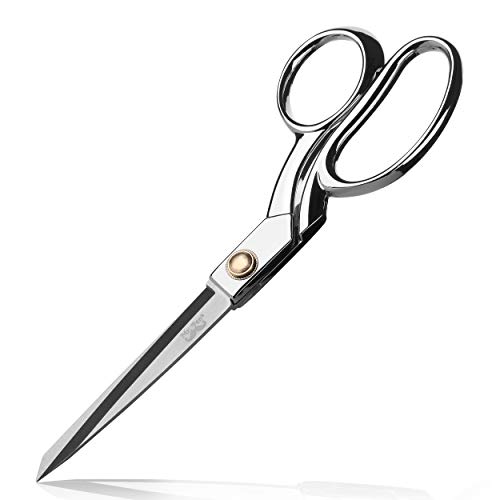
Mr. Pen’s 8-inch all-metal design emphasizes clean cuts across multiple layers, including fabrics like burlap, leather, and denim. The blade length is 4 inches, providing precise control for pattern cutting, alterations, and craft work. The classic handle suits various hand sizes and long sessions.
Best for: sewers who need strong, consistent cuts and a comfortable grip. Caution: heavy fabrics may require more pressure, which could fatigue hands during extended projects.
KOLEONHOME 10 Inch Set

This 10-inch fabric scissors set includes heavy-duty tailor shears plus measuring tools and accessories, designed for both home sewing and studio use. The SK5 high-carbon blades promise smooth, controlled cuts through common fabrics such as cotton, felt, denim, and canvas. The package format supports beginners and seasoned sewists who want a complete starter kit.
Best for: beginners and small studios needing a comprehensive set. Caution: larger size may feel heavy for all-day trimming tasks.
BoFuYuan Professional Stainless Steel Scissors

BoFuYuan offers an 8-inch chrome stainless steel design with a rust-resistant finish and lightweight handling. The bent handle keeps fabric flat during cuts, and the ambidextrous design suits both right- and left-handed users. It targets light-to-medium fabrics and is well-suited for pattern work and trimming details.
Best for: right- or left-handed sewists who value flat fabric alignment and comfort. Caution: may not be ideal for heavy leather or dense denim without extra effort.
Buying Guide
What material should your scissors have?
Stainless steel blades offer rust resistance and durability. For frequent quilting or multi-layer fabric work, look for forged blades with a sharp edge that can be resharpened. High-carbon SK5 steel provides better edge retention for heavy use.
How do blade length and handle affect usability?
Shorter blades excel at precision trimming, while longer blades cover more area per cut. Bent handles help keep fabric flat on the cutting surface, reducing fraying. Ergonomic handles reduce hand fatigue during extended sewing sessions.
What features improve longevity?
Choose scissors with full-metal construction, secure rivets, and rust-resistant finishes. Regularly clean and lightly oil blades to maintain smooth cutting action.
What’s the right choice for beginners vs. professionals?
Beginners benefit from complete sets that include measuring tools and chalk, as in the KOLEONHOME kit. Professionals may prioritize ultra-sharp blades and edge retention, as with LIVINGO or Fiskars forged models.
How to evaluate performance in purchase decisions?
Assess blade density, edge geometry, and the ability to cut through multiple layers without snagging. Check if the design supports comfortable long-term use and left-handed compatibility when applicable.
Maintenance tips
- Wipe blades clean after use to remove fabric fibers and residue.
- Store with blades closed and lightly oiled to prevent rust.
- Sharpen blades when cutting performance declines or fibers fray.
Quick comparison at a glance
- Best overall versatility: Fiskars or LIVINGO for multi-material cutting and durability.
- Best for beginners: KOLEONHOME set with included tools.
- Best budget option with solid edge: BoFuYuan 8-Inch Chrome Scissors.
Frequently Asked Questions
- Q: Are stainless steel scissors suitable for leather? A: They can handle light leather, but heavier leather may require stronger blades and more leverage.
- Q: How often should I sharpen fabric scissors? A: When cuts become uneven or fibers fray, sharpen or have them serviced.
- Q: Should I use the same scissors for paper and fabric? A: No. Use dedicated scissors for paper to avoid dulling fabric blades.
- Q: Do bent-handled scissors help with fabric alignment? A: Yes, they help keep fabric flat on the cutting surface for cleaner cuts.
- Q: Is an ambidextrous design important? A: It benefits left-handed users and improves comfort for shared workspaces.
Add a Comment