Yes, small foam paint rollers deliver smooth, lint-free finishes on tight spaces and flat surfaces. This guide highlights top compact kits that suit cabinets, doors, trim, and furniture. Ideal buyers include DIY enthusiasts, hobbyists, and professionals tackling small-scale projects who want clean edges and minimal drips.
Buying at a glance:
| Product | Best For | Key Benefit |
|---|---|---|
| Mister Rui 4-Inch Kit (8 Pack) | Small projects, multiple rooms | Complete set with tray and liner |
| Mister Rui 2-Inch Kit (10-Pack) | Touch-ups, tight spaces | High-density foam, quick swaps |
| Bates 4-Inch Kit | Trim and edges | Two foam covers, precise finish |
| Mister Rui Mini 4-Inch 10-Pack | Versatile mini projects | Larger pores for paint absorption |
| YiBaiBrush 2-Inch Kit (10-Pack) | Complete kit for small rooms | Includes trays, liners, and frame |
Mister Rui Foam Paint Roller Kit, 4 Inch, 8 Pack

The 4-inch kit provides five foam roller covers, a frame, a deep-load tray, and a liner. Best for: small walls, cabinet doors, and furniture where a smooth, even coat matters. Selection rationale: high-density foam reduces fiber shedding and delivers a uniform finish. Limitation: the kit’s depth is best for flat surfaces; irregular textures may show roller marks.
Mister Rui 2 Inch Foam Roller Kit 10-Pack for Touch-Ups

Two-inch rollers are designed for edges, corners, and tight spots. Best for: touch-ups and small fixtures where precision edges are needed. Rationale: high-density foam minimizes drips and ensures a smooth, even finish. Limitation: smaller coverage per stroke means longer application time on larger areas.
Mister Rui 4 Inch Foam Paint Roller Kit, 8 Pack

All-in-one 4-inch kit with five high-density covers, a sturdy frame, a deep-load tray, and a liner. Best for: cabinets, doors, trim, and small walls that require a consistent, smooth finish. Rationale: universal compatibility with water- and oil-based paints. Limitation: larger surfaces may require more time than larger rollers.
Mister Rui Mini Foam Paint Rollers, 4 Inch Kit

This 10-pack focuses on extended small-project efficiency. Best for: interior trim, cabinet edges, and craft surfaces where detail matters. Rationale: larger foam pores allow more paint absorption, reducing re-dips. Limitation: smaller panels may benefit from more frequent roller changes to maintain even coverage.
Bates- Foam Paint Roller Kit, 4 Inch

The Bates kit includes a 4-inch frame and two foam covers, tailored for smooth, even application on small surfaces. Best for: trim, edges, and small furniture pieces. Rationale: designed for precision with latex, acrylic, and similar paints. Limitation: fewer components than larger kits may require separate tray purchases for some projects.
YiBaiBrush Foam Paint Roller Kit, 10 Pack, 2 Inch
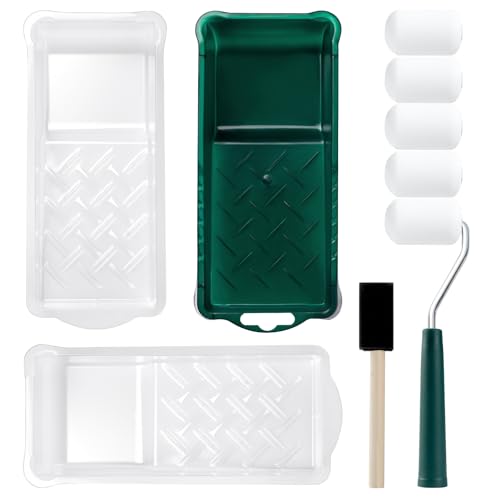
This 2-inch kit provides a complete setup: tray, liners, frame, sponge brush, and five 2-inch roller covers. Best for: small rooms, door panels, and craft projects. Rationale: reinforced frame reduces fatigue during longer sessions. Limitation: includes only 2-inch rollers, so larger wall areas require multiple passes.
Buying Guide
What size should you choose?
Choose 4-inch rollers for doors, trim, and small walls to balance coverage and control. Pick 2-inch rollers for tight corners, edging, and intricate surfaces where precision matters.
What materials do these work with?
Most foam rollers work with both water-based and oil-based paints, stains, varnishes, enamels, and primers. If you plan to stain or varnish, verify the foam density to minimize fiber shedding.
Is a complete kit better than buying separately?
Complete kits save time and ensure color consistency across components. If you already own a frame or tray, you may prefer targeted purchases with just the covers.
How important is foam density?
Higher density foam reduces fiber loss and delivers a smoother finish with fewer lap lines. It is especially important on cabinetry and trim where a flawless look is desired.
How many covers do you need?
For small projects or touch-ups, a 5–10-pack provides ample coverage without frequent replacements. For ongoing projects, consider larger packs to minimize downtime.
How to maintain foam rollers?
Rinse with appropriate solvent if using oil-based paints; otherwise, soap and water. Dry flat to prevent deformations. Replace rollers when the foam starts to sag or shed fibers.
What are common pitfalls to avoid?
- Avoid using high-viscosity paints that can clog foam pores.
- Avoid applying heavy coats in one pass to prevent drips.
- Avoid using foam rollers on rough textures that can tear the foam.
FAQ
- Q: Are foam rollers suitable for walls with glossy paint?
A: Yes, they can produce a smooth finish; use light, even pressure to minimize lap lines. - Q: Can I reuse the foam covers?
A: Many are reusable, but inspect for wear and clean thoroughly between colors to maximize lifespan. - Q: Which kit is best for kitchens?
A: A 4-inch kit with multiple covers is ideal for cabinet doors and trim around kitchens. - Q: Do these kits work with water-based sealants?
A: Yes, most foam rollers handle water-based sealants and varnishes with proper cleaning afterward. - Q: Should I buy extra liners?
A: Liners are convenient for quick setup and cleanup; have a supply on hand for longer projects.
Add a Comment