Rapid Cure plastisol inks provide faster curing times, strong opacity, and versatile textile compatibility. This guide highlights top products ideal for hobbyists and small shops alike, with clear what-to-choose guidance. The featured inks are best for beginners seeking easier handling, mid-sized operations needing reliable color, and professionals prioritizing quick production cycles.
| Product | Best For | Key Benefit |
|---|---|---|
| Rapid Cure White Plastisol Ink (Pt) — Screen Print Direct | Home studios, small batches | Low-temp cure, long shelf life |
| Rapid Cure White Plastisol Ink (Qt) — Screen Print Direct | Medium runs | Same great formulation in larger quantity |
| Rapid Cure White Plastisol Ink (8 oz.) — Screen Print Direct | Starter kits and hands-on learners | Compact size for testing |
| Rapid Cure Plastisol Ink Set — 6 Color Kit | Color exploration, classroom kits | Complete color range, versatile applications |
| SHALITEINK Plastisol Set — 10 oz, 6 Colors | Professional studios | Premium hiding power, fast cure |
Rapid Cure White Plastisol Ink — Pt

Best for small-scale screen printers who want a fast cure with minimal heat exposure. This pint-size option is ideal for testing colors and completing small runs without sacrificing opacity. The ink claims rapid curing at 270°F, lower than typical plastisol, which can reduce energy use and substrate stress. It’s suitable for cotton and polyester blends, including heat transfers. Use this if you prioritize a longer shelf life (over 12 months) and easier pressing for beginners.
Selection rationale: The compact pint is a practical starting point for new shops or hobbyists. Clear advantages include a short cure temperature and vibrant color. Caution: verify compatibility with your press cycles and ensure even layer thickness to maximize opacity at low heat.
Rapid Cure White Plastisol Ink — Qt
Better for mid-size runs, this quart option delivers the same rapid-cure benefits with more volume. It supports a variety of textiles and transfer methods, including cold peel. The color remains bold, opaque, and easy to work with on standard press setups. Choose this if you’re scaling up from a pint while maintaining consistent opacity and heat tolerance. Limitation: ensure your heat press can consistently reach the lower 270°F target for reliable cures.
Rapid Cure White Plastisol Ink — 8 Oz
Choose this if you want a quick-start tool kit featuring the core ink on a smaller, affordable scale. The 8 oz bottle is ideal for practice, small orders, or trial projects. It preserves the same formulation benefits—low heat cure and strong opacity—while enabling you to test color-building on fabric. Caution: smaller containers require careful portioning to avoid waste during multiple sessions.
Rapid Cure Plastisol Ink Set — 6 Color Kit
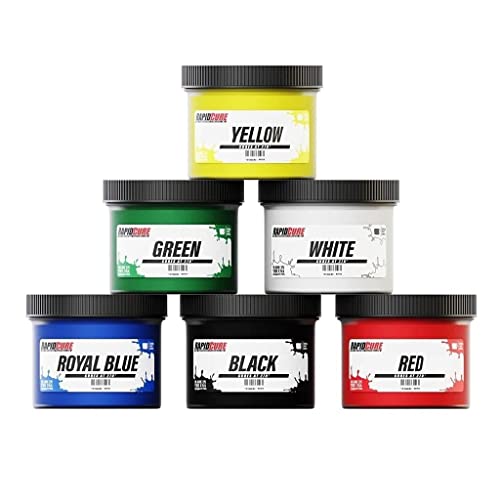
Best for beginners and classrooms, this six-color starter kit covers primary, metallic, and pastel tones. It’s designed for versatile production on fabrics, including cotton and blends. The kit promises a durable, soft hand after curing and supports various transfer methods. Choose this set if you want a complete color suite for experimentation and batch work. Limitation: ensure you have adequate workspace and drying setup for multiple colors simultaneously, as overlapping curing can affect results.
SHALITEINK Plastisol Screen Printing Ink Set — 10 oz, 6 Colors

Best for professional studios requiring high hiding power and fast curing. This premium set emphasizes rich color payoff and durability through repeated wash cycles. The low-heat curing technology aligns with efficient workflow in busy shops. Best for established printers handling larger batches or commercial orders. Caution: premium kits may have higher initial costs; balance this against projected production volume and color requirements.
Buying Guide
What should I look for in a Rapid Cure plastisol ink?
Key factors include cure temperature, opacity, and shelf life. Lower curing temperatures reduce substrate stress and energy usage. High opacity ensures bold designs on dark fabrics, while longer shelf life minimizes waste during storage. Consider transfer compatibility if you plan to heat-set or pressure-transfer designs.
What is the best ink for beginners?
For newcomers, consider a small-size kit with essential colors and a single-color ink for practice. Look for ease of use, clear instructions, and low-odor formulations. Starter sets help establish consistent test results before expanding to larger color ranges.
How do I choose between pints, quarts, and 8 oz bottles?
Start with smaller containers to test your process. Pints are ideal for initial trials, quarts are suited for growing runs, and 8 oz bottles work well for class kits or on-the-fly testing. Factor in your typical order size and curing setup when deciding.
Are there any safety or environmental considerations?
Opt for inks labeled as non-toxic and low-odor when possible. Ensure proper ventilation in your workspace and follow label directions for disposal. Some kits emphasize home-use safety, which is helpful for small studios operating in non-commercial spaces.
Which ink is best for various fabrics?
Plastisol inks generally perform well on cotton, polyester blends, and cotton-poly blends. For heavier fabrics or darker tees, choose inks with strong hiding power. If you plan on transfers, verify compatibility with your chosen transfer method and cure profile.
What about cleanup and maintenance?
Water-based cleanup is preferred for easier washing between colors. Silicone or plastic spatulas reduce ink buildup on screens. Maintain your screen printing press by following manufacturer guidelines for curing times and device temperatures to preserve print quality over time.
FAQ
- What is the benefit of rapid-curing plastisol ink? It cures at lower temperatures, reducing substrate wear and energy use while delivering bold color.
- Can I use Rapid Cure inks for transfers? Yes, these inks are described as compatible with plastisol heat transfers and cold peel transfers.
- Is a larger kit more cost-effective? Larger color kits provide more options for design variety and batching, often lowering per-color costs when used extensively.
- Do these inks work on polyester blends? The products claim compatibility with cotton and polyester blends; test on your specific fabric to confirm results.
- Are there safety concerns for home use? Some options emphasize low odor and non-toxic formulation, which is favorable for home or hobbyist environments.
- What should I do if I see bleed or poor opacity? Check nozzle thickness, layer consistency, cure temperature, and ensure even exposure to heat during curing.
Add a Comment