Silver silk PLA filaments deliver a metallic sheen and smooth, high-gloss surfaces ideal for decorative pieces, art, and accessories. This guide highlights five top options, explaining who each filament is best for and why. It also provides a practical buying guide and answers common buyer questions to help you choose confidently.
Quick comparison table of selected products
| Product | Filament Type | Diameter | Approx. Weight | Best For |
|---|---|---|---|---|
| GIANTARM Silk PLA | 1.75 mm | 1 kg | ||
| Geeetech Silk PLA | 1.75 mm | 1 kg | ||
| SUNLU Silk PLA+ | 1.75 mm | 1 kg | ||
| SUNLU Silk Filament | 1.75 mm | 1 kg | ||
| ELEGOO Silk PLA | 1.75 mm | 1 kg |
GIANTARM Silk Metallic Silver PLA Filament — 1 kg

Features: Shinier silk PLA finish with a smooth, silk-like surface; enhanced toughness and low shrinkage; dimensional accuracy ±0.03 mm on a 1.75 mm diameter, 1 kg spool.
Best for: Hobbyists and crafters seeking eye-catching, silk-like metallic finishes for decorative parts and functional models. The product’s stable dimensions suit most FDM printers.
Limitations: Silk sheen may require specific lighting to highlight metallic luster; prints can appear differently under varying light conditions.
Geeetech Silk PLA Filament — 1 kg
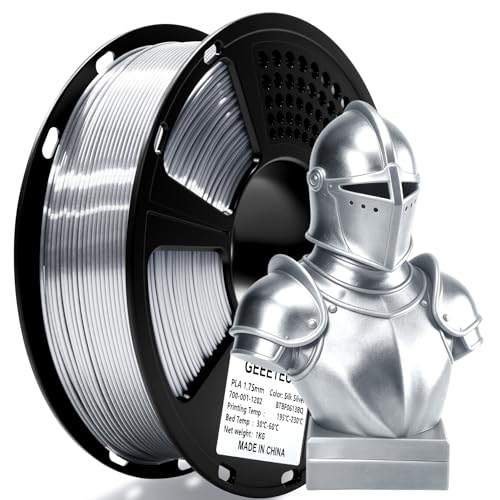
Features: Smooth, glossy silver surface with minimal warping and bubbles; recommended printing at 180–210°C with hot bed 50–70°C; ±0.02 mm dimensional accuracy.
Best for: Projects that demand a vivid metallic shine with reliable extrusion and low risk of jams. Suitable for beginners and seasoned users alike.
Limitations: Slightly higher temperature window; slower print speeds may help maximize silk gloss.
SUNLU Silk PLA+ Filament — 1 kg

Features: Glossy silk finish with a natural shine; stable extrusion with tolerance ±0.02 mm; recommended nozzle 205–215°C, bed 60–80°C; slower speeds enhance the silk finish.
Best for: Artistic models, decorative pieces, and gifts where appearance matters and easy printing is valued.
Limitations: PLA+ can be slightly more brittle than standard PLA in some conditions; verify print settings for your printer before large builds.
SUNLU Silk Filament — 1 kg

Features: Silk PLA with glossy, silver-like finish; tolerance ±0.02 mm; smooth feeding and low risk of clogs; recommended print temps 205–215°C, bed 60–80°C.
Best for: Speedy, reliable prints that deliver a premium silk look right out of the nozzle.
Limitations: Finished parts may show surface imperfections if printed at higher speeds; slower speeds help maximize shine.
ELEGOO Silk PLA Filament — Silver Grey

Features: Stunning silk colors with high gloss; good flow, low shrinkage, and minimal warping; ±0.02 mm dimensional accuracy; smooth prints without strong odors.
Best for: Designers and hobbyists who want a premium silk finish with consistent performance across prints.
Limitations: Requires proper bed adhesion for first layers; slower speeds help achieve the best silk texture.
Creality Silk PLA Filament — Silver
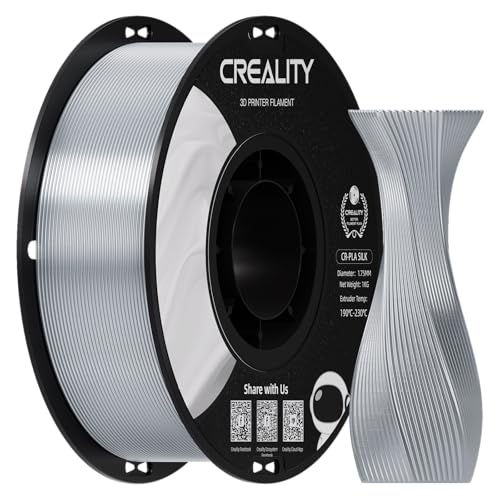
Features: High-gloss silk finish with pearlescent shine; 1.75 mm diameter, ±0.02 mm accuracy; compatible with 99% of FDM printers and popular brands.
Best for: Creality users and others seeking a reliable, shimmering silver finish suitable for MK3, Ender, and similar platforms.
Limitations: Silk appearance can vary with lighting; printer calibration helps ensure consistent shine across parts.
Buying Guide
What should you consider when choosing silver silk filament?
- Confirm your printer uses 1.75 mm filament and supports the recommended bed temperature range for silk PLA.
- Silk PLA/PLA+ formulations produce gloss and metallic sheen; color depth and shine vary by brand and lighting.
- Look for tolerances around ±0.02–0.03 mm for reliable feeding and fewer misprints.
- Silk filaments typically show low warping, but bed adhesion settings influence first-layer success.
- Some brands emphasize clog-free extrusion and smooth feeding; if you print complex models, prioritize those with stable feeding ratings.
- PLA-based silks generally have low odor compared with other materials; consider a well-ventilated area for long prints.
Which filament type is best for you?
- Best for decorative pieces: Filaments labeled Silk PLA or Silk PLA+ with glossy, metallic finishes.
- Best for beginners: Filaments offering straightforward extrusion and wide printer compatibility, with stable layer adhesion.
- Best for detailed models: Filaments with tight dimensional tolerances and consistent diameter control.
Practical printing tips
- Use slower print speeds to maximize silk gloss and layer bonding.
- Experiment with nozzle temperatures within the recommended range to avoid surface speckling or uneven gloss.
- Preheat hot beds when needed and ensure a clean nozzle to prevent clogs during long runs.
Maintenance and storage
- Store spools in vacuum-sealed bags or airtight containers to prevent moisture absorption, which can affect print quality.
- Keep filament in a cool, dry place away from direct sunlight.
FAQ
- Is silk PLA harder to print than regular PLA? Silk PLA can require precise temperature and speed settings for best gloss, but many brands offer user-friendly profiles.
- Will silver silk filament look the same on all printers? Appearance varies with lighting, printer calibration, and nozzle temperature; adjust settings to maximize shine.
- Can I use post-processing with silk prints? Post-processing is optional; many prints look excellent without polishing due to the silk finish.
- What is the best bed temperature for silk PLA? Generally around 50–80°C, depending on the brand and printer setup.
- Are there health or safety concerns with metallic-looking filaments? These filaments are typically PLA-based and non-toxic; print in a ventilated area if possible.
- Which brand offers the most consistent color and shine? Several brands provide strong consistency; testing a small sample run helps determine your preferred option.
Add a Comment