Answering your search for elegant, reliable evening gown sewing patterns, these selections cater to various skill levels and body types. The top picks are best for hobby sewists who want a polished, floor-length result without relying on ready-made garments. If you’re sewing for special occasions, these patterns are especially suitable for intermediate or confident beginners aiming for a timeless silhouette. The table below highlights five strong options and their standout traits.
| Pattern | Best For | Size Range |
|---|---|---|
| McCall Pattern: Floor-Length Evening Dress (14–22) | Advanced beginners to intermediates seeking darts and an invisible zipper | 14–22 |
| McCall Pattern: Floor-Length Evening Dress (6–14) | Classic floor-length with sleeve/hem variations | 6–14 |
| New Look N6341 (6–18) | Contemporary, easy-to-follow with variations | 6–18 |
| McCall’s M8475AA (10–18) | Empire/ princess seam styles and options for a train | 10–18 |
| Butterick B6338 (6–14) | Curved-hem designs for corsets and skirts | 6–14 |
McCall’s Floor-Length Evening Dress Pattern (Sizes 14–22)

Best for: intermediate sewists seeking a close-fitting bust with darts and an invisible back zipper. This pattern includes four dress options with templates, instructions, fabric guidance, and sizing for 14–22. The design emphasizes a tailored fit at the bust and neckline for a refined evening look. Limitation: fewer sleeve variation options compared to some newer patterns.
McCall’s Floor-Length Evening Dress Pattern (Sizes 6–14)
Best for: sewists who want classic floor-length versatility with possible sleeve and hem variations. It includes four dresses, with a lined option and an invisible zipper closing. This pattern is a solid choice for those seeking a timeless silhouette that adapts to different sleeve styles.
New Look N6341: Dress Pattern With Variations (6–18)

Best for: sewists who prefer a flexible one-pattern solution with length and sleeve variations. The pattern includes printed tissue pieces and step-by-step illustrated instructions, with guidance on fabric and notions. Use this when aiming for a contemporary, easy-to-follow project that still yields a polished evening gown effect.
McCall’s M8475AA Misses’ Evening Gown (10–18)
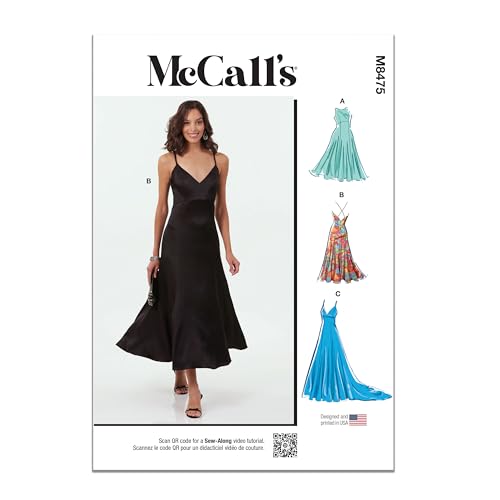
Best for: pattern packages that enable a floor-length gown with empire or princess seams and a train option. This selection emphasizes dramatic silhouettes suitable for formal events. Limitation: available sizes focus on the 10–18 range, so taller or fuller-figured sewists may need alterations or an alternate pattern.
Butterick B6338: Curved-Hem Corsets & Skirts

Best for: a5-size format catering to 6–14 with corset and skirt options. Choose this if your focus is a structured corset-inspired evening look or a curved-hem design. Limitation: it may require more fitting adjustments for a formal gown compared to full-length dress-focused patterns.
McCall’s Misses Bodice and Sleeve Variations

Best for: pattern that supports versatility through bodice and sleeve variations (6–14). This option suits sewists who want to experiment with neckline shaping and sleeve styles to complement a formal gown. Limitation: primarily a bodice/sleeve variation guide rather than a full-length gown package.
Burda 6866: Floor Length Evening Dresses

Best for: Burda’s sizing across 10–22 with multiple options for floor-length evening dresses. This choice is appropriate for sewists seeking a pattern that blends European styling with longer hemlines. Limitation: Burda patterns can have tighter fit guidance requiring careful measurement and tissue fitting.
McCall’s M8475BB: Plus-Size Evening Gown (20W–28W)
Best for: extended-size options with floor-length gowns and train variations. Choose this pattern if you need a formal look tailored to fuller figures. Limitation: broader size range may require more fabric and adjustments to achieve a professional fit.
Buying Guide: Choosing The Right Evening Gown Pattern
Your selection should balance fit, complexity, and the intended event. Consider these factors:
- Skill level: Some patterns assume intermediate sewing experience with zippers, linings, and precise darts.
- Fit and sizes: Check the size range and body measurement charts; some brands run small or differently from ready-to-wear sizing.
- Style preferences: Empire waists, princess seams, trains, and sleeve variations affect the gown’s final look.
- Fabric recommendations: Heavy satin, chiffon overlays, and stretch crepes require different sewing techniques and stabilizers.
- Pattern versatility: If you want future use, select patterns with multiple views or adjustable features.
Frequently Asked Questions
- What pattern features should I prioritize for a formal gown?
– Look for darts, princess seams, and an invisible zipper for a clean silhouette. A view with a train or long hem adds formal drama. - Are plus-size patterns available for evening gowns?
– Yes, some lines include extended ranges (e.g., 20W–28W) to accommodate fuller figures. - Which fabrics work best for floor-length gowns?
– Weighty fabrics like satin, crepe, and charmeuse provide drape and structure; overlays in chiffon or tulle add elegance. - Do pattern instructions include notions and fabric yardage?
– Most patterns list suggested fabrics and notions; verify yardage and notions in the envelope before purchasing materials. - Can I reuse a pattern for multiple events?
– Yes, patterns with multiple views or variations can create distinct gowns for different occasions. - Is it necessary to muslin-fit a gown?
– For a tailored look, a muslin or test fabric fitting helps confirm sizing and adjust seam placements before cutting your main fabric.
Add a Comment