When searching for perforated card stock, you want reliable sheets that print cleanly and break apart neatly. This guide highlights five strong options suited for home, school, or small business use. The top picks are best for creating custom postcards, invitations, reminders, and printable business cards with minimal waste. Each product is chosen for print compatibility, perforation quality, and edge-clean results, so you can pick with confidence based on your printer type and project size.
Product Comparison Snapshot
- 65lb White Printable Postcards – Desktop Publishing Supplies
- NextDayLabels 8-1/2 x 11 Laser and Inkjet Postcards (4 up)
- 200 Blank White Perforated Cardstock Postcards – Desktop Publishing Supplies
- NextDayLabels Blank Perforated Cards, 6 up per Page
- 250 Piece Blank Printable Business Cards 3.5 x 2, Litpoetic
65lb White Printable Postcards

Best for home office postcard projects. These blank white 4-up postcards measure 4 1/4″ x 5 1/2″ per card and print cleanly on inkjet or laser printers. The sheets are perforated for easy breaking and offer cleaner edges compared to non-perforated options. Ideal for announcements, event invites, or photo postcards. Limited by the 4-up format if you need more than four cards per sheet.
NextDayLabels 8-1/2 x 11 Postcards (4 Up)
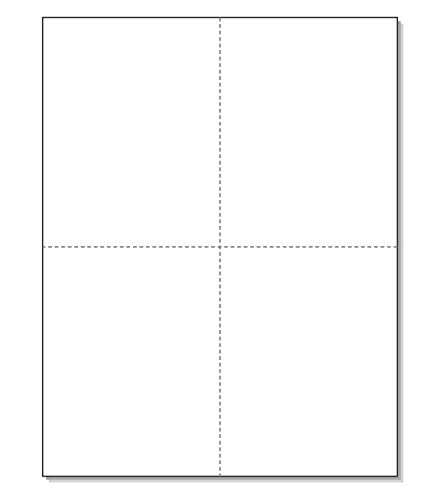
Best for users printing multiple cards per sheet with professional appearance. This pack provides 50 sheets, each with four cards per sheet (4-1/4″ x 5-1/2″ after perforation). The 100# tag stock and matte finish ensure a premium feel for marketing materials, reminders, and save-the-date cards. Better for larger batches or when a slightly heavier stock is desired.
200 Blank White Perforated Cardstock Postcards

Best for larger, cost-conscious postcard projects. These perforated 2-up postcards come on 8.5″ x 11″ sheets with 5.5″ x 8.5″ cards. The 80lb cover (218 GSM) stock provides a sturdy feel and smooth print surface for crisp images. Suitable for flyers, invitations, and direct mail where durability matters. A potential limitation is the heavier weight, which may require printer compatibility checks for some home models.
NextDayLabels Blank Perforated Cards (6 Up)

Best for intermediate-volume card projects with more cards per page. The 8-1/2″ x 11″ sheet produces six cards per page with perforations that yield 4-1/4″ x 3.66″ finished cards. The 100# tag stock provides a professional feel, suitable for announcements and coupons. Choose this if you need more cards per sheet without increasing sheet count.
250 Piece Blank Printable Business Cards (Litpoetic)

Best for professional business card printing at home or in the office. These 3.5″ x 2″ perforated cards start as 8.5″ x 11″ sheets, with 10 cards per sheet. The 170gsm offset paper yields a sturdy, jam-resistant surface suitable for clear text and images. Perforations are designed for easy removal. Practical for quick, on-demand business cards. Note that small card size may require precise printer settings for edge-to-edge prints.
Buying Guide
What printer type works best with perforated card stock?
Most perforated card stock is designed for inkjet or laser printers. Check your printer’s paper handling capabilities and weight limits. Heavier stock like 80lb cover (218 GSM) may require edge guides or manual feeding in some printers to prevent jams.
How to choose weight and finish?
For durability and a premium feel, choose 80lb cover stock (218 GSM). Matte finishes reduce glare and are great for text-heavy designs, while brighter finishes enhance photos and color depth. Your choice should align with intended use—marketing materials may benefit from a heavier weight, while simple notes can use lighter sheets.
Are perforations easy to remove without tearing?
Quality perforations are clean and aligned with the intended card size. Look for sheets with precise perforation lines and minimal edge tearing. If you plan to print vibrant images, ensure the stock supports sharp image reproduction without feathering.
What project types benefit most from perforated cards?
Perforated cards are ideal for postcards, invitations, reminders, coupons, and event materials. They also work well for printable business cards or flash cards when you need quick separation with a neat edge.
How many cards per sheet should I expect?
Common configurations include 4-up, 6-up, or 2-up per sheet. More cards per sheet reduce the number of sheets needed but can demand more precise printer settings to ensure clean perforations and even margins.
What should I know about compatibility with office workflows?
Look for sheets labeled for inkjet and laser printers, and verify they fit standard paper sizes in your workflow. If you use duplex printing or auto-feed, test a small batch first to avoid misfeeds or jams.
FAQ
- What is perforated card stock used for? Perforated card stock is designed to be printed on, then easily snapped into individual cards with clean edges for postcards, business cards, invitations, and reminders.
- Can I print both sides on perforated cards? Many sheets are suitable for double-sided printing; check the sheet weight and finish for ink bleed or smudging on your printer model.
- Will perforated cards fit standard printers? Most do, but heavier stocks may require manual feeding or specific printer settings. Always test before a full run.
- Which option is best for a bulk mailing campaign? For large campaigns, consider 80lb cover stock with a 4-up or 6-up layout to maximize cards per sheet while maintaining print quality.
- Are these sheets compatible with home and office setups? Yes, each listed option is intended for common home and office printers, with emphasis on clean perforations and easy separation.
Add a Comment