Direct answer: Ultramarine blue acrylic paints offer rich color, good lightfastness, and versatile texture for painting on canvas, paper, and mixed media. This guide targets both beginners seeking affordable options and professionals needing strong, reliable pigments. The top five products below are selected for pigment quality, finish, and application across common acrylic techniques. Best for large areas, fine details, or layered texturing, depending on the brand.
Buyer’s snapshot: helpful for choosing among student-grade basics and professional-grade options. The table below compares size, type, and standout traits to simplify decision-making at a glance.
| Product | Brand | Size | Why It Stands Out |
|---|---|---|---|
| Artecho Ultramarine Acrylic Paint | Artecho | 120 ml | Great lightfastness, creamy coverage, non-toxic and convenient single-pigment tube. |
| GOLDEN Heavy Body Ultramarine Blue | GOLDEN | 5 fl oz | Historically rich lazurite-based pigment, excellent permanence and plasticity for bold strokes. |
| Winsor & Newton Galeria Ultramarine | Winsor & Newton | 60 ml | Strong covering power with a smooth satin finish and dependable permanence. |
| Liquitex BASICS Ultramarine | Liquitex | 8.5 oz | Thick, creamy texture with good pigment load; ideal for learning color theory and blending. |
| Nicpro Ultramarine Blue Large | Nicpro | 16.9 oz | High-volume paint with semi-gloss finish and non-toxic, water-based formula. |
Artecho Ultramarine Acrylic Paint

Best for artists seeking a single-pigment option with reliable lightfastness and gloss finish. The tube’s 120 ml size offers convenient daily use for large areas or fine details. The creamy consistency supports smooth application on canvas, wood, or ceramic. This product is non-toxic and conforms to ASTM D-4236, making it suitable for adults and classroom use.
Who it’s best for: beginners and hobbyists who want dependable pigment without mixed colors. Why selected: affordable, easy to carry, and easy to mix with other pigments while preserving color integrity. Caution: some users may prefer higher opacity for light-layered glazing compared to heavier-bodied paints.
GOLDEN Heavy Body Ultramarine Blue

Best for bold, layered brushwork and strong color presence. GOLDEN’s Heavy Body line is known for high pigment load and a thick, brush-stroke-friendly texture that holds shape. The ultramarine blue in this range comes from a traditional lazurite-like pigment, delivering depth and permanence. It’s ideal for artists who value rich color and extended open time for blending.
Who it’s best for: professional painters and mixed-media artists needing durable, glossy color with visible brushwork. Why selected: exceptional color development with a smooth, heavy-bodied feel. Caution: premium price point and higher viscosity may require compatible brushes and surfaces for best results.
Winsor & Newton Galeria Ultramarine

Best for student-friendly use with solid pigment power and a satin finish. Galeria paints are formulated for good coverage without overpowering opacity. The 60 ml tube offers enough volume for several painting sessions, with color stability and permanence rated as A – Permanent by W&N. It is a reliable mid-range option for studies and studio work.
Who it’s best for: art students and hobby painters who need dependable color without the premium price. Why selected: balanced performance, easy handling, and consistent results. Caution: may require multiple layers for strong opacity on very bright undercoats.
Liquitex BASICS Ultramarine
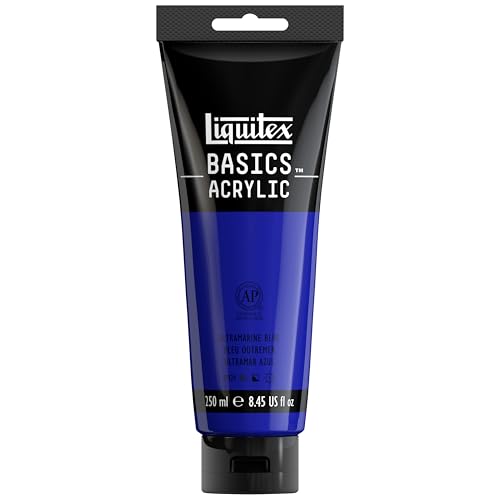
Best for beginners and learners focusing on color theory and blending. Liquitex BASICS offers a thick, creamy texture with a notable pigment load and a satin finish. It retains brush peaks well, making it suitable for demonstrations, color mixing exercises, and layering techniques. The 8.5 oz tube provides substantial supply for practice and small projects.
Who it’s best for: students and color-study artists who want forgiving handling and strong color basics. Why selected: reliable coverage, good value, and accessible for practice. Caution: may require additional coats for high-opacity results on bright backgrounds.
Nicpro Ultramarine Blue Large

Best for large-scale projects and decorative applications. Nicpro’s 16.9 oz bottle delivers a semi-gloss finish with fast drying times and safe, water-based composition. It’s suitable for murals, background layers, and plaster or canvas surfaces where a substantial color fill is needed. The product uses a low-odor formula and is ASTM D-4236 compliant.
Who it’s best for: crafters and mural artists who need high-volume paint with easy cleanup. Why selected: economical bulk option with practical drying and cleanup. Caution: high volume may lead to over-application if not managed with appropriate thinning.
Buying Guide: Key Purchase Considerations
- Paint type and texture: Choose Heavy Body for texture and brush marks; BASICS or Galeria for smooth coverage and easier mixing.
- Pigment load and opacity: Higher pigment load yields richer color and better coverage in fewer coats.
- Finish and glaze potential: Satin or gloss finishes affect light reflection and layering strategies.
- Drying time and open time: Fast-drying formulas are great for quick workflows; longer open time helps blending.
- Intended use: Large works may benefit from bulk sizes; classroom use may prioritize non-toxic formulas and lower cost per ounce.
- Surface compatibility: Most acrylics work on canvas, wood, and paper; test on unfamiliar surfaces for adhesion and texture.
- Safety and standards: Look for ASTM D-4236 labeling for non-toxic, classroom-safe use.
Frequently Asked Questions
- What’s the difference between heavy body and basics acrylics?
Heavy body has thicker consistency with higher pigment load, suitable for bold strokes and texture; basics are thinner and easier for beginners to handle and blend. - Is ultramarine blue suitable for glazing?
Yes, it can be used in glazes with transparent or semi-transparent properties, depending on the pigment load and medium mixed in. - Are these paints non-toxic?
Most listed products are formulated to meet safety standards such as ASTM D-4236; always check the product page for specific labeling. - Which size should I buy for a first set?
Start with mid-range sizes (60 ml to 120 ml) to test consistency and color behavior before committing to bulk options. - Can I mix ultramarine blue from different brands?
You can mix across brands, but expect slight variations in hue and transparency; test blends on a scrap surface first.
Add a Comment