Choosing the right clay for large sculptures requires balancing workability, drying and firing behavior, and long-term durability. This guide highlights five leading clays and modeling materials—ranging from mid-fire pottery clays to oil-based modeling compounds—that are well-suited for big, expressive pieces. Each option offers specific advantages for wheel throwing, hand building, and detailed modeling, helping artists achieve scale without sacrificing detail or structural integrity.
The following table summarizes the featured products to help you compare core attributes at a glance:
| Product | Brand | Type | Key Benefit |
|---|---|---|---|
| Pottery Clay: Best Mix- BMix – BMX – Mid Fire Cone 5-7 | Rocky Mountain Clay | Mid-fire clay | Smooth, versatile for wheel or hand-building |
| Monster Clay Premium Grade Modeling Clay (4.5lb) | The Monster Makers | Oil/Wax-based modeling clay | High detail, sulfur-free, easy modeling |
| Van Aken Plastalina Non-Hardening Modeling Clay 4.5 Lb. | Van Aken | Non-hardening plastiline | Remains pliable with vibrant color range |
| Sculpture House Roma Plastilina No.2 Med Grey-Green | Sculpture House | Soft modeling clay | Professional-grade, smooth texture |
| Activa Blackjack Earthenware Low Fire Clay, 10lb | Activa | Low-fire earthenware clay | Silky smooth workability for sculpture and pottery |
Pottery Clay: Best Mix- BMX Mid Fire Cone 5-7
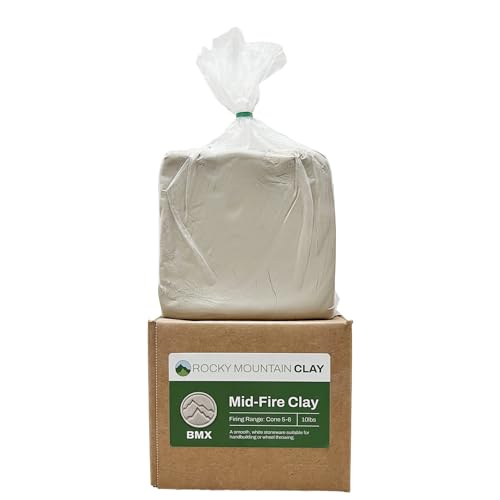
This smooth white mid-fire clay blends well for large-scale projects requiring both wheel throwing and hand building. Its mid-fire cone range makes it suitable for sculptures that need a balance between color retention and workable plasticity. The formulation is non-toxic and gluten-free, which can be advantageous for studio safety and clean handling during long, complex builds. It supports even shrinkage and consistent firing results, important for large pieces with multiple sections joined together.
Monster Clay Premium Grade Modeling Clay (4.5lb)

The Monster Makers’ Monster Clay offers a premium oil/wax-based modeling experience with a 4.5-pound tub ideal for large-scale sculpture sessions. It is sulfur-free, minimizing the risk of odor or staining, and remains pliable for extended periods, allowing artists to rework details across sittings. The medium consistency supports fine modeling for textures and contours on sizable forms, while its non-hardening nature simplifies long-term storage and reworking when plans evolve during a large sculpture project.
Van Aken Plastalina Non-Hardening Modeling Clay 4.5 Lb. Grey

Van Aken Plastalina is a renowned oil-based modeling compound that stays pliable without hardening, making it ideal for planning and detailing large sculptures. Its pigmented, smooth consistency supports rich color studies and complex textures on expansive forms. The non-hardening nature ensures the material remains workable from initial concept through revisions in the design phase, which is particularly advantageous for large projects requiring multiple iterations.
Sculpture House Roma Plastilina No.1 Soft Gray-Green

Roma Plastilina No.1 is a soft-gray-green modeling material favored by professionals for large sculpture projects that demand a fine touch and precise detailing. Its soft texture allows for smooth modeling of subtle curves and intricate features on expansive surfaces. While it is primarily used for sculpting models and maquettes, its quality and consistency make it a reliable choice for planning large-scale forms, especially when combined with plaster or armature frameworks.
Sculpture House Roma Plastilina No.2 Med Grey-Green

Roma Plastilina No.2 Med Grey-Green is a professional-grade modeling clay designed for sculptors working on large forms. It offers a balanced stiffness and excellent texture capture, enabling accurate transfer of detail from maquette to final sculpture. This medium grey-green variant supports comfortable handling over longer sessions and remains pliable enough for structural adjustments as the piece develops on a larger scale.
Creating Lifelike Figures in Polymer Clay: Tools and Techniques

This reference volume explores tools and techniques for sculpting lifelike figures with polymer clay, offering insights applicable to large-scale figurative sculpture. While polymer clay is typically used for smaller pieces, the methods—such as layer-building, texturing, and color blending—translate well to larger forms when used as study material. The book supports artists seeking to expand their approach to surface realism and anatomical accuracy in grand-scale sculptures.
Mont Marte Clay Sculpture Sealant, Glossy Clear Varnish

This gloss varnish is water-based and suitable for polymer modeling clays or air-hardening clays. It dries to a transparent, high-gloss finish, protective layer, and the screw cap helps prevent drying out between sessions. For large sculptures, using a sealant can enhance color longevity and surface durability, particularly on exterior-facing areas or pieces exposed to light and humidity in studio environments.
Activa Blackjack Earthenware Low Fire Clay, 10lb

Activa Blackjack is a low-fire earthenware clay designed for a wide range of sculpture and craft projects. It features a silky smooth consistency that supports workability across large pieces, including wheel throwing and modeling. Its formulation is intended to deliver reliable results for beginners through advanced users, offering good plasticity during shaping and suitability for kilns firing at lower temperatures. This makes it a practical option for big projects where easier firing schedules are desirable.
Buying Guide
Key considerations for large sculpture clay selection
- Workability and plasticity: For large forms, clays with balanced plasticity reduce cracking risk during shaping and joining. Consider mid-fire pottery clays for sturdiness and ease of handling when building big structures.
- Firing range and compatibility: Mid-fire clays (Cone 5-7) offer a compromise between durability and color, while low-fire clays simplify studio workflows. Plan your kiln or firing approach and ensure compatibility with any surface treatments or sealants.
- Setting time and reworkability: Modeling clays that stay pliable or non-hardening help during iteration. Non-hardening plastilines are ideal for planning large pieces before committing to a permanent cast or fired form.
- Surface finish and sealants: For large surfaces, sealants can protect against moisture and UV exposure. Choose compatible finishes that won’t cause adhesion issues with the underlying clay.
- Safety and materials. Non-toxic and gluten-free options can improve studio safety and maintenance, especially in shared spaces or classrooms. Verify any odor, sulfur content, or chemical sensitivities associated with the clay.
- Storage and durability: Large sculptures involve long development timelines. Favor clays and modeling compounds that store well between sessions and resist drying too quickly while still accepting rework.
Type-oriented guidance
- Pottery clays (mid-fire and low-fire): Ideal for large, durable sculptures requiring fired finishes. They pair well with armatures and can be glazed or left matte depending on the aesthetic.
- Modeling clays (non-hardening/plastilina): Best for maquettes, planning, and surface detail studies. Useful for large sculptures when you need to rapidly prototype forms before firing.
- Oil/wax-based modeling clays: Offer excellent detail and a smooth surface. They remain pliable, making them suitable for extended modeling sessions and adjustments on overarching forms.
Application considerations
- Preparation: Score and slip joints for clay pieces that will be joined on large sculptures to maximize strength and minimize cracks.
- Armature: For large forms, an internal support structure reduces sagging and warping. Choose clays that bond well to armature materials and respond predictably during drying.
- Texture and finish planning: Consider how your chosen clay accepts texture and how well it accepts glazes or sealants if you intend a final surface treatment.
- Cost and availability: Large works require substantial material. Evaluate cost per project and supplier accessibility to avoid delays in long building cycles.
Add a Comment