Choosing the right focal length is essential for landscape photographers. This guide highlights five relevant products that help you capture expansive scenes, dramatic foregrounds, and versatile framing. From ultra-wide primes to standard-length lenses, you’ll see how focal length shapes composition, depth, and detail in outdoor settings.
| Product | Brand | Key Benefit | Link |
|---|---|---|---|
| Canon RF16mm F2.8 STM Lens | Canon | Ultra-wide field of view for sweeping landscapes | Amazon |
| Canon RF50mm F1.8 STM Lens | Canon | Bright fixed focal length for balanced landscapes and detail | Amazon |
| Nikon AF FX NIKKOR 35mm f/1.4G | Nikon | Classic wide-to-standard framing with sharp corners | Amazon |
| NEEWER Zoom Telescope Eyepiece, 7-21mm | NEEWER | Flexible focal length for landscape-like astronomical views | Amazon |
| SUMGREEN 1.2 Inch Water Spout (Landscape Decor) | SUMGREEN | Outdoor landscape decor that complements scenic photography setups | Amazon |
Canon RF16mm F2.8 STM Lens

Canon’s first ultra wide-angle fixed focal length RF lens provides a broad perspective ideal for dramatic landscapes. The bright f/2.8 maximum aperture helps in lower-light morning or dusk scenes and supports selective focus when foreground elements are prominent. A stepping motor (gear-type STM) ensures smooth, quiet continuous autofocus during video and still photography, aiding in dynamic landscape shoots without distracting noise.
Canon RF50mm F1.8 STM Lens

This compact prime offers a standard focal length that balances scene-wide context with detailed foreground interest. The large f/1.8 aperture is advantageous for low-light landscapes and creates pleasing background separation when needed. The STM mechanism yields smooth, quiet autofocus during both stills and video, making it a versatile choice for travel and outdoor shoots where light can be variable.
Nikon AF FX NIKKOR 35mm f/1.4G

The 35mm focal length is a long-standing staple for landscape work, offering a natural perspective with a wider field of view than standard kits without excessive distortion. The lens is optimized for edge-to-edge sharpness on both FX- and DX-format Nikon bodies. Its fast aperture helps in mixed lighting situations and allows for creative depth-of-field control in foreground-to-background relationships across expansive scenes.
NEEWER Zoom Telescope Eyepiece

For landscape observers who enjoy celestial views, a zoom eyepiece offers flexible focal lengths from 7mm to 21mm. While designed for astronomy, the ability to adjust focal length on the fly supports varied framing of landscape and night-sky subjects. The design emphasizes sharpness across the field and a comfortable eye relief, reducing eye strain during extended viewing sessions.
SUMGREEN Water Spout Landscape Decor
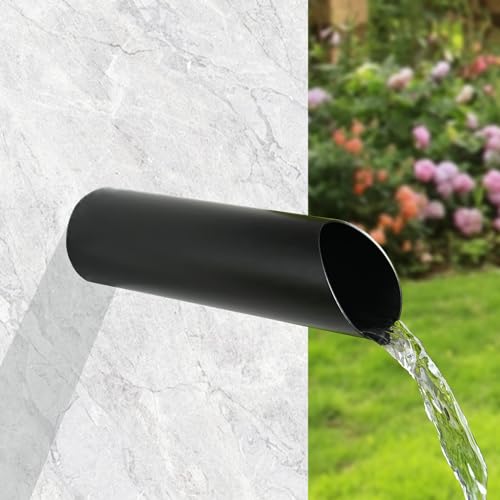
Outdoor decor items like a water spout can enhance landscape photography setups by providing ambient movement and reflective surfaces in background scenes. While not a camera accessory, these features can influence composition and mood in exterior shoots, especially near ponds, fountains, or water features where light interaction adds dynamic texture to the landscape.
Buying Guide: Key Purchase Considerations For Landscape Focal Length
- Field of view and composition: Ultra-wide lenses (around 8–16mm on full-frame) capture sweeping skies and broad panoramas, while 24–50mm lenses provide versatility for mid-range landscape scenes with foreground interest.
- Light and aperture: Lenses with brighter apertures (f/2.8 or wider) help in dawn/dusk conditions and enable creative depth-of-field control for layered landscapes. Consider trade-offs in weight and size for travel-friendly setups.
- Camera system compatibility: Ensure mounts, autofocus performance, and image stabilization align with your body. STM-driven lenses offer quiet AF suitable for video work in outdoor environments.
- Image quality vs portability: Prime lenses typically deliver sharpness and contrast with smaller footprints, while zooms provide flexible framing without changing position—useful on uneven terrain or adverse weather.
- Support gear alignment: For outdoor landscape shoots, pairing lenses with sturdy tripods, polarizing filters, and weather protection enhances image consistency across varied lighting conditions.
- Specialty options: For astro-landscape or low-light scenes, consider a fast prime or a zoom with a good edge-to-edge performance. Telescopes and eyepieces can extend your vantage when scouting distant horizons or celestial subjects.
- Maintenance and durability: Weather resistance, build quality, and maintenance considerations matter for field use. Choose lenses with comfortable handling and reliable autofocus under cold or windy conditions.
Add a Comment