Whether you’re personalizing caps for a team, club, or a craft business, a capable hat press is essential for professional results. This guide highlights five top hat press machines suited for patches, HTV, sublimation, and other cap projects. Each option balances temperature control, platen sizes, and ease of use to help you tailor your gear to your hat shapes and materials. Read on to compare features, build quality, and what to prioritize when buying a hat press for patches.
Summary of Selected Products
| Product | Brand | Key Platen Size | Notable Feature |
|---|---|---|---|
| Hat Heat Press Machine for Caps with 2 Plattens | Delclynee | 6.7″x3.8″ and 6.7″x2.5″ | Interchangeable platens for varied hat styles |
| HTVRONT Hat Press Machine | HTVRONT | 6.5″x3.3″ and 6.5″x2.5″ | Two platens; precise temp/time controls |
| VEVOR 4-in-1 Hat Press | VEVOR | 6×3 / 6.7×2.7 / 6.7×3.8 / 8.1×3.5″ | Four interchangeable heating pads |
| Calogy Hat Press Heat Machine | Calogy | 6.3″x2.76″ curved plate | Compact, precise temp control |
| EENOUR Hat Press Machine | EENOUR | 3″×5.5″ arched plate | Three heat settings; safety base |
Delclynee Hat Press: Versatile Interchangeable Plats

Delclynee’s hat press offers a curved 6.7″ x 3.8″ heating plate paired with two interchangeable lower cap platens (6.7″ x 3.8″ and 6.7″ x 2.5″). This setup supports a range of cap shapes, including structured and low-profile hats. A molded silicone lower platen helps minimize lines and scorching, improving finish on patches and HTV projects. The unit runs on 110V with a 550 W/10A rating, delivering steady heat for reliable transfers. Its focus on platen versatility makes it a strong choice for hobbyists and small shops targeting patch work.
HTVRONT Hat Press Machine: Precise Control And Dual Platens

HTVRONT’s hat press is built around a cast aluminum heating plate with a Teflon coating, promoting even heat distribution and longevity. The four-bar linkage contributes to a smoother operation, complemented by a digital display that shows real-time temperature and countdown. The machine ships with two platens—6.5″ x 3.3″ and 6.5″ x 2.5″—and is designed to fit a broad range of cap shapes with minimal wrinkles. This model emphasizes precise control over temperature and time, which is critical for delicate patches and vinyl transfers on hats.
VEVOR 4-in-1 Hat Press: Four Platens For Versatility

VEVOR’s 4-in-1 hat press brings four interchangeable heating pads: 6 x 3, 6.7 x 2.7, 6.7 x 3.8, and 8.1 x 3.5 inches. This broad platen range covers most cap styles, including berets and bucket hats, along with larger or higher-profile designs. The digital controls simplify temperature and time settings, with a wide 104°F–410°F (40°C–210°C) range. A larger heat plate supports easy transfer across various materials—cotton, polyester, and blends—while the Teflon coating minimizes sticking and makes cleanup straightforward.
Calogy Hat Press: Compact And Precise For Small Caps
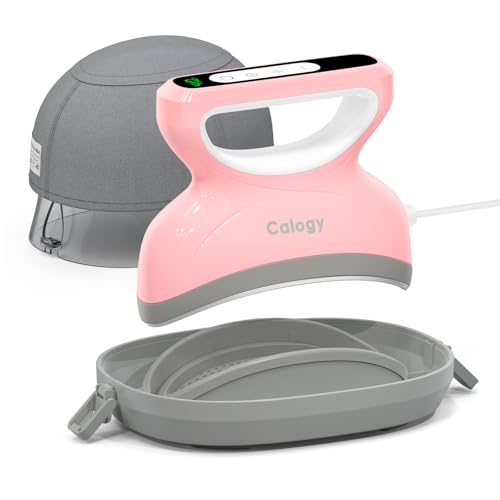
Calogy presents a compact hat press designed for smaller caps, including 6.3″ x 2.76″ curved plates. With a maximum temperature of 410°F and ±5°C/°F precision, this model is suited to high-precision transfers where consistent pressure and temperature stability matter. The unit focuses on straightforward operation, with a simple control scheme that enables easy setup for projects like patches on pro adult hats. Its light footprint makes it ideal for takeaway setups or limited workspace environments.
EENOUR Hat Press: Three Heat Levels For Versatile Projects

EENOUR’s handheld hat press combines portability with practical capability. It features a 3″×5.5″ arched heating plate and two additional platens, offering three heat levels to handle a variety of patches and transfers. An insulated safety base enhances user protection, making it suitable for smaller shops or hobbyists who need to move between locations. While not the largest press, its built-in safety and multiple heat settings provide solid value for patch enthusiasts looking to expand project scope.
Buying Guide: Key Purchase Considerations And Comparisons
- Platen size and shape: Larger or multi-platens provide flexibility for different cap styles, including curved and structured hats. If you frequently work with various hat types, prioritize models with interchangeable platens.
- Temperature range and precision: Look for a digital display and stable heat control (± a few degrees). Precise, repeatable temps are essential for consistent patches, especially with HTV and sublimation.
- Pressure control: Uniform pressure prevents scorching or uneven transfers. Some models offer adjustable or even dual-stage pressure mechanisms for thicker caps.
- Build quality and safety: Aluminum heating plates with non-stick coatings help with longevity and cleanup. A safety base or auto-off features reduce risk in busy workspaces.
- Ease of use and portability: For hobbyists or mobile workshops, compact units with straightforward interfaces reduce setup time and fatigue.
- Compatibility with patches and materials: If you plan to use leather patches, heat-transfer vinyl, or sublimation on caps, ensure the press can reach the required temperatures without damaging cap fabrics.
When selecting a hat press for patches, evaluate your typical hat shapes, patch materials, and desired workflow. For frequent cap variety, a model with multiple platens and a broad temperature range is advantageous. If you mostly work with standard baseball caps and embroidered patches, a mid-sized platen paired with precise temperature control often delivers reliable results. Safety features and build quality also influence long-term durability, especially in high-volume settings.
Add a Comment