Finding the right hat heat press can streamline customized branding, gifting, and small-batch production. Below are five well-regarded options that cover different needs—from multi-plate versatility to beginner-friendly operation. Each product supports different hat styles, platen sizes, and heat-control features to help you choose the best fit for your projects.
| Product | Key Feature | Platen Size Options | Ideal For |
|---|---|---|---|
| VEVOR 4-in-1 Hat Heat Press | Multiple interchangeable platens; digital controls | 6×3, 6.7×2.7, 6.7×3.8, 8.1×3.5 inches | Varied hat styles, beginners to intermediate users |
| HTVRONT Hat Press Machine | Two cap platens; memory mode; digital display | 6.5×3.3 inches & 6.5×2.5 inches | Most cap shapes; straightforward transfers |
| Delclynee Hat Press with 2 Platens | Interchangeable platens; curved plate; low-marking | 6.7×3.8 inches and 6.7×2.5 inches lower platens | Structured and low-profile caps |
| VEVOR Hat Press with 2 Platens | Two platen sizes; dual display; auto shut-off | Multiple sizes (specifics in listing); two platens | HTV and sublimation on caps and accessories |
| EENOUR Hat Press Machine | Three heat levels; arched and curved platens | Arched 5.5×3 inches; curved 3×5.5 inches | Caps of various shapes; kid and adult caps |
Note: This overview focuses on models commonly used for hats, featuring reliable temperature control, scalable platen options, and safety features suitable for hobbyists and small shops alike.
VEVOR 4-in-1 Hat Heat Press

VEVOR’s 4-in-1 hat press combines four distinct heating pads to accommodate a variety of cap shapes. Its 8.5 x 4 inch heating plate is designed to handle berets, baseball caps, bucket hats, and more with a Teflon-coated surface that resists sticking. The machine includes four replaceable elements and a dual-display control system showing Fahrenheit/Celsius and time, enabling precise transfers from 40°C to 210°C (104°F to 410°F). This setup supports materials like cotton, linen, polyester, and canvas, promoting clean edges and consistent results across projects.
Pros include expanded platen options and beginner-friendly operation. However, users should monitor heat distribution when switching between platen sizes to avoid wrinkles on certain cap shapes. The non-slip base adds stability during pressing, and the broader temp range supports a wide array of transfers, including sublimation and HTV. Overall, a versatile option for diversified hat projects.
HTVRONT Hat Press Machine

HTVRONT’s model emphasizes even heat with a one-piece cast aluminum heating plate and a Teflon coating to prevent sticking and odors. The upgraded four-bar linkage and a longer lever improve leverage, while two cap platens (6.5×3.3 inches and 6.5×2.5 inches) optimize fit for most cap shapes. A digital display presents real-time temperature and countdown, allowing precise timing. The design targets easy operation, accurate results, and durability, making it a strong choice for hobbyists seeking reliable performance with fewer wrinkles and creases.
Potential considerations include ensuring compatible cap styles with the platen curvature. The memory mode helps streamline repetitive designs, and the solid build enhances longevity. This HTVRONT model is well-suited for beginners who want predictable transfers with straightforward setup and operation.
Delclynee Hat Press Machine With 2 Platens

Delclynee offers a curved heat plate at 6.7 x 3.8 inches along with a second platen at 6.7 x 2.5 inches. This arrangement supports a range of hat styles, including structured and low-profile caps, while a molded silicone lower platen minimizes visible pressing marks. The device operates at 110V with a 550W rating, suitable for home studios and small shops. The interchangeable lower platens expand project flexibility, enabling both large, edge-to-edge transfers and tighter placements on curved surfaces.
Considerations include ensuring proper placement to avoid scorch marks on darker fabrics, and checking compatibility with your preferred transfer media. The silicone lower platen helps protect hat surfaces, contributing to cleaner results on delicate textiles. Overall, a practical option for users who want versatile platen configurations in a compact package.
VEVOR Hat Press With 2 Platens
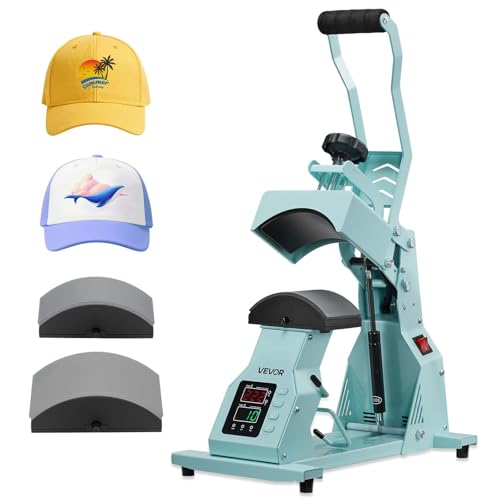
This VEVOR model highlights dual platens and dual displays, providing precise temperature and time control. A long-arm handle and adjustable pressure knob simplify operation for different hat thicknesses. The auto shut-off feature adds a safety layer, making it suitable for beginners who want hands-off reminders as transfers complete. The unit supports HTV and sublimation transfers across a range of hat types, including caps, headbands, and other accessories.
Strengths include clear, simultaneous readouts in Fahrenheit and Celsius, while potential drawbacks involve ensuring platen compatibility with specific hat shapes you use most often. The design emphasizes user-friendly controls and consistent results across various fabrics and materials.
EENOUR Hat Press Machine

EENOUR’s compact unit offers three heat levels and a 3″ x 5.5″ arched heating plate along with a 3″ x 5.5″ curved platen. A handheld design and safety base emphasize portability and user protection. Settings range up to 374°F (190°C) with straightforward controls that guide users through choosing a heat level. This model emphasizes safety and ease of use for quick, on-the-go hat transfers, making it a practical option for small workshops or craft studios.
Pros include simple operation and the protected base, while cons may involve limited platen sizes for larger hats. It’s best suited for casual projects or educational kits where quick setup and predictable results matter more than heavy-duty production capacity.
Buying Guide: Key Purchase Considerations
- Platen versatility: Look for multiple platen sizes and curvature options to fit diverse hat shapes (low-profile, structured, berets, bucket hats, etc.).
- Heat control: Choose models with precise digital temperature and timer control, and a wide temperature range suitable for HTV, sublimation, and Infusible Ink.
- Ease of use: For beginners, prioritize models with clear displays, memory modes, and automatic shut-off for safety and workflow efficiency.
- Build quality and materials: A durable frame, Teflon-coated plates, and anti-adhesion surfaces reduce maintenance and improve transfer quality.
- Safety features: Auto shut-off, stable bases, and over-temperature protection protect both users and materials during transfers.
- Maintenance and replacement parts: Check availability of replacement platens and pads; easier maintenance keeps long-term costs lower.
- Project scope: If you plan frequent, varied hat projects, consider a 4-in-1 or dual-platen system for faster setup changes.
- Power and footprint: Ensure the unit fits your workspace and power capacity without overheating or tripping circuits.
In evaluating these hats presses, consider your typical cap shapes, transfer media, and production goals. A model with interchangeable platens and precise digital control tends to deliver the most reliable results across a variety of hat types, while compact single-plate devices provide portability for small, on-the-go projects. Budget, space, and desired versatility should guide the final choice for your hat customization needs.
Add a Comment