Vinyl heat transfers require precise heat, even pressure, and reliable timing. The right heat press can improve transfer quality, speed up production, and reduce errors. This guide outlines five strong options across clamshell and swing-away styles, including models from HTVRONT, VEVOR, Delclynee, and AST&T. Each selection balances performance, safety, and value for vinyl projects, HTV applications, and sublimation-ready designs. Read on to compare features, ease of use, and suitability for different scales of crafting.
| Product | Brand | Key Strength | Platen Size |
|---|---|---|---|
| HTVRONT Auto Heat Press 15×15 | HTVRONT | Auto release, fast heat-up, multiple modes | 15×15 in |
| VEVOR 2 in 1 Heat Press 15×15 | VEVOR | Two platens (flat + curved cap), precise control | 15×15 in + 6×3 in cap |
| Delclynee 16×24 Slide Out Heat Press | Delclynee | Slide-out lower platen, industrial-grade | 16×24 in |
| HTVRONT Hat Press | HTVRONT | Two cap platens, memory mode, durable plate | 6.5×3.3 in & 6.5×2.5 in caps |
| AST&T Heat Press 12×10 | AST&T | Portable, reliable for larger designs on garments | 12×10 in |
Choosing a heat press for vinyl involves considering platen size, temperature range, pressure control, and safety features. The selections below highlight versatile machines suitable for vinyl transfer, including HTV on apparel, hats, bags, and decorative items. Each product section provides a concise overview, practical capabilities, and how it suits different vinyl projects.
HTVRONT Auto 15×15 Heat Press
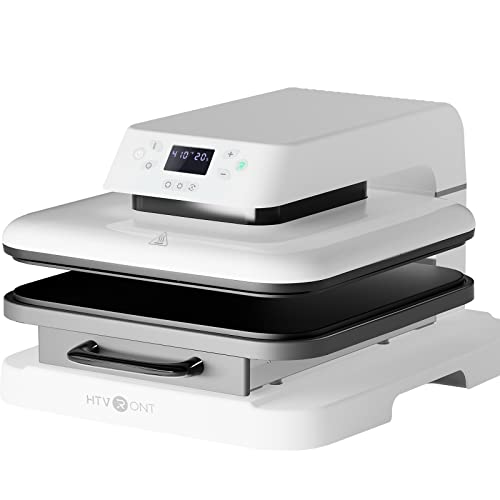
The HTVRONT Auto Heat Press 15×15 adds automation to the standard workflow. It features an auto-release mechanism, which reduces the risk of over-pressing and protects delicate vinyl layers. A built-in thermal sensor and dual-tube heating system help maintain even heat distribution, reaching 320°F (160°C) in about four minutes for common transfers and higher temperatures for sublimation. Four fast modes, plus two custom modes and an auto setting, streamline routine designs and batch work. This model is suitable for tees, bags, caps, and decor projects that benefit from consistent results.
AST&T 12″ x 10″ Portable Heat Press

The AST&T Heat Press offers a compact 12×10 inch heating surface that’s well-suited for larger T-shirt designs and other apparel. It emphasizes safety with a temperature-controlled process and guide-based operation. The unit is light enough for mobile setups, yet robust enough to handle frequent use on vinyl and heat-transfer projects. Operators should consult the included time and temperature guide to optimize transfer results for different HTV materials, including foil, glitter, and holographic vinyl.
VEVOR 12×10 Inch Heat Press
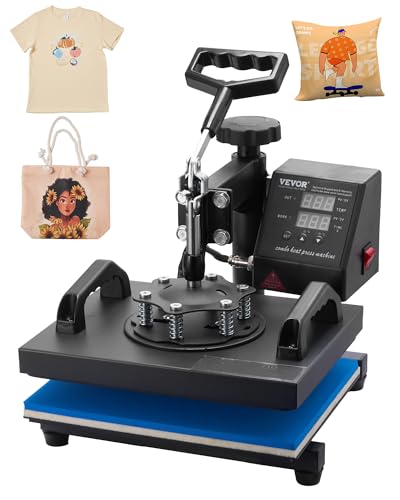
The VEVOR 12×10 Inch Heat Press prioritizes precision with a robust digital control panel and a clamshell design. It supports a variety of vinyl types and sublimation projects. A Teflon-coated surface minimizes sticking and burning, while an ergonomic handle and long-arm design help reduce operator fatigue. An audible end-of-cycle alert simplifies batch transfers, ensuring consistent results across multiple garments or items.
Delclynee 16×24 Slide Out Heat Press

This model features a 16×24 inch non-stick heat platen and a slide-out lower platen, designed to reduce contact with the hot surface during loading and unloading. The lower platen retracts up to 12.25 inches, enhancing safety and workflow efficiency for large designs. A locking mechanism and optional lower pad cover help keep designs aligned and protect mats and garments during transfers. This press is well-suited for higher-volume vinyl projects and larger sublimation runs.
HTVRONT Hat Press for Caps

The HTVRONT Hat Press includes dual cap platens designed to fit most cap shapes with an emphasis on even heat distribution. A cast aluminum heating plate with a Teflon coating helps maintain uniform temperatures and reduces odor during operation. The digital display shows temperature and time, while memory and safety features help manage repeated hat transfers. This press is ideal for vinyl designs on caps, beanies, and other curved surfaces.
Buying Guide: Key Purchase Considerations
- Platen size and versatility — For vinyl projects, a 12×10 to 15×15 inch platen accommodates most T‑shirts and bags. Some models offer additional cap or hat platens for headwear, expanding capabilities without a second machine.
- Temperature range and heat distribution — Look for even heat delivery across the platen and a wide temperature range (roughly 320°F to 410°F or higher) to cover HTV, foil, and sublimation needs. Dual-tube or advanced heating elements improve uniformity.
- Pressure control and stability — Precise pressure and a reliable clamping mechanism help achieve clean transfers. Models with adjustable pressure knobs or digital readouts reduce guesswork and improve repeatability.
- Auto-release and safety features — Auto-release minimizes over-pressing, while auto-shutoff and insulated bases protect users and surrounding materials. These features are especially useful for busy workflows or home studios.
- Ease of use and setup — Quick start modes, clear manuals, and intuitive controls reduce the learning curve. If you plan bulk transfers, consider auto modes and memory settings to speed up production.
- Durability and maintenance — Stainless surfaces, non-stick coatings, and quality build matter for long-term use. Check for user-replaceable parts and customer support options.
- Specialty capabilities — If you work with hats or curved surfaces, ensure the press includes appropriate cap platens. For larger designs or heavy fabrics, a slide-out lower platen can enhance safety and efficiency.
Overall, the best heat press for vinyl depends on your typical project size, workflow pace, and whether you value automation, cap work, or larger transfer areas. The models presented here provide a spectrum of features—from auto-release and dual platens to slide-out platens and hat-specific designs—so you can match capabilities to your vinyl transfer needs. Always verify compatibility with the exact HTV or sublimation materials you use, and follow manufacturer guidelines for best results.
Add a Comment