Choosing the right interfacing is essential for durable T-shirt quilts. The following top-rated options provide stability, prevent distortion, and preserve the soft feel of knit fabrics. This guide compares five widely used products, helping you pick a stabilizer that suits your project size, fabric weight, and stitching method.
Summary Table
| Product | Brand | Size/Weight | Key Benefit |
|---|---|---|---|
| Heatnbond EZ TEE Cotton Woven Interfacing | HeatnBond | 14 in x 25 ft | High cotton content; good for large quilt blocks |
| June Tailor T-shirt Project Fusible Interfacing | June Tailor | White | Prevents distortion with knits; versatile for apparel and quilting |
| WINGKIND T-Shirt Quilt Project Fusible Interfacing | WINGKIND | 44″ x 79″ | Specifically designed for stretchy tees; folds smoothly without stiffness |
| PLANTIONAL Woven Cotton Interfacing (44″ x 2 Yards) | PLANTIONAL | 44″ x 2 yards | Natural cotton backing; multiple weight options |
| Missouri Star Fusible Interfacing Sheets (42 Pack) | MISSOURI STAR QUILT CO. | 14″ x 14″ sheets | Precut stabilizer; convenient for multiple blocks |
Heatnbond EZ Tee Cotton Interfacing For T-Shirts

Heatnbond EZ TEE Cotton Woven Interfacing is designed for T-shirt quilts and memory projects. This 100% cotton woven fusible backing is pre-shrunk, helping blocks maintain shape through washing and wear. The product is suitable for up to about twenty 12” x 12” finished blocks, though yield depends on block size and layout. Its cotton composition offers a soft, breathable foundation that works well with knit fabrics, reducing distortion during handling and stitching. Using this interfacing can streamline assembly for larger quilts or memory projects that require consistent stability across multiple panels.
June Tailor T-Shirt Project Fusible Interfacing
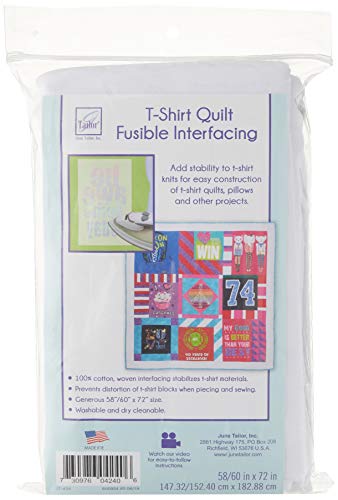
June Tailor’s T-shirt Project Fusible Interfacing provides stability for both knits and woven fabrics, making it versatile for apparel, quilting, and accessories. It helps prevent distortion when sewing with stretchy materials and is suitable for various fabric types. The fusible backing enables strong bonding with minimal bulk, supporting clean seams and professional finishes. This option is particularly helpful for quilters who combine T-shirts with other fabric types or who value crisp edge definition in their blocks.
WINGKIND T-Shirt Quilt Project Fusible Interfacing
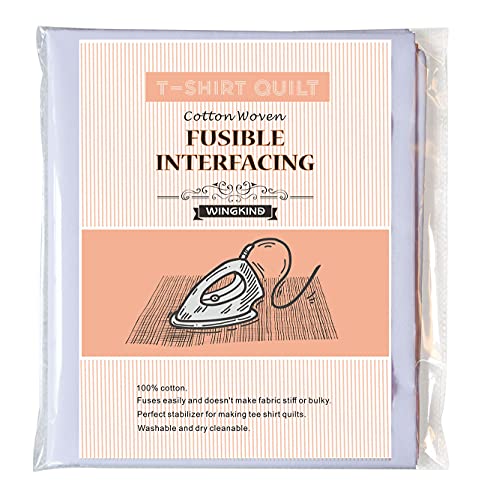
WINGKIND offers a fusible interfacing designed specifically for stretchy T-shirt materials. It irons on easily and tends to avoid making the fabric stiff or bulky, preserving the soft hand of T-shirts while providing needed stability for quilt blocks. This option is favored by quilters who work with a significant amount of knit tees and want to maintain block flexibility without sacrificing shape retention during quilting and washing.
PLANTIONAL Woven Cotton Interfacing (44″ X 2 Yards)

This PLANTIONAL interfacing uses 100% natural cotton with a single-sided heat-activated adhesive. It comes in a wide 44″ width and two-yard length, making it suitable for larger quilt sections or multiple blocks. The product is positioned for durability and versatility across garment and craft projects, with weight options that allow customization for delicate fabrics or heavier fabrics that require stiffer stability. Its easy iron-on method saves time without compromising fabric integrity.
PLANTIONAL Heavy Weight Interfacing (10.6″ X 10 Yards)

This PLANTIONAL heavy-weight option offers robust support for T-shirt quilts and other projects requiring extra stability. The cotton composition provides a natural foundation, and the heat-activated adhesive enables straightforward application. Suitable for blocks that endure frequent handling and washing, it helps maintain shape and reduce distortion in high-traffic areas of a quilt.
Missouri Star Fusible Interfacing Sheets

Missouri Star offers a 42-sheet pack of medium-weight fusible interfacing, with 14″ x 14″ precut squares. This setup is convenient for making memory quilts from T-shirts and jerseys, allowing consistent stabilization for each block. The sheets are designed for quick application with minimal steam and provide dependable backing that stiffens fabrics while keeping the surface fabric comfortable to the touch.
Buying Guide: Key Considerations For T-Shirt Quilt Interfacing
- Fabric Type: Knit tees require interfacing that preserves stretch without creating excessive bulk or stiffness. Look for fabrics described as soft, breathable, and compatible with knits.
- Block Size and Quilt Scale: Larger quilts may benefit from wider or continuous backing (like 44″ widths) to reduce seam alignment issues. Smaller blocks can use precut sheets for uniform results.
- Weight and Stability: Light to medium weights are often enough for T-shirt quilts, but heavier interfacing improves durability for frequent washing and handling. Balance stability with preserving soft hand.
- Adhesive Type: Fusible interfacing should bond cleanly with minimal heat and pressure. Some products are single-sided; others may require more precise ironing techniques to avoid warping.
- Ease of Use: Precut sheets, clear instructions, and minimal steam requirements save time. For beginners, a kit with multiple block sizes can be advantageous.
- Future Repairs: If you anticipate fraying or block replacements, consider sheets or panels that offer repeatable adhesion and a consistent finish across blocks.
- Washing and Care: Check shrinkage behavior and post-wash stability. Cotton-based interfacing tends to handle repeated washing well when properly fused.
- Avoiding Bulk: Some knit fabrics can become stiff when interfaced aggressively. For such fabrics, test a small sample to gauge hand feel and drape before applying to all blocks.
When selecting an interfacing for T-shirt quilts, balance is key: you want enough stability to keep blocks square and intact, but not so much weight that the quilt becomes stiff or uncomfortable to wear or use. If you work with a mix of knits and wovens, consider a combination approach: use a stable but soft interfacing on knit panels and a lighter stabilizer on woven sections. For large projects, a wide-format interfacing can speed assembly, while precut sheets support precise, repeatable blocks. Always test on a scrap piece to confirm bonding and hand feel before proceeding.
Add a Comment