Choosing the right oil finish for wood depends on the balance between ease of application, depth of color, and the level of protection you need for indoor or outdoor use. The following selections cover natural tung oils, linseed blends, solvent-free options, and hard wax oils to suit a range of projects—from cutting boards to furniture. Each entry pulls from trusted brands and real-world performance to help you compare options based on leakage resistance, curing time, and food-safety considerations.
Summary of selected products
- HOPE’S 100% Pure Tung Oil — Deep penetration, durable moisture resistance, food-safe.
- Tried & True Original Wood Finish — Linseed oil and beeswax blend, fast curing, no solvents.
- ODIE’S Oil — Universal, food-safe, solvent-free finish for wood and other materials.
- Watco 241758 Butcher Block Oil & Finish — Food-safe, easy to apply, ready after curing.
- Minwax Tung Oil Finish — Penetrating finish for restoring vitality in dry wood, long-lasting.
HOPE’S 100% Pure Tung Oil

HOPE’S Tung Oil is a traditional choice for a hand-rubbed, natural finish. It penetrates wood fibers rather than forming a surface film, which allows the wood to “breathe” while developing a durable, flexible layer. This makes it suitable for indoor furniture and cabinetry, as well as outdoor projects when paired with appropriate sealers. The oil is valued for its food-safe properties, ease of use, and relatively long-lasting protection against moisture, alcohol, and daily wear. Application typically involves wiping on thin coats and allowing sufficient cure time at room temperature. Coverage and cure times vary by wood type and environment, but users often report a warm, natural glow that enhances grain without masking character.
Key considerations:
– Penetration vs. film: The oil seeps into fibers, contributing to a natural look and touch.
– Food safety: Suitable for cutting boards and surfaces contacted by food, depending on usage.
– Maintenance: Reapplication can refresh the finish and extend protection.
Tried & True Original Wood Finish

This Tried & True blend pairs linseed oil with beeswax to deliver a warm, soft appearance and genuine protection against water and everyday use. The product is polymerized for faster curing and does not require drying aids or solvents, making it a favorable indoor option for those seeking a traditional finish with minimal odor. The formula is designed for durability and ease of touch-up—an important feature if you want to maintain furniture without stripping or heavy refinishing. It is well-regarded for restoring color and depth to aged woods while preserving natural grain.
Key considerations:
– Indoor friendliness: No strong solvents or PPE requirements for typical home use.
– Repair-friendly: Re-coats blend into existing finish without stripping.
– Aesthetics: Provides a warm, natural glow that emphasizes grain.
ODIE’S Oil

ODIE’S Oil is marketed as a universal, food-safe, and solvent-free finish that works across wood, leather, plastic, vinyl, metal, and more. The formulation is designed to be easy to apply and to provide a lustrous, durable finish in one coat. It includes natural UV inhibitors to help protect surfaces from sun damage over time. The product’s versatility makes it a popular choice for multi-material projects and for wood species with challenging oil affinities, including oily or difficult-to-finish woods.
Key considerations:
– Solvent-free ease: Reduced fumes and safer indoor use.
– Versatility: Useful on a variety of substrates beyond wood.
– UV protection: Helps slow degradation from sunlight exposure.
Watco 241758 Butcher Block Oil & Finish
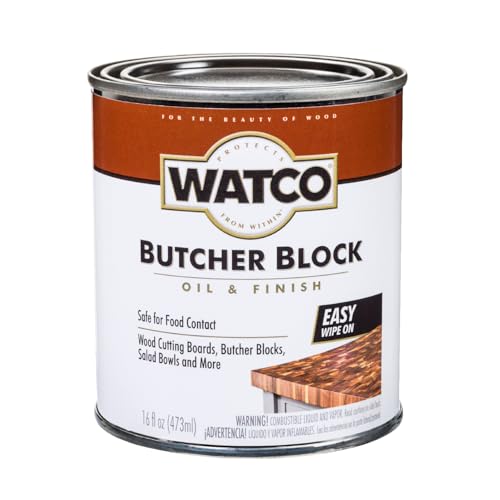
Watco’s Butcher Block Oil & Finish is designed for interior wood surfaces commonly used in kitchen settings, such as butcher blocks, cutting boards, and salad bowls. The product is non-toxic and food-safe, with straightforward application that minimizes visible brush marks. It dries to the touch quickly and provides coverage suitable for most home projects. Cure times are typical for oils designed for hard-use surfaces, with an emphasis on first-use protection and ongoing maintenance for food-contact surfaces.
Key considerations:
– Food-safety focus: Suitable for surfaces in contact with food.
– Ease of application: Low risk of brush marks and consistent finish.
– Durability: Good for daily kitchen use with a practical cure schedule.
Minwax Tung Oil Finish

Minwax Tung Oil Finish is a penetrating solution designed to restore vitality to dry or aged wood. It’s commonly recommended for furniture, cabinets, and woodwork where a natural look with subtle depth is desired. The finish can be refreshed by applying additional coats, which makes it practical for ongoing maintenance of wood surfaces. While it mimics traditional tung oil performance, some users report enhanced durability when compared to mineral oil-based products, especially on woods that benefit from deeper penetration.
Key considerations:
– Rejuvenation: Easy to refresh with a new coat without full stripping.
– Versatility: Suited for a range of indoor wood applications.
– Enhanced grain: Adds depth without masking natural character.
Buying Guide: What to Consider When Choosing an Oil Finish
-
<li Wood type and porosity: Softer woods accept oil finishes differently than dense hardwoods. Highly porous woods may benefit from deeper penetration finishes, while dense species may require multiple coats for depth.
<liIndoor vs outdoor use: Outdoor projects demand finishes with stronger UV and moisture resistance; indoor projects prioritize odor, cure time, and ease of touch-ups.
<liPenetration vs film-forming: Penetrating oils preserve the wood’s feel and grain, while film-forming finishes can give a more uniform look with a layer on the surface.
<liFood-safety considerations: Surfaces in contact with food require finishes that are explicitly food-safe for the intended use and cure time.
<liMaintenance and re-coating: Some finishes allow quick touch-ups or re-coats without full refinishing; others require sanding before reapplication.
<liCure time and odor: Fast-drying options are convenient for projects with tight schedules, but odor andVentilation considerations matter for indoor spaces.
<liEnvironmental and safety concerns: Solvent-free or low-VOC options reduce fumes and improve safety for home workshops and living areas.
<liAesthetics and color: Oils can darken or enhance the grain subtly; choose a finish that preserves or complements the wood’s natural tone.
In assessing options, compare how well each finish meets project goals—whether you prioritize speed, safety, or the most natural wood appearance. For kitchens and cutting boards, prioritize food-safe finishes and reliable durability. For heirloom furniture, consider long-term durability and the ability to refresh the surface without heavy stripping. For outdoor furniture, select products with proven UV and moisture resistance and consider a maintenance plan that fits your climate. The right oil finish balances protection, ease of use, and the wood’s natural beauty for years of satisfaction.
Add a Comment