Artists working with ink need paper that delivers crisp lines, minimal feathering, and reliable ink holdout. The following selections prioritize Bristol surface textures, smooth papers, and bleed-resistant finishes ideal for pen, ink, markers, and graphite alike. Each option balances affordability with performance, helping you achieve cleaner scans, sharper detail, and longer-lasting artwork.
| Product | Brand | Type / Surface | Weight | Ideal For |
|---|---|---|---|---|
| Strathmore 300 Series Bristol Paper Pad | Strathmore | Smooth Bristol | 100 lb / 270 gsm | Pen, ink, markers, fine detail |
| Canson XL Bristol Paper | Canson | Smooth Bristol | 100 lb / 260 gsm | Markers, pen, ink, high contrast work |
| Sax Pen And Ink Drawing Paper | Sax | Sulphite, smooth | 80 lb | Mechanical drawing, ink lines |
| Appozure Bleedproof Paper Pad | Appozure | Bleedproof heavy weight | 240 gsm | Markers, ink, pencils, blending |
| Pixiss White Alcohol Ink Paper | Pixiss | Heavyweight synthetic paper | 300 gsm | Alcohol inks, watercolor and mixed media |
Below are five selections that stand out for ink drawings, covering traditional Bristol, vellum-style traces, and durable synthetic options. Each entry includes a quick look at why it’s well-suited for ink work and what to expect in terms of surface feel and performance.
Strathmore 300 Series Bristol Paper Pad
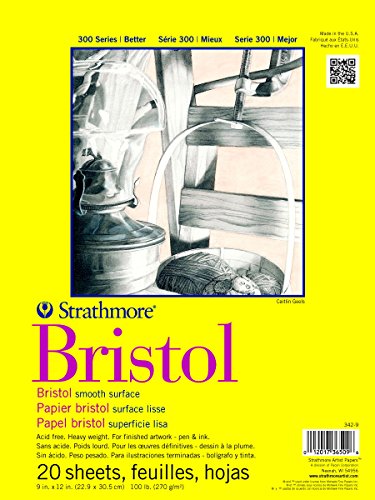
Strathmore’s 300 Series Bristol offers a smooth, acid-free surface ideal for fine pen work and markers. The 100 lb / 270 gsm weight provides sturdiness for final pieces while preventing feathering and ink bleed. The tape-bound pad keeps pages flat, enhancing scanability for digital refinement and reproduction. This option is particularly favored for detailed inking, technical drawings, and illustration work that benefits from a tightly controlled line quality.
Canson XL Series Bristol Paper
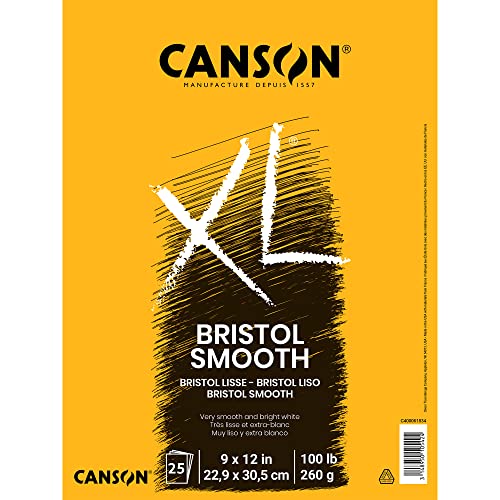
Canson’s XL Series Bristol adds a bright white surface with excellent erasability and a smooth finish that remains friendly to scanners. The 100 lb / 260 gsm weight provides a balance between rigidity and flexibility, preventing buckle during handling. It supports pen, ink, markers, pencils, and colored pencils, making it a versatile choice for ink drawings that require crisp line work and clean shading transitions.
Tracing Paper 8.5×11 Inch, SuFly

SuFly tracing paper is a translucent vellum option designed for overlays, sketches, and preliminary layouts. While not a traditional final drawing surface, its transparency makes it ideal for tracing ink compositions, testing line weights, and fitting ink drawings into larger compositions. The 38 lb/60 gsm weight ensures easy handling and tear resistance for light tracing tasks, with an acid-free construction to preserve your transfer drawings over time.
Sax Pen And Ink Drawing Paper

Sax’s 80 lb sulphite drawing paper provides a bright white surface with a smooth ledger finish that minimizes feathering for ink lines. The 9 x 12 inch size is convenient for study sheets, field sketches, and classroom work. Although lighter than Bristol, it offers clean, reliable lines for beginner to intermediate ink projects where portability and cost are considerations.
Appozure 240GSM Bleedproof Paper Pad

The Appozure bleedproof paper pad features a heavyweight 240 gsm surface designed to prevent bleed-through while supporting markers, ink, pencils, and other media. Its smooth texture helps maintain crisp lines and precise control over ink flow, making it suitable for bold ink drawings as well as fine line work. A practical choice for sketchbooks that travel well, with minimal show-through on the reverse side.
Pixiss White Alcohol Ink Paper

Pixiss offers a 300 gsm heavyweight synthetic paper designed for alcohol inks and water-based media. The extra-smooth surface minimizes feathering and offers strong color pop, while the durable composition stands up to blending and layering without warping. It’s a contemporary option for ink drawings that pair traditional line work with vibrant, ink-based color experiments.
Buying Guide
When selecting paper for ink drawings, consider these factors to balance performance with your style and budget:
- Surface texture: Smooth Bristol surfaces deliver razor-sharp lines that resist feathering, making them ideal for technical ink drawings or pen-and-ink illustrations. Semi-smooth options offer a touch of tooth for tonal blending without loss of line clarity.
- Weight and stiffness: Heavier papers (e.g., 100 lb / 270 gsm and above) stay flat, resist buckling, and hold up to multiple passes. Lighter papers are better for practice and preliminary sketches but may require a backing board.
- Bleed resistance: For markers and alcohol inks, bleedproof or coated surfaces help prevent ink from seeping to the reverse side. Bleed resistance supports cleaner double-sided work and easier scanning.
- Acid-free and archival properties: Acid-free papers maintain color fidelity and prevent yellowing over time, which is important for artwork longevity and resale value.
- Surface compatibility: Ink types vary in their interaction with paper—pen inks, india inks, markers, and graphite all respond differently. Test your preferred combination on a sample sheet if possible.
- Ease of scanning and reproduction: Very bright white surfaces can improve contrast in scans. Fine textures may show up in digital reproductions; choose a surface that aligns with your intended output.
- Size and portability: For field studies or travel sketching, compact pads with bleed-proof surfaces provide reliable performance on the go. Larger sheets best suit studio work and finished pieces.
Other practical considerations include cost per sheet, availability in pads or loose sheets, and whether you prefer a fixed-edge pad (like tape-bound Bristol) or loose sheets for framing. For beginners, a mid-weight Bristol or sulphite drawing paper can balance cost with results, while advanced artists may invest in premium Bristol or synthetic papers for specialized effects with alcohol inks and mixed media.
Add a Comment