Finding the right starter piano for a toddler blends safety, playfulness, and early musical development. The following picks offer sturdy builds, kid-friendly keys, and engaging features designed for young learners. This guide highlights 5 popular mini pianos that balance fun with educational value, helping children explore sound, rhythm, and creativity from an early age.
| Product | Brand | Keys | Notes |
|---|---|---|---|
| Melissa & Doug Learn-to-Play Piano with 25 Keys and Color-Coded Songbook Toy Piano | Melissa & Doug | 25 | Color-coded songbook |
| Best Choice Products Kids Classic Wooden 30-Key Mini Grand Piano | Best Choice Products | 30 | Glossy enamel finish |
| B. toys – Wooden Toy Piano for Toddlers | B. toys | 25 | Color-coded keys |
| Dollox Keyboard Piano for Kids, 37 Keys | Dollox | 37 | Demo music, record & playback |
| BIGFUN Kid Keyboard Piano – 37 Keys | BIGFUN | 37 | Multifunctional with speakers |
Melissa & Doug Learn-to-Play Piano

Brightly-painted upright piano with solid wood construction; 25 keys spanning two octaves; designed for easy play by toddlers. The included illustrated songbook features English lyrics to guide early singing and playing, making it a straightforward entry point for young children. The compact size and sturdy build help small hands explore rhythm, melody, and tempo with minimal adult supervision.
Best Choice 30-Key Mini Grand Piano
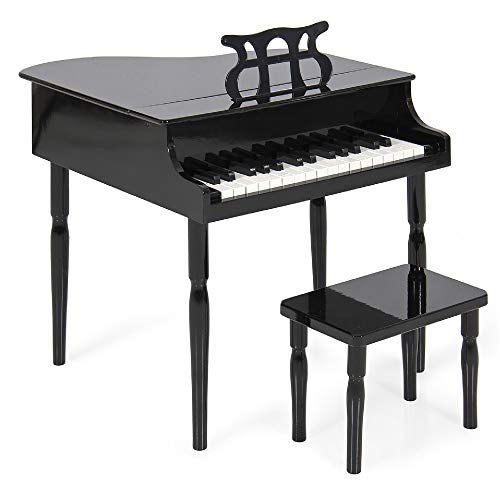
This miniature grand-style piano uses 30 keys and a wooden MDF body with a glossy enamel finish. Key stickers help new players learn finger placement, assisting transitions to larger pianos as skills develop. The instrument’s warm tone can expose kids to a more realistic piano experience, and the lid detaches to expose a broader playing surface for growing learners.
B. toys Wooden Toy Piano

This color-coded, 25-key toy piano offers a user-friendly learning path through notes A-to-G, with a built-in songbook featuring six tunes. The easy-to-press keys and visual cues are designed to promote early music comprehension, color recognition, and fine motor skill development, all wrapped in a toddler-friendly wooden frame.
Dollox 37-Key Kids Keyboard

The Dollox keyboard provides a 37-key setup with 8 instrument tones, 8 accompaniment styles, 8 percussion effects, and 22 demo pieces. It includes demo recording, playback, adjustable volume, and rhythm control. The 2-in-1 design allows flat-floor use or assembly of legs with a stool, supporting different playing positions as children grow confident with motor control and musical ideas.
BIGFUN 37-Key Kid Keyboard

The BIGFUN keyboard offers 37 keys with multiple functions, including built-in speakers and multiple play modes. It is designed to engage children through interactive play, enabling exploration of tones, rhythms, and simple music creation. The product emphasizes safety certifications and a user-friendly control layout for preschoolers and early elementary learners.
Buying Guide: How to Choose The Right Toddler Piano
- Age suitability and safety: Look for non-toxic finishes, rounded edges, and sturdy stands. For very young children, a compact, low-profile design reduces tipping risk and supports easy reach.
- Key count and action: Toddlers benefit from 25–37 keys to explore octaves without overwhelming them. Keys should be lightweight and easy to press to build confidence and avoid frustration.
- Educational features: Color-coded keys, songbooks, and demo tunes help with early literacy and rhythm recognition. Tools that support finger placement reinforce motor skills and proper technique.
- Sound quality and volume control: Clear, pleasant tones sustain a child’s interest. Adjustable volume helps tailor play to different environments, from living room to playroom.
- Durability and materials: Wood and high-quality plastics provide longevity for rough toddler use. A stable base and secure lid can prevent tipping during enthusiastic play.
- Growth potential: Consider instruments with expandable features, like additional keys, built-in rhythms, or optional stands. This supports continued use as a child’s skills progress.
- Portability and storage: Lightweight designs and foldable accessories aid transport and neat storage in small spaces commonly found in homes and classrooms.
- Budget and value: While premium models offer richer sound, many affordable options deliver essential learning benefits. Balance price with features important to your child’s development.
Key Considerations In Practice
Parents should balance immediate engagement with long-term learning. A piano that combines interactive songs, color-coded notes, and sturdy construction can sustain interest beyond toddler years. When evaluating options, assess how the instrument grows with the child—whether it offers more keys, varied sounds, or play modes that align with emerging musical curiosity. Safety, durability, and ease of use should be prioritized to ensure a positive first musical experience.
Comparative Perspectives
Wooden pianos with larger key ranges deliver a more authentic feel and longer-term usability, but may be heavier and less portable. Plastic-bodied models with bright colors often attract younger toddlers and are easier to clean, though they may wear faster with heavy use. Instruments with a built-in songbook and color cues support early literacy, while those with recording or playback features enable children to experiment with layering sounds and self-assessment. Consider your space, your child’s temperament, and whether you want a base instrument or a feature-rich model that can grow with musical interest.
Choosing the best piano for a toddler depends on balancing engagement with durability and potential for growth. The selected options above offer a spectrum of styles and features to support early music exploration, regardless of whether your child is just testing the waters or ready to dive into more complex melodies.
Add a Comment