Starting out with sewing becomes simpler when you choose a beginner-friendly machine that offers helpful features without overwhelming you. This guide highlights five reliable options ideal for new sewers, from automatic needle threading to easy stitch selection. Below is a quick compare table of the selected models to help you decide at a glance.
| Product | Brand | Stitches | Key Feature |
|---|---|---|---|
| XM2701 | Brother | 27 | Automatic needle threader |
| XR3774 | Brother | 37 | Wide table for quilting |
| 4452 | SINGER | 110 | Heavy-duty motor |
| SEDNEE (16 built-in) | SEDNEE | 16 | Portable and beginner-friendly |
| XM3700 | Brother | 37 | Auto-size buttonhole |
Brother XM2701 Sewing Machine: Lightweight and Full-Featured

The XM2701 is a compact, lightweight model designed for beginners who want a capable machine without complexity. It offers 27 built-in stitches, including decorative and stretch options, plus an auto-size buttonhole for quick repairs and projects. An automatic needle threader saves time, and the jam-resistant drop-in top bobbin keeps thread management straightforward. Included accessories comprise six feet, a three-piece needle set, a twin needle, bobbins, and an instructional DVD. This blend of features makes it a practical first machine for hobbyists and students alike.
Brother XR3774 Sewing and Quilting Machine: Expanded Stitches

The XR3774 expands the beginner toolkit with 37 built-in stitches, including blind hem and quilting stitches, plus a 1-step buttonhole. It features an automatic needle threader and a drop-in top bobbin for ease of use. The machine arrives with a wide table and eight sewing feet to support a range of projects, from basic garments to quilting. A dedicated cover and instructional DVD accompany the machine, helping new users grow their skills while keeping the workstation organized.
SINGER 4452 Heavy Duty Sewing Machine: Strong and Versatile

The SINGER 4452 is built for durability with a full metal frame and a powerful motor that handles thicker fabrics and multiple layers. It offers 110 stitch applications, including basic, stretch, and decorative options, plus a one-step buttonhole. A top drop-in bobbin with a clear view cover helps monitor thread supply easily. This model suits beginners planning to tackle tougher materials while learning reliable seams and finishes, making it a solid long-term option as skills progress.
SEDNEE Beginners Sewing Machine: Compact, 16 Stitches
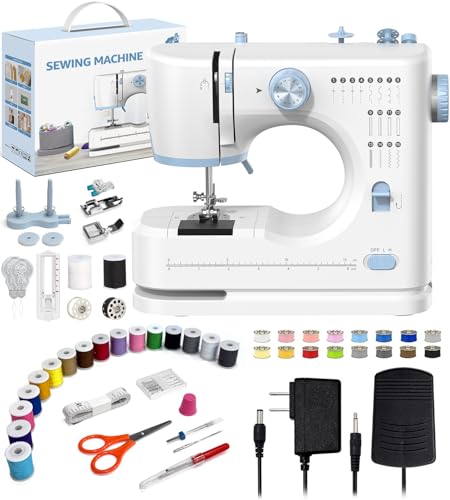
The SEDNEE model focuses on simplicity for beginners, offering 16 built-in stitches with clear threading guides and intuitive controls. It includes a two-speed operation and supports a foot pedal or button control, giving users flexibility in how they sew. The kit comes with a compact design suited for small spaces, along with storage for accessories. It emphasizes ease of use and a straightforward learning curve, ideal for first-time crafters working on simple projects.
Brother XM3700 Sewing Machine: Modern, User-Friendly

The XM3700 brings 37 built-in stitches and a one-step auto-size buttonhole for versatile project options. It includes five sewing feet and a practical accessory pouch, along with a user-friendly threading system and a jam-resistant bobbin. The machine’s compact build and included manual support ease the transition from simple repairs to more complex constructions, making it suitable for students and hobbyists expanding their repertoire.
Buying Guide
When choosing a beginner sewing machine, consider stitch variety, ease of use, and maintenance features. A model with automatic needle threading and a jam-resistant bobbin reduces setup time and frustration for new users. Look for a machine with a clear stitch chart, intuitive controls, and sufficient pedal control to dial in comfortable speeds. A generous accessory kit—feet for zipper, blind hem, buttonholes, and general purpose stitching—enables a wider range of projects without replacement purchases.
Stitch variety matters depending on your goals. If you want simple hems and basic repairs, 16–27 stitches may suffice. For future quilting or decorative projects, a machine with 30+ stitches and a dedicated buttonhole option is advantageous. A sturdy build, preferably with metal or reinforced components, supports learning with thicker fabrics. For those with limited space, compact models that still provide a full feature set offer a practical balance.
Portability versus workspace is another factor. Lightweight machines travel well for classes or workshops, while broader worktables benefit quilting and larger fabrics. Budget-conscious beginners may start with a model that includes a few essential stitches and shrink into more advanced machines later, whereas those certain about long-term sewing may prioritize speed, durability, and a wider range of accessories from the outset.
Additionally, consider warranty and customer support. Brands with robust service networks and clear manuals reduce downtime when issues arise. If you plan to sew thick fabrics like denim or multiple layers, a sturdy motor and higher piercing power will be helpful, even for beginners learning control over fabric feed and stitch consistency.
Add a Comment