If you’re searching for 1/4 inch graph paper, you want pads and notebooks that deliver crisp lines, durable pages, and easy tear-out when needed. This guide highlights five reliable options, each suited to different buyers—from students solving complex equations to professionals sketching on-site. The table below compares the top picks to help you choose quickly.
| Product | Type | Grid | Binding/Format | |
|---|---|---|---|---|
| Five Star Loose Leaf Paper + Study App | Graph ruled filler paper | 1/4″ grid | Loose-leaf, 3-ring compatible | 80 |
| 2 Pack Graph Paper Pad (Zaviko) | Graph paper pad | 1/4″ grid (4×4) | Glue bound, perforated top | 60 (30 each) |
| Oxford Filler Paper | Graph-rule loose-leaf | 4×4 grid | 3-hole punched | 400 (distributed across two sides) |
| MSKKSM Graph Paper Pads | Graph paper pad | 1/4″ grid | Glue binding, double-sided printing | 60 |
| Dunwell 1-Subject Graph Paper Notebook | Graph paper notebook | 1/4″ grid | Spiral notebook | 160 pages (80 sheets) |
Five Star Loose Leaf Paper Plus Study App

Type: Graph ruled filler paper; Size: 8.5″ x 11″; Sheets: 80; Features: Five Star reinforced filler paper is double the strength of the competition and durable enough to last all year. This option fits standard 3-ring binders for easy organization. Best for students who need durable pages and occasional ink bleed resistance, and for general note-taking in math and engineering courses. Caution: Not all planners or apps integrate with this paper, so rely on the paper’s built-in durability for long-term notes.
2 Pack Graph Paper Pad 8.5 x 11 (Zaviko)

Type: Graph paper pad; Grid: 4×4; Size: 8.5″ x 11″; Pages: 30 sheets per pad; Binding: Top glue with easy tear perforations. Best for students and professionals who need clean tear-out sheets and a sturdy writing surface on the go. This pad is ideal for note-taking, geometry, and engineering sketches. Caution: Perforated sheets tear out cleanly, but the glue binding can limit use in very busy binders.
Oxford Filler Paper with 4×4 Graph Rule
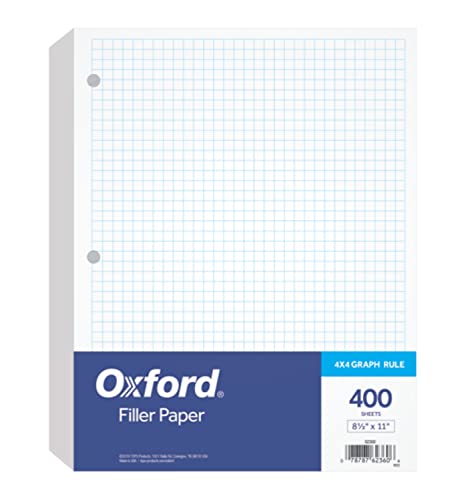
Type: Filler paper; Grid: 4×4 graph; Size: 8.5″ x 11″; Sheets: 400 per pack; Features: 3-hole punched to fit standard 3-ring binders. Best for classrooms and home use where high-volume graphing pages are needed. Caution: Loose-leaf format requires binder storage to maintain organization.
MSKKSM Graph Paper Pads

Type: Graph paper pad; Grid: 4×4; Size: 8.5″ x 11″; Pages: 60 (30 sheets per pad); Binding: Glue bound with top perforations for easy removal and clean edges. Best for engineers and students who prefer sturdy pads with crisp-grid visibility and consistent line work. Caution: Backing can be relatively stiff; might require a clipboard for stable writing on the go.
Dunwell 1-Subject Graph Paper Notebook

Type: Graph paper notebook; Grid: 1/4″ squares; Size: 8.5″ x 11″; Pages: 80 double-sided sheets (160 pages); Binding: Spiral binding with moisture-resistant cover. Best for on-the-go note-taking, assignments, and sketches that benefit from a sturdy, disposable workbook. Caution: Spiral binding can snag at times and may limit flat-page presentation for very large sheets.
Pacon Filler Paper 1/4″ Grid

Type: Filler paper; Grid: 1/4″ grid; Size: 8″ x 10-1/2″; Sheets: 80; Binding: 3-hole punched for standard binders. Best for classroom use and general note-taking in math and drafting tasks. Caution: Slightly smaller sheet size than typical 8.5″ x 11″ formats may require binder adjustments.
Buying Guide: Key Purchase Considerations
- Grid size and visibility: A true 1/4″ grid helps with precision in math, drafting, and geometry. Look for clearly defined lines that don’t bleed through the page.
- Paper weight and bleed resistance: Thicker paper (higher GSM) reduces ink bleed when using markers or gel pens. Consider double-sided use if you need more writing space.
- Format and binding: Loose-leaf provides organization in binders, while pads and notebooks offer portable options. Choose top-tear perforations for quick removal or spiral binding for flat writing surfaces.
- Durability: Reinforced or sturdy covers protect notes in backpacks and on job sites. For long-term storage, consider paper that resists moisture and tearing.
- Compatibility: If you rely on binders, ensure 3-hole punched sheets align with your binder rings. For on-site drafting, a pad with a rigid backer can improve writing stability.
Frequently Asked Questions
- What is a 1/4 inch graph paper best used for?
– It is ideal for mathematical problems, engineering drawings, architectural sketches, and precise grid-based note-taking. - Should I buy a pad or loose-leaf sheets?
– Choose pads for portability and on-the-go writing; loose-leaf is better for organized binder storage and ongoing coursework. - Are 1/4″ grids suitable for mechanical drawings?
– Yes, the 1/4″ grid provides fine precision for initial sketches and diagrams, especially when paired with a ruler. - Is bleed-through a concern with graph paper?
– It can be, especially with thin paper. Look for higher GSM paper or double-sided printing to minimize bleed-through. - Do these products fit standard binders?
– Most 4×4 graph-rule papers are 8.5″ x 11″ and 3-hole punched, designed to fit standard 3-ring binders; some pads use glue binding instead. - Which option is best for students who need lots of sheets?
– Oxford filler paper with 400 sheets per pack is a strong choice for classrooms and long-term note-taking.
Add a Comment