Find the best closed cell foam padding for insulation, sealing, and padding projects. This guide highlights five top options, explaining who they suit best and why they stand out. Ideal buyers include DIY enthusiasts, car enthusiasts seeking noise reduction, and homeowners needing soundproofing or cushion materials. Below is a quick comparison table of the featured products to help you decide at a glance.
- Product: Artilife Closed Cell Foam Roll (1/2″ x 13″ x 60″)
- Product: AMGSH 1/2″ Thick X 17″ Wide X 60″ Long Closed-Cell Foam Neoprene Padding
- Product: GoTo Foam 1″ x 24″ x 72″ Black Upholstery Foam Sheet
- Product: 8 Pcs Black Adhesive Foam Pads Closed Cell Sheets (4″ x 4″, 1/2″ thick)
- Product: XCEL Marine Foam Roll with Self Adhesive (72″ x 17″ x 1/4″)
Artilife Closed Cell Foam Roll 1/2″ Thick

Best for small DIY insulation and padding projects. This Artilife roll can be cut into foam sheets or pads for sound deadening in vehicles, studio gear, or home spaces. The 1/2″ thickness delivers a balance between cushioning and compact packing. It’s suitable for sealing and noise reduction in daily applications such as auto interiors or kitchen furnishings.
Who it’s best for: DIYers needing a versatile, easy-to-cut foam that doubles as insulation and padding. Why chosen: It combines easy cutting, reliable closed-cell structure, and practical size for numerous projects. Limitation: Thickness may be less ideal for heavy-duty cushioning where very thick padding is required.
AMGSH 1/2″ Neoprene Foam Sheet Roll

Best for environments requiring oil resistance and durable sealing. This neoprene foam sheet is flexible, easy to cut, and resistant to oils, temperatures, and wear. It performs well for gaskets, automotive seals, and DIY projects where a tough, non-adhesive padding is needed. It remains practical in cold to moderately hot conditions and resists deformation.
Who it’s best for: Builders tackling engine, diesel, or workshop projects where oil exposure is likely. Why chosen: Its oil resistance and robust lifespan make it a safer pick for tougher, ongoing use. Limitation: It does not come with adhesive, so separate attachment methods may be required.
GoTo Foam 1″ Upholstery Foam Sheet
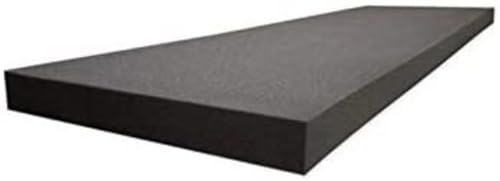
Best for furniture and cosplay projects requiring a firmer cushion. With a density of 1.8, this foam offers solid support without being overly stiff. It’s well-suited for seat cushions, bench padding, and professional-looking upholstery results. It also holds up well against stains and impacts, helping maintain finish over time.
Who it’s best for: Upholstery hobbyists and cosplayers who want a reliable, easy-to-cut foam that delivers a clean, professional look. Why chosen: The balance of density, ease of cutting, and durability makes it a versatile for both home and craft use. Limitation: Open-cell properties can be less ideal for true soundproofing compared to closed-cell foams in some applications.
Salimhib 8 Pcs Adhesive Foam Pads (4″ x 4″, 1/2″ thick)

Best for quick, adhesive-backed padding and vibration dampening. This set provides eight 4×4 inch pads with self-adhesive backing. They’re suitable for furniture, electrical cabinets, cars, speakers, and hobby projects. The closed-cell neoprene foam offers temperature resilience and a strong seal while reducing noise and impact.
Who it’s best for: Those needing an easy-install solution without extra glue or tools. Why chosen: The combination of adhesive backing, decent size, and broad compatibility makes it a practical add-on for many quick fixes. Limitation: Adhesive performance can vary with heavy-duty use or extreme conditions; always test a small area first.
XCEL Marine Foam Roll 72″ x 17″ x 1/4″

Best for marine, automotive, and general padding that requires buoyancy. This closed-cell foam roll is waterproof, non-absorbent, and buoyant, making it ideal for boats, cabins, or as a protective liner in vehicles. It’s easy to cut to fit curved or irregular shapes and provides a reliable cushion with good insulation properties.
Who it’s best for: Boat owners and craftspeople needing a durable, water-resistant padding. Why chosen: Its marine-grade properties and self-contained sizing help with precise, dependable fits. Limitation: Limited color options and may be bulky for very small projects.
Buying Guide: Closed Cell Foam Padding Decisions
- What is the best thickness for my project? Thicker foams (such as 1/2″) provide more cushioning and noise dampening, while thinner foams (1/8″–1/4″) work for seals, gaskets, and lightweight padding. Consider the application’s space and desired feel.
- Should I choose closed-cell or open-cell foam? Closed-cell foams resist water, oils, and moisture better and provide stronger insulation. Open-cell foams are softer and more compressible but absorb moisture and sound more readily.
- Is oil resistance important? For automotive, workshop, or engine environments, neoprene-based or specially treated closed-cell foams offer superior oil and chemical resistance. Check for temperature rating when exposure is a concern.
- Do I need adhesive backing? Adhesive-backed pads are convenient for quick installs. If using non-adhesive sheets, plan for a bonding method or mechanical attachment.
- Is buoyancy a factor? Marine and boat applications benefit from buoyant, water-resistant foams that resist immersion and provide padding without absorbing water.
- What about cutting and shaping? Choose materials that can be easily cut with a utility knife or scissors. Some foams also cut well with hot blades for cleaner edges; test first on a scrap piece.
Frequently Asked Questions
- What is closed-cell foam padding? It is foam with cells that are not interconnected, providing water resistance, higher strength, and better insulation than open-cell foams.
- Can I use these foams for soundproofing a room? Yes, closed-cell foams offer sound deadening, though for room-wide soundproofing you may want a layered approach with other materials.
- Are these materials safe for food surfaces? Most closed-cell foams are not food-safe unless specifically labeled. Avoid direct contact with food-contact surfaces unless rated for such use.
- Do these foams withstand high temperatures? Temperature ratings vary by material. Neoprene foams tolerate broader ranges; always verify temperature limits for your project.
- Will adhesives damage my surfaces? Some adhesives may leave residue or damage finishes. Test on a small area before full application.
- Can I recycle these foams? Many closed-cell foams are not widely recycled in curbside programs. Check local recycling options or reuse opportunities.
| Product | Best For | Notes |
|---|---|---|
| Artilife 1/2″ Foam Roll | DIY insulation and padding | Easy to cut; balanced thickness |
| AMGSH Neoprene Foam | Oil exposure and sealing | Non-adhesive; cut to shape |
| GoTo Upholstery Foam | Furniture cushions | 1.8 density; durable and easy to shape |
| Salimhib Adhesive Pads | Quick installs and vibration damping | Adhesive backing; versatile |
| XCEL Marine Foam Roll | Marine and automotive lining | Waterproof; buoyant; customizable |
Add a Comment