COE 90 dichroic glass is designed for compatibility with microwave kilns and traditional fusing methods, enabling vibrant, light-shifting designs. This guide highlights five suitable options for jewelry makers, mosaic artists, and DIY crafters. Each product is chosen for distinct strengths such as color variety, texture, and ease of use in fused projects. Read on to compare materials, understand who benefits most, and find practical guidance for selecting the right COE 90 glass for your projects.
| Product | Size / Type | Best For |
|---|---|---|
| Buenoarte COE90 Dichroic Glass Scrap | 3 Bags, 28g each (approx. 84g total) | Small, detailed jewelry components and texture-rich accents |
| Rainbow Art Glass CBS Dichroic Assorted | 1/2 lb bag, CBS dichroic on clear glass | Textured, varied pieces for mosaic and statement pieces |
| BTMIEY COE90 Dichroic Glass Scrap | 3 bags, ~84g total | Versatile, ready-for-cutting accents and base layers |
| Devardi Glass COE 90 Mix | 2 oz mix, random selection | Handmade, unique pieces with mixed textures |
| Maasechs COE90 Dichroic Glass Scrap | 4 bags, 28g each (112g total) | Mosaic patterns and jewelry with iridescent depth |
Buenoarte COE90 Dichroic Glass Scraps

Contains three bags of assorted dichroic glass from COE 90, with thin pieces around 3 mm thick. Best for crafters who want a quick start on texture-rich jewelry or small mosaic accents. The random colors and shapes allow quick experimentation and unique results. A potential limitation is the mix of shapes, which may require pre-planning for precise designs.
Rainbow Art Glass CBS Dichroic Assorted on Clear Glass

This 1/2 lb bag features Wissmach CBS texture dichroic over clear glass, COE 90. It suits experienced designers who want varied textures in one package and who can manage potential variation between batches. Best for creating textural pendants or layered pieces. A caveat is that each bag varies, so results may differ from the example image.
BTMIEY COE90 Dichroic Glass Scrap
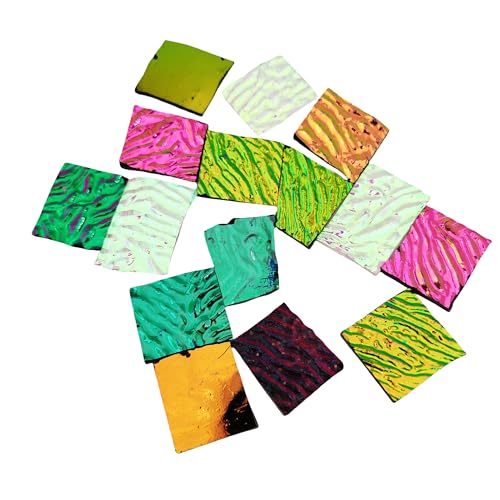
Microwave-ready COE 90 glass with assorted colors and textures, cuttable to fit as base layers or shimmering accents. The kit is well-suited for jewelry, small bowls, and decorative pieces. Choose this if you want a compact, versatile set with reliable fusion potential. Caution: thickness may vary slightly between pieces due to manufacturing variances.
Devardi Glass COE 90 Dichroic Mix

Handmade COE 90 glass from India with a random mix of dichroic and colored sheet pieces. Best for designers seeking a handmade, varied appearance and discarding strict uniformity. Not all pieces will be identical, so plan designs around potential variation. Best for mixed-media projects where unique, one-of-a-kind pieces add character.
Maasechs COE90 Dichroic Glass Scrap

The Maasechs set includes four bags totaling about 112 g of COE 90 glass with random shapes. It offers a strong option for mosaic patterns, pendants, and decorative plates. Best for those who want a larger quantity with varied shapes for broader design possibilities. A limitation is that results depend on the random assortment, so color coordination may require extra planning.
Buying Guide: Key Considerations For COE 90 Dichroic Glass
What exactly is COE 90 dichroic glass? It is glass formulated for 90 COE (Coefficient of Expansion) and coated with dichroic layers to create color-shifting effects when viewed from different angles and lighting. For best results, pair COE 90 glass with compatible kilns and compatible glazes. Consider these questions when choosing a set:
- What project are you planning? Jewelry, mini mosaics, or decorative home accents all benefit from different piece sizes and textures.
- Do you prefer uniform sheets or random textures? Random assortments offer unique look but may require more cutting and planning.
- How important is color variety? Some packs emphasize iridescent shifts, others focus on clear bases with texture.
- What is your preferred cutting approach? Thinner pieces (around 3 mm) fuse more predictably in microwave kilns, while larger chunks support mosaic designs.
- Is mix variability acceptable? Handmade or mixed-brand sets can introduce slight thickness or shape variation, affecting fusion behavior.
Practical Tips For Working With COE 90 Glass
- Always plan your design with the kiln’s capacity and firing schedule in mind to minimize bubbles and distortions.
- Test small samples before committing to a large piece to gauge color shift and fusion behavior.
- Label batches by COE and finish type to prevent cross-use with incompatible materials.
FAQ
- What does COE 90 mean for glass projects?
COE 90 indicates the glass expands and contracts at a similar rate during heating and cooling, reducing stress and cracking when fused in compatible kilns.
- Is dichroic glass suitable for jewelry making?
Yes. Dichroic coatings provide luminous color shifts that create eye-catching pendants, earrings, and accents when fused or laminated.
- Can I mix COE 90 with other COEs?
Mixing COE 90 with non-COE 90 glass can lead to breakage. It’s best to fuse COE 90 glass with other COE 90 pieces.
- Do all packs have the same color variety?
No. Some packs vary by batch, offering different textures, colors, and shapes. Plan accordingly if color coordination is important.
- What’s the advantage of textured or dichroic coatings?
Texture adds surface interest and depth; dichroic coatings create color shifts that change with light, enhancing visual impact.
Add a Comment