Answer: If you need durable orange paint that withstands high temperatures on engines, headers, pipes, or calipers, these five options deliver strong heat resistance and vivid color. They’re suitable for automotive enthusiasts, builders restoring classic engines, and DIYers who want a durable, corrosion-resistant finish. The selections emphasize high heat tolerance, chemical resistance, and easy application, with each product chosen for its relevance to orange high-heat applications. Below is a quick comparison table and detailed product sections to help you choose the best match for your project.
| Product | Best For | Key Heat Note |
|---|---|---|
| VHT Flameproof Coating, Flat, Orange | Exhaust manifolds and headers | Up to 2000°F |
| Rust-Oleum Automotive Engine Enamel Spray Paint, Gloss Orange Red | Automotive parts with intermittent heat | Up to 600°F |
| Dupli-Color Engine Paint with CERAMIC, Gloss, Chevy Orange | Engine blocks and covers | High heat dissipation; durable gloss |
| VHT Engine Enamel, Gloss, Chevy Orange | Protective engine coatings | Excellent heat and chemical resistance |
| Seymour EN-48 Hi-Tech Engine Spray Paint, Chevy Orange | OEM color restoration | Heat resistant up to 300°F |
VHT Flameproof Coating, Flat, Orange

This flat orange coating is designed for surfaces that experience extreme heat, such as headers, manifolds, and exhaust systems. It uses ceramic resins that resist heat up to 2000°F, helping to minimize discoloration and cracking under repeated heating and cooling. Best for high-heat exhaust components is its durable, heat-shielding formula. It is less suitable for non-heat-exposed parts or finishes requiring a bright gloss. Consider this option if your project demands maximum heat endurance and a rugged, non-gloss finish.
Who this is best for: DIYers and professional restorers working on exhaust systems or turbocharged setups where extreme heat is expected. Why selected: unmatched heat tolerance in an orange, flat finish that maintains color under intense temperature cycles. Limitation: flat finishes show surface imperfections more readily than gloss coatings, which may require precise surface prep.
Rust-Oleum Automotive Engine Enamel Spray Paint, Gloss Orange Red

This gloss orange-red enamel is formulated for automotive parts exposed to intermittent heat. It provides a protective rust-preventive layer and resists oil, gas, and environmental elements. Finish dries to the touch quickly and can cover large areas, making it practical for valve covers, brackets, and engine blocks. Best for: projects where a bright orange-red, glossy look is desired and heat exposure is moderate. Limitation: rated for up to 600°F, so it’s not ideal for extreme exhaust temperatures.
Why chosen: good balance of color vibrancy, durability, and oil/gas resistance for typical engine surfaces. Choose this if you want a bright orange finish with solid protection against common automotive fluids. Caution: allow full cure as directed to achieve maximum chemical resistance and adhesion.
Dupli-Color Engine Paint with CERAMIC, Gloss, Chevy Orange

This ceramic-enhanced engine paint delivers high heat dissipation and gloss retention. It resists blistering, flaking, cracking, and peeling, while remaining resistant to oil and other automotive fluids. Best for: engine blocks, valve covers, and other components where a bright Chevy orange gloss is desired and heat exposure is substantial but not extreme. Limitation: gloss may require multiple coats for even color and a smooth finish in some applications.
Why chosen: strong durability with ceramic benefits, making it suitable for long-term automotive accents that endure routine heat and fluids. Choose this if you need a vivid Chevy orange with reliable finish retention and chemical resistance. Caution: follow curing instructions to prevent premature gloss loss or color inconsistency.
VHT Engine Enamel, Gloss, Chevy Orange
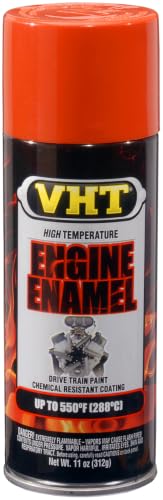
This enamel provides excellent durability and strong heat and chemical resistance. It is formulated to withstand corrosion, rust, salt spray, and additives, making it suitable for exposed engine compartments. Best for: valve covers, intake manifolds, and other chrome or metal surfaces needing a protective orange gloss. Limitation: not designed for extremely high continuous temperatures; best used where heat exposure stays within a moderate range.
Why chosen: proven durability and chemical resistance in a Chevy orange shade, ideal for restoring or finishing high-heat engine components. Choose this if you want a reliable, bright orange finish with robust protection against harsh automotive environments. Caution: prep and masking are critical to prevent uneven coverage on complex shapes.
VHT Caliper Paint, Gloss, Orange
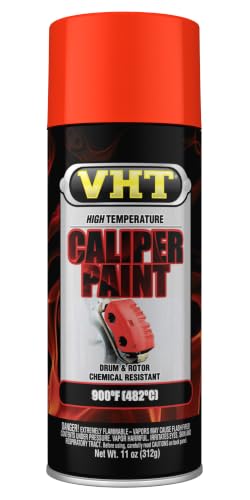
This gloss caliper paint is designed for fast-drying finishes with quick handling times. It dries to touch in about 30 minutes and is ready to handle in roughly an hour. It’s resistant to chipping, chemicals, and brake dust, making it a practical choice for brake components and nearby metal surfaces that require color consistency under heat and brake exposure. Best for: calipers and adjacent parts where a durable orange finish is desired. Limitation: not a universal engine coating; verify compatibility with nearby heat sources and surfaces.
Why chosen: provides a bright orange look with targeted durability for braking components, a common high-heat area. Choose this if you want a color-matched, high-visibility finish on calipers and nearby hardware. Caution: apply in well-ventilated areas and follow heat cure recommendations for best adhesion.
Buying Guide
What level of heat resistance do you need?
Choose higher heat ratings for components like headers and exhausts (e.g., up to 2000°F). For engine blocks and components with intermittent heat exposure, 600°F or similar ratings may suffice.
Gloss vs. flat finishes
Gloss finishes offer brighter color and easier washability but may highlight surface imperfections. Flat finishes better hide imperfections and provide a rugged look, though they can be harder to clean.
Chemical and oil resistance
Engine environments involve oil, coolant, and solvents. Look for coatings that resist these fluids to maintain color and adhesion over time.
Application and curing
Many engine coatings require proper surface prep and curing times. Some dry quickly but need full curing to maximize durability. Plan for surface prep, masking, drying, and curing in your project timeline.
Compatibility with metal surfaces
Most high-heat orange paints are designed for metal surfaces like steel, aluminum, and cast iron. Ensure the product is suitable for the specific substrate to avoid adhesion issues.
Durability versus appearance
Consider whether you prioritize color vibrancy, gloss level, or long-term durability. Ceramic-enhanced or ceramic-lean coatings tend to offer better heat management and chemical resistance, at the potential cost of a higher price or more meticulous application.
Quick tips for best results
- Clean and degrease surfaces before painting to maximize adhesion.
- Mask adjacent areas to prevent overspray on non-target parts.
- Follow label instructions for curing times to achieve full hardness.
- Test spray on a small area if possible to verify color and finish.
FAQ
- What is the best orange paint for extreme heat?
– VHT Flameproof Coating offers the highest heat resistance among the listed options, suitable for exhaust components up to 2000°F. - Will orange engine enamel protect against oil and chemicals?
– Yes, several formulas state resistance to oil and other automotive fluids; check the specific product for its chemical resistance claims. - Can I use gloss orange paint on an exhaust manifold?
– Gloss finishes can be used, but for heat exposure beyond 600°F, a high-heat or ceramic-coated option is typically better to prevent discoloration. - Is ceramic-enhanced paint worth the extra cost?
– Ceramic formulations often provide improved heat dissipation and gloss retention, which can be beneficial on engines with frequent heat cycling. - How long should I cure high-heat paint before starting the engine?
– Cure times vary; follow the product label. Some coatings require air-drying followed by a heat cure at a specified temperature for optimal adhesion. - Are orange caliper paints compatible with brake dust exposure?
– Many caliper paints are designed to resist brake dust and chemicals; verify the product’s stated resistance for calipers in braking systems.
Add a Comment