The best high strength wood glue options deliver durable bonds for indoor and outdoor projects. This guide highlights five top picks suited for DIY enthusiasts, hobbyists, and professionals who need strong, reliable adhesion with straightforward use. Each listing explains who it’s best for, why it was selected, and any important limitations to consider. Use the buying guide to compare application, curing times, water resistance, and compatibility across hardwoods, softwoods, and composites.
| Product | Brand | Best For |
|---|---|---|
| Gorilla Ultimate Waterproof Wood Glue (8 oz) | GORILLA | Outdoor and indoor projects requiring water resistance |
| Titebond III Ultimate Wood Glue (16 oz) | Titebond | Strong bonds with easy sanding and cleanup |
| Gorilla Ultimate Waterproof Wood Glue (18 oz) | GORILLA | Large-scale projects needing extended working time |
| Boncart 8.45 fl.oz Wood Glue | Boncart | Clear-drying bonds and versatile indoor/outdoor use |
| Gorilla Wood Glue (18 oz) | GORILLA | Fast clamp time with water resistance |
Gorilla Ultimate Waterproof Wood Glue, 8 oz

Best for outdoor or indoor wood projects that demand a water-resistant bond. This glue passes ANSI/HPVA Type I and offers an extended working time of about 15 minutes before setting. It dries to a natural tan color, suitable for hardwoods, softwoods, and composites. Choose this for decks, outdoor furniture, or any project exposed to moisture and temperature changes. A limitation is the longer cure time relative to fast-setting options.
Titebond III Ultimate Wood Glue, 16-Ounces

Best for projects needing a stronger bond than the wood itself, with easy sandability and heat resistance. This glue cleans up with water while wet and becomes a strong, durable joint as it cures. It’s ideal for furniture repairs, cabinetry, and decorative woodwork. A potential limitation is the longer cure time in cooler conditions.
Gorilla Ultimate Waterproof Wood Glue, Natural Color, 18 oz
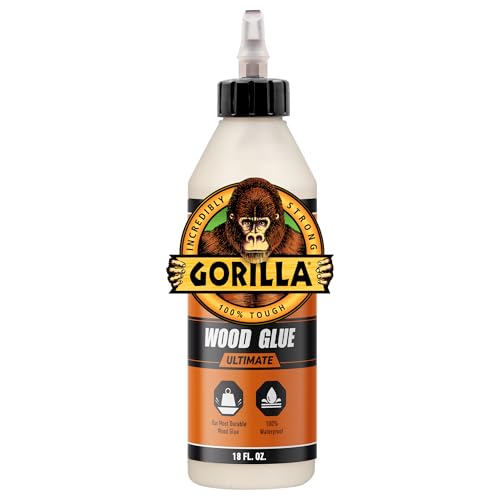
Best for large-scale woodworking where extended open time is beneficial. This 100% waterproof formula bonds hardwoods, softwoods, and composites, with up to 15 minutes of open assembly and full cure in 24 hours. It’s suitable for precision joints in furniture or outdoor structures. The main limitation is that it requires proper clamping and adequate cure conditions to reach maximum strength.
Boncart 8.45 fl.oz Super Strong Wood Glue

Best for clear-drying, high-strength bonds with outdoor versatility. This glue dries clear and maintains the wood’s natural beauty, making it ideal for visible joints. It provides 20–30 minutes of clamping and fully cures within 24 hours. A limitation is that performance can vary in extreme temperatures, so follow recommended storage and curing conditions.
Gorilla Wood Glue, 18 oz Bottle

Best for quick projects that benefit from a relatively fast clamp time. It passes ANSI/HPVA Type II water resistance and yields a natural tan color suitable for general woodworking and repairs. Choose this when you need reliable indoor-outdoor performance with a straightforward application. A caution is to avoid using on porous, dusty, or contaminated surfaces for best results.
Buying Guide
What makes a wood glue high strength?
High strength typically comes from polymer chemistry, moisture resistance, and a long open time. Look for bonds that resist moisture, temperature changes, and shear forces. Waterproof formulations and Type I/II ratings signal strong performance in real-world conditions.
Water resistance and outdoor use
For outdoor projects, select glues rated for water resistance or waterproofing. ANSI/HPVA Type II or Type I ratings indicate durable bonds in wet environments. Consider cure time and clamp requirements to ensure joints set properly outdoors.
Open time, clamp time, and cure time
Open time is how long you can adjust parts before the glue starts to set. Clamp time is how long you should hold parts together. Cure time is when the joint reaches full strength. Longer open times help with precise alignment, while faster clamping accelerates project completion.
Surface compatibility
Most wood glues bond well with hardwoods, softwoods, and wood composites. Porous vs. smooth surfaces affect adhesive penetration and strength. For repairs, consider gap-filling formulations or CA glues if small gaps exist.
Application and cleanup
Water cleanup while wet simplifies handling. Clear-drying formulas are preferable for visible joints. A precision nozzle or brush helps achieve even coverage and neat edges, reducing cleanup after curing.
Choosing the right product
For outdoor furniture, decks, or planters, pick a waterproof, longer-working-glue like Gorilla Ultimate Waterproof variants. For furniture assembly or cabinetry where sanding is frequent, Titebond III’s strong bond and sandability are advantageous. For large-scale projects, consider a higher-volume option with extended open time. If a clear, discreet repair is needed, Boncart’s clear-drying formula can be a better choice.
FAQ
- What is the difference between Type I and Type II wood glue?
Type I is typically water-resistant and used indoors or in mild outdoor conditions; Type II has higher water resistance for more exposure. - Can I use wood glue on furniture joints that will be painted?
Yes, but choose a formula with low creep and consider sanding and finishing steps to ensure a smooth surface. - Do I need to clamp wood glue?
Yes, most wood glues require clamping during cure to achieve maximum strength and alignment. - Is CA glue suitable for large woodworking joints?
CA glues are great for small gaps or quick repairs but are less ideal for large structural joints compared to PVA glues. - How long does it take for glue to fully cure?
Most wood glues reach full strength within 24 hours under proper temperature and humidity conditions.
Add a Comment