Find the right large corrugated cardboard sheets for shipping protection, DIY crafts, or bulk packing. This guide highlights five high-value options, each best for specific needs like ultra-strong protection, roll versatility, or wide-format coverage. Whether you’re a small business packing fragile items or a hobbyist creating art kits, these products help you optimize protection, storage, and handling. Read on to compare dimensions, durability, and best-use scenarios to choose confidently.
| Product | Best For |
|---|---|
| RLAVBL 5 Pack 36×48 Large Corrugated Cardboard Sheets | Heavy-duty shipping and large-format art or documents |
| Hathoro Single-Wall 36×48″ 5-Pk | Versatile layer protection for multi-item packages |
| BOX USA Double Wall 24×48″ (Pack of 5) | Superior cushioning for heavier items |
| SYOGUA Corrugated Cardboard Roll 17×197 in | Custom-sized padding and large craft projects |
| Tottist 17″x236″ Single B Flute Roll | Extra-long roll for bulk wrapping and shaping |
RLAVBL 5 Pack 36×48 Large Corrugated Sheets

Best for: Shippers and hobbyists needing strong, flat sheets for large items. RLAVBL sheets use three-layer E-flute corrugated board, delivering high rigidity and protection for shipping, mailing, or DIY projects. The 36 x 48 inch format covers substantial surface area, reducing the need for multiple sheets.
Why chosen: The three-layer construction offers enhanced crush resistance and item safeguarding, making these sheets suitable for bulk art prints, certificates, or other large flat items. The 2 mm thickness balances durability with weight for easier handling.
Limitations: Large sheets may require careful storage to prevent warping if not kept flat. Ensure adequate support during transit to avoid bending.
Partners Brand Double Wall Sheets 24×48″
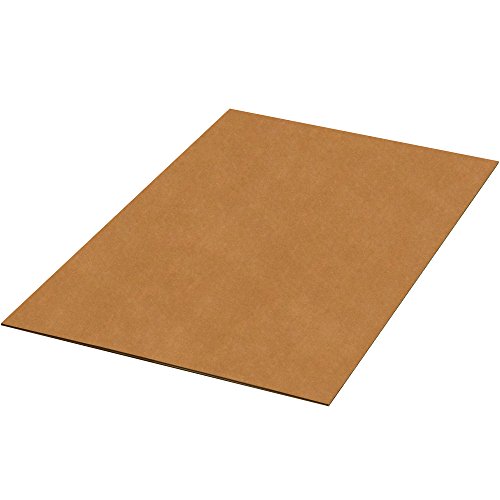
Best for: Packaging heavier or bulkier items that require sturdy cushioning. These 24 x 48 inch double-wall sheets provide thicker protection suitable for warehouses or shipping stations dealing with dense packages.
Why chosen: Double-wall construction increases stiffness and damping, offering reliable protection against impacts. The standard 24×48 footprint aligns well with common pallet and package dimensions, helping to streamline packing workflows.
Limitations: Slightly heavier than single-wall equivalents, which may impact handling time if you pack many items by hand.
SYOGUA Corrugated Cardboard Roll, 17×197 in

Best for: Crafters and packaging teams needing long, continuous sheets for custom sizes. The wide roll format delivers flexible options for trimming to exact lengths and wrapping irregular items.
Why chosen: Thicker and tear-resistant material offers durable protection, and the roll design allows cutting to desired widths and lengths, reducing waste and storage space for offcuts.
Limitations: Requires cut-to-size handling; may be less convenient for quick, single-flat-pack packaging compared to pre-cut sheets.
Tottist 17×236″ Single B Flute Roll

Best for: Users needing an ultra-long solution for wrapping, packing, or custom project planning. The long length accommodates large or multiple shipments without frequent sheet changes.
Why chosen: The single B flute provides a good balance of strength and flexibility, enabling easy shaping around irregular items while maintaining protective performance. The length minimizes the number of joints or seams in large pack scenarios.
Limitations: Handling and storage require space; long rolls may be cumbersome to maneuver in tight packing areas.
Magicheap 25-Pack Corrugated Sheets 8.5×11

Best for: Small businesses or classrooms needing multiple ready-to-use sheets for flat items, photos, documents, or craft projects. The 8.5 x 11 inch size is ideal for flat protection and quick packing tasks.
Why chosen: A bulk pack of uniform sheets supports standardized packing workflows and DIY projects, with a thickness of about 1.8 mm for reliable cushioning without excessive weight.
Limitations: Not suitable for large-format items; better as a supplementary option for small shipments or decorations.
Buying Guide: Key Considerations For Large Corrugated Cardboard Sheets
- Sheet vs roll format: Choose sheets for quick, flat-pack protection or rolls for custom-length packing and large crafts. Rolls increase versatility but require cutting and storage space.
- Flute type and thickness: Double-wall options offer superior cushioning for heavy items, while single-wall is lighter and flexible for general packaging. Thickness around 2 mm provides good rigidity without excessive weight.
- Sheet dimensions: Match sheet size to your typical package footprint. Larger sheets reduce seams but may be heavier to handle.
- Durability and material: Look for multi-layer corrugated board for higher crush resistance, especially for fragile or flat items like photos and artwork.
- Storage & organization: Flat sheets store easily in a vertical rack or large flat bin. Rolls require tube storage or shelf space for unrolling.
- Environment and reuse: 3-layer and double-wall boards tend to be recyclable and reusable for many DIY purposes, which can reduce waste and cost over time.
- Cautions: Ensure sheets are stored flat to avoid bowing. When using large sheets, protecting edges during transit reduces edge crushing.
FAQ
- Q: What size is best for standard shipping boxes? A: Common large formats are 24×48″ and 36×48″, which cover broad surfaces and reduce the need for multiple sheets.
- Q: Are corrugated sheets reusable? A: Yes, many 2-3 layer sheets can be reused if they are not damaged or creased during transit.
- Q: Which is best for fragile items? A: Double-wall or thicker three-layer sheets provide the strongest protection against impacts.
- Q: How should I store rolls to keep them pristine? A: Store rolls horizontally in a dry area, away from heavy weights that could deform the cardboard.
- Q: Can I cut sheets to fit irregular items? A: Yes, most sheets are easy to cut with scissors or a utility knife, and some rolls can be cut to length on-site.
- Q: Are these sheets suitable for DIY crafts? A: Yes, many sheets are praised for easy cutting, scoring, and shaping for crafts and school projects.
Add a Comment