Direct answer: For large white poster boards, the best choices balance size, thickness, and value for classrooms, presentations, and DIY displays. This guide highlights top 5 picks with clear uses, so you can pick the right board for signs, mounting, crafts, or science fairs. Each option includes who it’s best for and practical cautions to consider.
| Product | Size | Ideal For | Notes |
|---|---|---|---|
| Staples Poster Board (20/Carton) | 22″ x 28″ | Classrooms and offices needing bulk signs | Good value per sheet; avoid if you need premium white finish |
| Pacon Super Value Poster Board | 22″ x 28″ | Budget posters, crafts, and student projects | Bright white, uncoated; economical option |
| UCreate Foam Board | 22″ x 28″ | Cutters and lightweight displays | Foam core adds rigidity; not ideal for heavy mounting |
| Staples Poster Board (10/Carton) | 22″ x 28″ | Smaller classrooms or backup projects | Smaller carton but same size; convenient for limited needs |
| Small Trifold Poster Board | 26″ x 17″ | Science fairs and tri-fold presentations | Compact, multi-panel design; easy to transport |
Staples Poster Board, 22×28 Inch, White, 20/Carton

Best for: Bulk classroom signs, school displays, and group projects. The board measures 22″H x 28″W and comes in a carton of 20, making it a practical choice for teachers and activity coordinators who need multiple boards ready for use. The poster board is ideal for mounting and poster creation with a clean white surface.
Why chosen: High-value option with a sizeable carton count. Clear, straightforward surface supports markers, paints, and adhesives commonly used in school settings.
Limitations: The uncoated white surface may show marker bleed on certain inks; consider matte markers or finishing coats for presentation boards.
Pacon Super Value Poster Board, 22″ x 28″
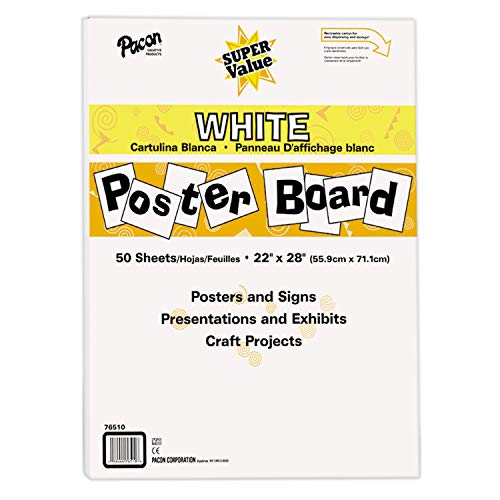
Best for: Budget-conscious classrooms and craft projects needing bright white, versatile poster boards. The 50-sheet count and uncoated surface provide flexibility for paints, markers, and cutouts.
Why chosen: Economical, all-purpose poster board with a bright white finish that enhances legibility in displays and student work.
Caution: While economical, the surface is uncoated; very wet media may cause warping or bleed-through on sensitive inks.
UCreate Foam Board, White, 22″ x 28″

Best for: Lightweight, rigid displays such as classroom science boards or lightweight mounting supports. The 3/16″ foam core provides stiffness without heavy weight.
Why chosen: Combines a smooth white surface with rigid foam for easy cutting and clean presentation boards. Ideal for projects requiring a sturdy yet portable board.
Limitation: Not suitable for heavy-duty mounting or outdoor use where moisture may affect foam integrity.
Small Trifold Poster Board 26″ x 17″ (White)

Best for: Science fairs, classroom demos, and compact presentations with multi-panel layouts. The 26″ x 17″ flat size folds into a tri-panel display for easy setup.
Why chosen: The tri-fold design offers built-in stability and a portable display solution, reducing the need for additional stands or frames.
Caution: The smaller footprint may limit space for very large posters or dense content; plan layout accordingly.
TUXIYA Trifold Poster Board, 4 Pack 24″ x 16″

Best for: Group displays and portable presentations that require multiple tri-fold boards. The four-pack is convenient for multi-station projects or rotating displays.
Why chosen: Durable corrugated construction with a triple-panel stand; easy to fold for storage and transport. The white surface provides a clean canvas for markers, paints, and crafts.
Caution: The folded size reduces display area when fully opened; consider layout planning if space is limited.
Foam Board 24×36 Inch, 3 Pack White Poster Board

Best for: Larger display needs, art studios, or classrooms requiring bigger foam-backed boards. The 24″ x 36″ size supports bold posters and art projects.
Why chosen: Thick 0.23″ foam core provides stability and a sturdy mounting surface. Packs are convenient for multiple large displays.
Limitation: Foam boards may not hold heavy textiles or glass mounting; use appropriate mounting methods to avoid bending or warping.
Buying Guide
What size should you choose?
Poster boards come in various sizes. For standard classroom posters, 22″ x 28″ is common. For science fairs or larger displays, consider 24″ x 36″ or tri-fold formats to maximize presentation space.
Material and finish considerations
Uncoated white boards offer versatile media compatibility (markers, paints, glue). Foam-board options add rigidity but are less durable for heavy mounting. Choose a surface that suits your primary medium and long-term use.
Bulk vs. single-pack needs
Bulk cartons (like 20 or 50 sheets) are cost-effective for teachers and large groups. Smaller packs are better for limited projects or backup boards.
Durability and portability
Foam boards are lightweight and easy to transport, while corrugated trifold boards balance sturdiness with portability. Consider where and how the board will be used and stored.
Best practice for mounting and displaying
For signs and posters, use a flat surface with room to breathe around the edges. For displays, ensure stability with stands or the board’s tri-fold design. Be mindful of moisture and handling to preserve the surface.
What to avoid
Avoid overly wet media on uncoated boards to prevent bleed-through. Avoid boards that are too heavy for your display stands, especially in portable setups.
FAQ
- What size poster board is best for a school project? A standard 22″ x 28″ board is a versatile choice for most classroom projects and posters.
- Are foam boards suitable for outdoor displays? No, foam boards can be damaged by moisture and weather exposure; use them indoors or under cover.
- Is a tri-fold board better than a flat board for science fairs? Tri-fold boards offer built-in stability and convenient multi-panel layouts for presentations.
- Should I buy in bulk or individual boards? Bulk bundles are cost-effective for classrooms or groups; individual packs work well for selective projects.
- Can I use markers on all these boards? Most boards accept markers and paints, but uncoated surfaces may bleed with certain inks; test first if possible.
- Do these boards require special mounting hardware? Generally no; most boards are designed for simple one-step assembly with tape, pins, or glue.
Add a Comment