Answering common needs for quick, non-hardening wood repairs, this guide highlights reliable putties that stay pliable and blend with wood tones. These options are best for DIYers and professionals seeking easy color matching, nail-hole fills, and minor scratches without rigid curing. The picks below cover various popular wood tones and both indoor and outdoor applications. Use the summary table to compare key traits at a glance.
| Product | Best For | Notes |
|---|---|---|
| Minwax Wood Putty, Golden Oak | Golden oak finishes, quick touch-ups | Pre-mixed, non-hardening; color-matched to Minwax finishes |
| Minwax Wood Putty, Walnut | Dark walnut or espresso tones | Pre-mixed; ideal for minor repairs on stained wood |
| Gorilla All Purpose Wood Filler, Natural Finish | Indoor outdoor repairs with natural finish | Water resistant; smooth, easy spread; does not shrink |
| DAP Plastic Wood Wood Putty, Dark Walnut | Custom color matching and furniture touch-ups | Knife-grade; non-hardening; blendable for custom shades |
| Minwax Wood Putty, Colonial Maple | Colonial maple and similar light-to-medium woods | Pre-mixed; color-matched to finishes |
Minwax Wood Putty Golden Oak
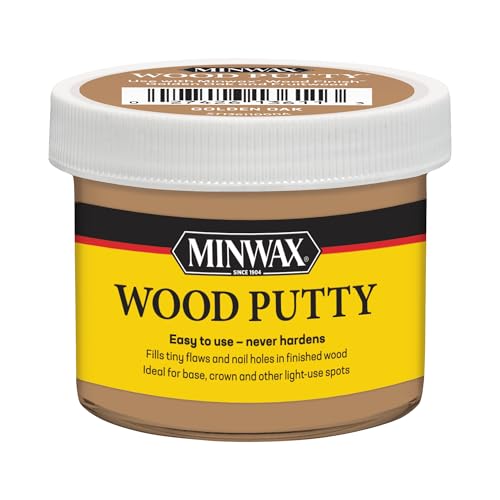
Best for: DIYers working with golden oak finishes who need quick, color-consistent filling of nail holes and scratches. This non-hardening putty is pre-mixed to align with Minwax Wood Finish colors such as Golden Oak, making color matching straightforward for small repairs.
Why selected: Its ready-to-use formula speeds up repairs without sanding or curing delays. It adheres well to bare, painted, stained, or finished wood, providing a durable, flexible fill that resists cracking in typical indoor environments.
Caution: Color matching is optimized for specific Minwax finishes; for non-standard stains, color may vary slightly.
Minwax Wood Putty Walnut
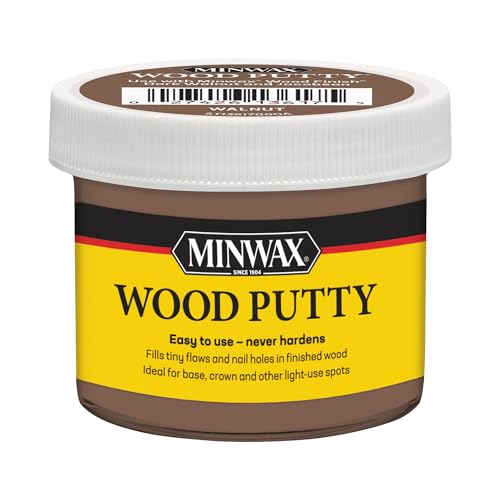
Best for: Dark walnut and espresso tones where lower contrast is crucial. The Walnut putty is pre-mixed to color-match colors like Dark Walnut and Jacobean for seamless repairs on stained woods.
Why selected: Color-matched options reduce the need for post-application staining. It’s well-suited for covering nail holes and minor imperfections on finished surfaces.
Caution: Similar to Golden Oak, its color accuracy depends on matching to specific Minwax finishes; test in an inconspicuous area first.
Gorilla All Purpose Wood Filler, Natural Finish

Best for: Projects requiring stronger repairs with a natural finish; suitable for indoor and outdoor applications. The natural finish helps blend with many wood tones without a heavy stain requirement.
Why selected: The formula is designed to be water resistant and to resist shrinking or cracking, which is valuable for joints and larger gouges that need to hold up over time.
Caution: Indoor-outdoor performance varies by climate; for extreme humidity or UV exposure, additional protective finish may be needed.
DAP Plastic Wood Wood Putty Dark Walnut

Best for: Custom-color matching on wood surfaces where a precise tone is needed, especially in cabinetry, moldings, and furniture with dark finishes.
Why selected: It is a knife-grade putty designed for fine repairs and allow blending to create a custom shade that matches surrounding wood, offering control for detailed refinishing work.
Caution: It is non-hardening, so it remains flexible and can be sanded or reworked, but avoid heavy structural repairs that require rigidity.
Minwax Wood Putty Colonial Maple

Best for: Colonial maple and similar light-to-medium woods where a ready-to-use fill is preferred for minor scratches and nail holes.
Why selected: Color-matched to Colonial Maple and Gunstock stains, helping to achieve a uniform look without complex custom staining.
Caution: Like other Minwax colors, it works best when the surrounding finish aligns with the intended wood tone; mismatches may occur on highly stained or painted surfaces.
Buying Guide: Key Purchase Considerations
- Color matching: Choose a putty that closely corresponds to your wood finish. Pre-mixed options save time, while some products offer customizable blends.
- Drying and hardness: Non-hardening putties stay pliable for flexible repairs, but avoid using them for structural fixes or high-stress joints.
- Finish compatibility: Ensure the putty is compatible with the finish you use (stain, varnish, paint) and whether it works on bare or finished wood.
- Indoor vs outdoor use: If repairs are outdoors or in damp areas, verify water resistance and expansion characteristics.
- Application method: Consider knife-grade or spreadable textures. Knife-grade putties allow precise shaping; spreadable formulas are faster for larger areas.
- Blendability: Some colors are intermixable. If your project requires a unique shade, test blends on scrap wood first.
FAQ
- What is non-hardening wood putty?
It remains flexible after application and does not cure to a rigid hard state, allowing easy rework and touch-ups. - Can I stain over non-hardening putty?
Yes, most non-hardening putties are designed to take stains or finishes, but test for color drift on a scrap area first. - Is non-hardening putty suitable for outdoor use?
Some formulations are water resistant and suited for exterior projects; check product details for outdoor compatibility. - How do I choose the right shade?
Match to the closest finish color, or blend two colors if allowed by the product to achieve a precise shade. - Do I need to sand non-hardening putty?
Light sanding between applications can help achieve a smooth, flush repair; follow product guidance. - Can I reuse leftover putty?
Most non-hardening putties can be resealed and stored for future repairs, but follow packaging instructions for longevity.
Add a Comment