Answering the search intent, this guide highlights top non-toxic air-dry clays that are easy to use, versatile, and classroom-friendly. The featured products suit different creators—from beginners and kids to hobbyists and teachers. Read on to find options that balance softness, durability, and color variety for safe, at-home or classroom crafting.
Below is a concise comparison table of the five highlighted clays to help you compare at a glance.
| Product | Brand | Color Range | Best For |
|---|---|---|---|
| Crayola Air Dry Clay (5lbs) | Crayola | Natural White bulk, multiple color options in sets | Classrooms and large projects |
| DAS Modeling Clay Air Hardening | DAS | White; classic natural tone | Easy, fuss-free sculpting without baking |
| Crayola Air Dry Clay for Kids (5lbs) | Crayola | Terracotta and other earth tones in bucket | Kids’ projects and group activities |
| Ixiaoyoo Air Dry Clay, 100 Colors | Ixiaoyoo | 100 colors total | Colorful, large-scale color-mixing projects |
| MuseLuxe Air Dry Clay, 32 Colors | MuseLuxe | 32 colors + sealing options | Creative color experiments and detailed modeling |
Crayola Air Dry Clay (5lbs) — Bulk Classroom Pack

Crayola’s bulk air-dry clay comes in a 5-pound re-sealable bucket, ideal for classrooms and large-group projects. Best for teachers organizing art stations or after-school crafts. The clay supports coil, slab, pinch, and score-and-weld techniques, with water added to adjust softness. This makes it a reliable option for sustained classroom use where multiple students work simultaneously.
Best for: classrooms, art centers, and group projects. A potential limitation is managing drying time with many pieces in progress at once; plan projects with staggered timelines.
DAS Modeling Clay Air Hardening — White, 2.2lb

DAS air-dry clay offers a smooth, even texture that requires no oven baking. It’s highly adaptable for molding, sculpting, and decorative pieces, making it suitable for independent artists and educational settings alike. The clay remains highly pliable during shaping and air-dries to a durable finish, simplifying cleanup and storage between sessions.
Best for: quick, studio-style projects or classrooms needing a low-maintenance option. Caution: as with all air-dry clays, ensure even drying to prevent cracking on larger sculptures.
Crayola Air Dry Clay for Kids (5lbs) — Terra Cotta
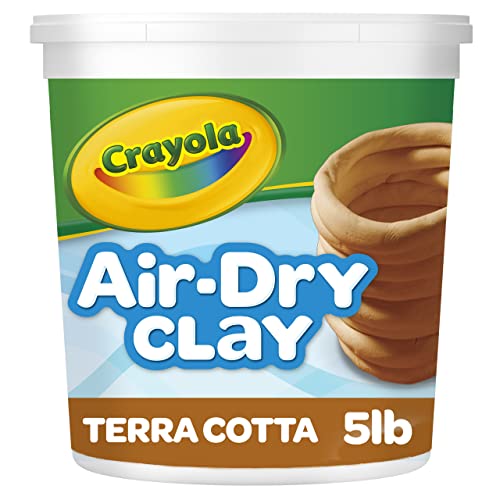
This Crayola clay comes in a 5-pound Terra Cotta bucket, offering earthy tones that are ideal for nature-inspired projects and mixed-media sculpture. It’s easy to mold and shape, making it suitable for classrooms and family craft time. No baking is required, and dried pieces are durable for display or a long-lasting keepsake.
Best for: kids’ projects and color-matching earthy palettes. Limitation: terra cotta tones may limit color variety in some projects unless additional color additives are used.
MuseLuxe Air Dry Clay — 32 Colors Kit

The MuseLuxe kit includes 32 colors plus three sculpting tools and sealing bags for storage. It’s non-toxic, odorless, and non-sticky, with air-drying completed within 24 hours. This set is ideal for color experiments, detailed miniatures, and classroom demonstrations where vibrant variety enhances learning.
Best for: color experiments and detailed modeling. Choose this if you want a broad color spectrum in one package. Caution: open bags to prevent clay drying out between sessions; reseal properly after use.
Buying Guide: Key Purchase Considerations
What should you look for when choosing non-toxic air-dry clay?
- Color Range: Consider whether you need a single color family, earthy tones, or a full spectrum set for color mixing.
- Drying Time and Handling: Some clays dry faster than others. For classrooms, stagger projects to avoid crowding drying shelves.
- Texture and Workability: A soft, pliable clay is easier for beginners and kids, while firmer clays help with fine details.
- Durability After Drying: Look for clays that dry to a sturdy finish suitable for display or handling.
- Storage and Packaging: Re-sealable containers help extend usability between sessions and prevent drying out.
- Non-Toxic and Odor Considerations: Ensure the product is explicitly labeled non-toxic and suitable for the intended age group.
Practical Tips for Beginners
- Prep Work: Knead the clay briefly to soften before shaping.
- Moisture Control: If clay dries too quickly, wrap unused portions in plastic bags to retain moisture.
- Joining Pieces: Score-and-weld or wet surfaces lightly to improve adhesion between parts.
- Finishing: Use water-based paints or acrylics after the clay dries for details and color accents.
FAQ
- What is non-toxic air dry clay best for beginners?
Clay options that are soft, easy to mold, and come in larger quantities—such as bulk 5-pound packs—are well-suited for beginners and classrooms.
- Do air-dry clays require baking?
No. Air-dry clays harden naturally when left exposed to air, eliminating the need for a kiln or oven.
- Can you mix colors easily with air-dry clay?
Yes. Many kits are designed to allow color mixing; some include a wide array of colors for diverse palettes.
- Are all colors equally durable after drying?
Finish strength varies by brand and formula. Some air-dry clays dry harder than others and may accept paint well after drying.
- What should I store air-dry clay in between uses?
Use resealable bags or airtight containers to prevent drying and keep the clay pliable.
- Is air-dry clay suitable for kids under 3?
Many products are labeled for ages 3 and up due to small parts or choking hazards; always check the product’s age guidance.
Add a Comment