Artists and photographers seeking print-ready paper must balance texture, weight, archival quality, and compatibility with inkjet or traditional print processes. The selections below highlight five paper options well-suited for home studios, galleries, and classroom use. Each entry notes surface texture, weight, and ideal applications to help you choose the right substrate for vibrant, lasting prints.
style=”font-size:0;line-height:0;”>Summary Table Of Chosen Products
| Product | Brand | Key Feature |
|---|---|---|
| Strathmore 59-701 Textured Inkjet Paper | Strathmore | Textured 80 lb inkjet paper for crisp, detailed prints |
| PPD Watercolor Printer & Printable Fine Art Paper | PPD | Heavyweight 240 gsm watercolor-like surface for rich color and depth |
| UCreate Printmaking Paper | UCREATE | Heavyweight, acid-free for block/relief printing |
| Strathmore 300 Series Printmaking Paper Pad | Strathmore | Medium-textured surface for ink absorption and practice |
| Tedco Sun Art Paper Kit | TEDCO | Sun-activated sun art paper with acrylic panel for easy development |
Strathmore 59-701 Textured Inkjet Paper

The Strathmore 59-701 Textured Inkjet Paper is an 80 lb (approx. 118 g/m²) inkjet-ready sheet designed for art prints, photography, and mixed-media projects. Its textured surface helps render fine detail while adding a tactile quality that enhances color depth and realism. The 8.5″ x 11″ format makes it ideal for test prints, portfolios, and classroom demonstrations. Compatibility with common desktop inkjet printers supports quick iterations, while archival-friendly composition helps preserves colors over time.
Key considerations: texture can influence color saturation and edge definition; weight and fiber content affect stiffness and curl; surface choice should align with your printer’s ink formulation to minimize feathering or bleed.
PPD Watercolor Printer & Printable Fine Art Paper
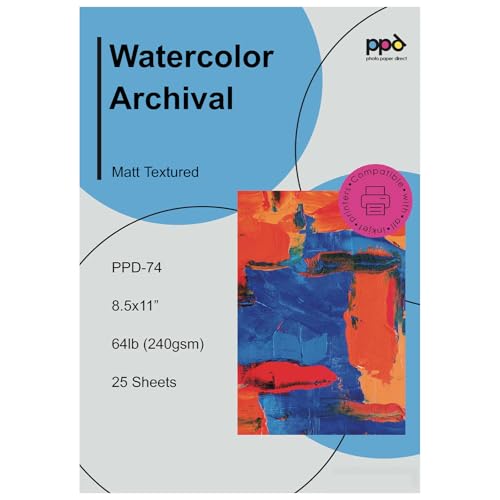
The PPD Watercolor Paper replicates the feel of traditional watercolor stock while maintaining inkjet compatibility. With a hefty 240 gsm (64 lb) weight, the surface mirrors the texture of high-grade watercolor paper, producing vivid color reproduction and smooth tonal transitions. The paper is acid-free and designed to resist fading, making it suitable for giclée prints, art reproductions, and high-detail portraits. Packs contain 25 sheets, giving artists space to experiment with layering and washes without quickly exhausting materials.
Key considerations: watercolor-like texture can influence micro-contrast and edge sharpness; heavyweight stock can improve warp resistance but may require longer drying times; archival properties are essential for long-term display and resale value.
UCreate Printmaking Paper

UCreate Printmaking Paper is a heavy-weight, acid-free option ideal for beginners and experienced printmakers alike. It supports block printing, relief printing, and other printmaking techniques, providing a robust surface that holds ink well without excessive bleed. The 9″ x 12″ sheets are practical for small editions, proofs, and classroom projects. The white, smooth-to-textured surface encourages clean, precise lines and solid ink coverage, making it a versatile substrate for multiple print processes.
Key considerations: the paper’s surface texture influences ink adhesion and line crispness; suitable for learning curves in printmaking; archival-grade acidity resistance helps ensure longevity of prints.
Strathmore 300 Series Printmaking Paper Pad

Strathmore’s 300 Series Printmaking Paper Pad offers a practical option for practice and study. With a moderate weight and a soft medium-textured surface, this paper is well-suited for block printing, linocut, and screen printing exercises. It absorbs ink efficiently and provides durability for repeated runs, making it a reliable choice for students and hobbyists. The paper’s acid-free composition and high alpha cellulose content contribute to longevity, ensuring prints remain vibrant over time.
Key considerations: surface texture helps control ink uptake; suitable for learning traditional printmaking techniques; avoid using on very fine detail work if a high-precision line is required.
TEDCO Sun Art Paper Kit

The TEDCO Sun Art Paper Kit centers on sun-activated printing, a creative approach for educational settings and DIY projects. The kit includes 12 sheets of 8″ x 10″ Sun Art Paper, plus an acrylic panel and instructions. After exposing the paper to sunlight or bright light, developers rinse to reveal a photographic-like cyanotype image. This process yields unique silhouettes and color shifts, ideal for photograms, kids’ crafts, and experimental artwork. Proper rinsing and drying steps are necessary to set the print and prevent smudging.
Key considerations: best for sun-activated effects rather than traditional inkjet printing; exposure times vary with sunlight and weather; not all images print with consistent tonal range, requiring testing for best results.
Buying Guide: Key Purchase Considerations And Comparisons
Material compatibility: Confirm whether the paper is designed for inkjet, dye/ pigment inks, or traditional printing methods. Some papers blend textures that enhance color depth but may require specific printer settings to minimize feathering or bleeding.
Weight and texture: Heavier papers (around 80–240 gsm) offer sturdier prints and warp resistance, while textures like laid, cold-press, or canvas-inspired surfaces add character that influences color saturation and perceived sharpness.
Acidity and archival quality: Acid-free and archival-grade papers resist yellowing and fading over time. This is crucial for gallery-quality prints and long-term storage or exhibitions.
Whiteness, brightness, and color reproduction: Paper whiteness and brightness numbers affect how whites render in the final print. A balance between brightness and surface texture helps maintain true color reproduction without harsh highlights.
Size and format: Consider common sizes (8.5″ x 11″ or 9″ x 12″) for ease of printing and framing, as well as the availability of larger formats if your projects demand bigger works or editions.
Environmental and cost considerations: Look for recycled content or responsibly sourced materials if sustainability matters. Compare packs (25 sheets, 40 sheets, etc.) to determine cost per sheet and project viability.
Use-case orientation: For beginners, a versatile all-purpose paper (balanced texture and weight) supports multiple printmaking styles. For artists exploring color accuracy and depth, a watercolor-like or giclée-friendly surface may yield richer results.
Printer compatibility and drying time: Some papers require longer drying times, especially heavier stocks or textured surfaces. Ensure your printer’s ink type and curing capabilities align with the stock for best results.
In summary, choosing the right paper involves matching surface texture, weight, and archival properties to your printing technique and desired outcome. Testing a few sheets from each option can help identify the best fit for your art practice and presentation needs.
Add a Comment