Answering the question for ceramic artists and educators: these pottery plasters are selected for smooth texture, fine detail reproduction, and dependable set times. The top picks fit different needs—from beginner slip casting to large-scale reproductions and classroom use. This guide highlights five highly suitable options and clearly explains who benefits most from each.
| Product | Size | Best For | Why It Stands Out |
|---|---|---|---|
| USG No.1 Pottery Plaster- 10 lbs | 10 lbs | Home studios and hobbyists | Enhanced workability, fine particle size for incredible detail, easy-to-follow instructions. |
| Rocky Mountain No.1 Pottery Plaster (50 lbs) | 50 lbs | Community studios and larger projects | Industry-standard consistency guidelines by weight; strong for sanitaryware and dinnerware casting. |
| Rocky Mountain No.1 Pottery Plaster (25 lbs) | 25 lbs | Schools and small classes | Same recommended water-to-plaster ratio; reliable for consistent results in group work. |
| Perfect Plaster for Pottery & Ceramic Slip Casting Molds, 1 lb | 1 lb | Beginners and quick experiments | High-purity gypsum with fast-setting formula; great for small molds and rapid iterations. |
| Perfect Plaster for Pottery & Ceramic Slip Casting Molds, 2 lb | 2 lb | Educators and makers with frequent molds | Same high purity and detail potential in a slightly larger batch for more testing. |
USG No.1 Pottery Plaster- 10 lbs – Instructions Included
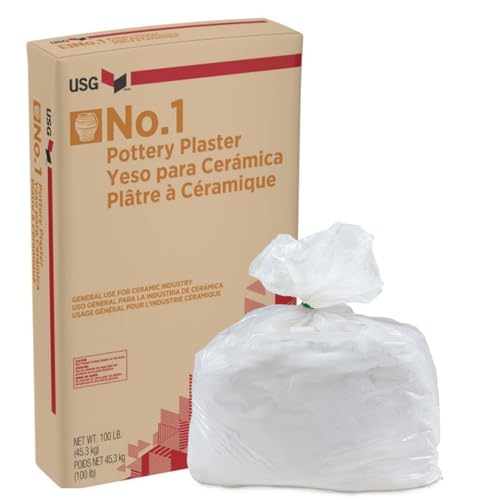
Best for individual artists or small studios seeking reliable detail with a smooth texture. The plaster is easy to work with and supports fine detailing in ceramics and large-scale pieces. It’s a strong all-around choice for hobbyists requiring consistent results. A potential limitation is availability in larger bulk for big projects, which may require planning purchases ahead of time.
Rocky Mountain, No. 1 Pottery Plaster (50, Pounds)

Best for community studios or larger projects where bulk supply matters. The product adheres to an industry-standard water-to-plaster ratio and is commonly used for sanitaryware and dinnerware casting, delivering dependable results. Caution: handling a very large bag requires appropriate storage and weight-safe handling.
Rocky Mountain, No. 1 Pottery Plaster (25, Pounds)
Best for classrooms and small studios requiring balanced portions for multiple molds. The consistent 70:100 water-to-plaster ratio supports uniform results across several sessions. Limitation: not as economical as the 50 lb option for very large runs if bulk purchasing is a priority.
Perfect Plaster for Pottery & Ceramic Slip Casting Molds, 1 lb

Best for beginners and small, quick projects. This plaster delivers high-purity gypsum for detailed casting and pours cleanly from molds. It releases easily from silicone, latex, or plastic molds. Choose this if you’re testing designs before committing to larger batches. Limitation: small package means more frequent restocking for frequent users.
Perfect Plaster for Pottery & Ceramic Slip Casting Molds, 2 lb

Best for educators and makers who need more working material without moving to bulk sizes. It shares high-purity gypsum and the same fast-setting 30–45 minute cure. This is a practical middle-ground option for classrooms needing reliable results with a bit more volume. Limitation: not ideal for very large, single-piece reproductions due to size.
Perfect Plaster for Pottery & Ceramic Slip Casting Molds, 4 lb
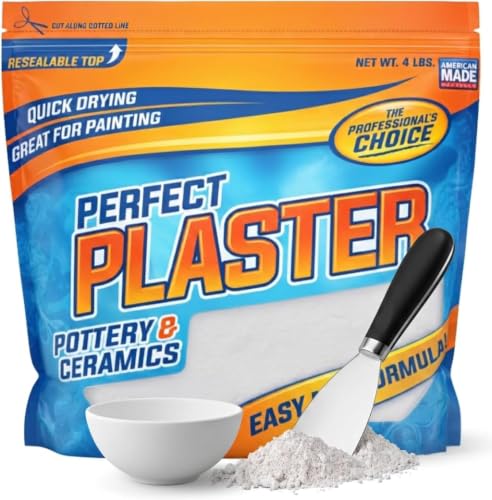
Best for medium-sized projects and classrooms requiring more material per mold. It provides consistent fine details with quick setting and easy mold release. Consider this option if you regularly mold multiple pieces in one session and need a reliable, repeatable workflow. Caution: as size grows, handling bigger batches requires careful mixing to avoid air pockets.
Buying Guide: Key Considerations for Pottery Plaster Purchases
What plaster you choose depends on project size, mold complexity, and workspace needs. Consider these factors:
- Detail versus speed: Fine-detail plasters deliver sharper surfaces but may require careful handling. Fast-setting blends save time in classrooms but may reduce open-working time.
- Bulk versus small bags: Large bags are more economical for studios; smaller bags suit beginners or flexible, mixed-use spaces.
- Water-to-plaster ratio: Consistency guidelines help achieve uniform results across batches and sessions.
- Mold compatibility: Most plasters work with silicone or latex molds. Check compatibility with your mold material.
- Storage and handling: Keep in a dry, cool place. Large bags require sturdy containers and safe lifting.
Practical Comparisons
- Best for beginners: Perfect Plaster 1 lb or 2 lb options due to easy handling and quick setup.
- Best for large-scale work: Rocky Mountain 50 lb offers bulk efficiency and consistent results.
- Best for classrooms: Rocky Mountain 25 lb balances volume with manageable packaging.
- Best for detail-focused work: USG No.1 10 lb provides fine detail and smooth texture.
Frequently Asked Questions
- What is the typical setting time for these plasters? Answer: Many options set in about 30–45 minutes, depending on the exact product and mix.
- Can I reuse plaster leftovers? Answer: Reuse is generally not recommended after the material has begun to set, as it can affect set time and detail.
- Which plaster is best for dinnerware molds? Answer: Plasters described as industry-standard for sanitaryware and dinnerware casting are well-suited for those applications.
- Is bulk purchasing necessary for a school program? Answer: Yes, 25–50 lb bags or larger are typically more cost-effective for classrooms and studios with frequent use.
- Do these plasters work with silicone or latex molds? Answer: Most do; check each product’s description for mold compatibility and release performance.
Add a Comment