Answering the common buyer question, a resin mold release spray reduces sticking, preserves fine details, and speeds up your workflow. This guide highlights top options ideal for resin art, epoxy projects, candles, and crafts. The best picks are suited for hobbyists, DIY crafters, and professional makers who work with silicone, epoxy, and plastic molds. The quick reference table below summarizes the five selected products and their key strengths.
- Product
- Best For
- Notes
| Product | Best For | Why It Stands Out |
|---|---|---|
| MRealeazy Silicone Mold Release Spray (16.9 floz) | General resin and epoxy work | High-coverage, reliable releases; large volume |
| Pachsi 4Oz Mold Release Spray | Silicone molds and high-heat projects | Fast-drying, durable for silicone molds |
| DecorRom Silicone Mold Release Spray (7 fl oz) | Beginner to intermediate resin/candle projects | Water-based, odorless, easy demold |
| OOTDART 2 Pcs 150ML Mold Release Spray | Resin art and multi-mold setups | Water-based, non-stick, protects mold life |
| Kraken Bond Silicone Mold Release Spray (2×12.3 oz) | Professional and frequent use | High-temperature compatibility, two-pack value |
Silicone Mold Release Spray (16.9 Floz) – MRealeazy

The MRealeazy formula focuses on easy mold release and consistent results. It is designed to minimize sticking and simplify post-demold cleanup, making it a practical choice for crafters who handle multiple mold shapes in one session. Best for hobbyists who value dependable performance over occasional use. A caution: large-volume spray may require more mindful storage in warm environments to prevent unintended evaporation.
Best for: General resin and epoxy work, frequent demolding, and projects with complex mold details. This option is well-suited for crafters who run longer sessions and need reliable, repeatable releases.
Pachsi 4Oz Mold Release Spray for Candles and Epoxy

This spray is tailored for silicone molds and epoxy projects, offering a fast-drying, non-stick layer. It’s colorless and odorless, which makes it suitable for sensitive studio environments. The main limitation noted is that it’s a smaller bottle, so frequent users might need regular reapplication or a larger volume option for bigger projects.
Best for: Silicone molds and high-temperature scenarios where a quick release reduces wait times. Ideal for small to mid-sized batches and those prioritizing odor-free operation.
DecorRom Silicone Mold Release Spray – 7 Fl Oz

DecorRom’s spray emphasizes safety and compatibility, offering a non-toxic, colorless, odorless solution that creates a residue-free barrier for easy demolding. It works across silicone, metal, polyester, concrete, and plastic molds, making it a versatile choice for mixed-material projects. A caution: ensure the coating dries completely before pouring materials to avoid imperfect releases.
Best for: Mixed-material molding projects and resin casting that involve silicone, plastic, and metal molds. Great for beginners and experienced users who want a straightforward demold with minimal cleanup.
2 Pcs 150ML Mold Release Spray – Water-Based
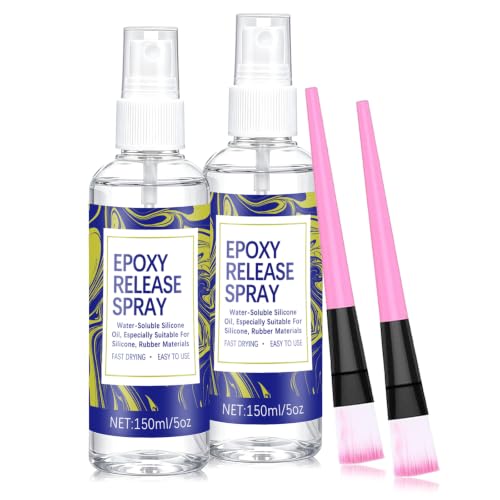
This set is designed specifically for resin molds, including silicone and epoxy options. The water-based formula forms a non-stick barrier that facilitates easy demolding while helping preserve mold details. It also aims to extend mold life by reducing wear during removal. A potential limitation is the smaller package size per bottle, which may require more frequent reapplication in high-volume workflows.
Best for: Resin artists who need a practical, budget-friendly option for frequent use. Choose this if you work with multiple small-to-medium molds and want quick-drying performance.
Kraken Bond Silicone Mold Release Spray (2×12.3 oz)

Kraken Bond offers a high-temperature-ready mold release solution with a professional focus. The two-pack provides extended use for studios and production setups. It’s suitable for epoxy resin projects and other high-heat applications, ensuring reliable demolding across a range of molds. A caution: for sensitive finishes, test on a small area first to confirm finish compatibility.
Best for: Professional studios and frequent DIYers who need durable, high-temperature performance and long-lasting supply. Ideal when demolding efficiency and consistency are top priorities.
Limino Silicone Mold Release Spray – Professional

Limino emphasizes an efficient, versatile release agent designed for epoxy resin, candle making, and other casting projects. It promises odorless operation, minimal residue, and broad material compatibility. It’s a solid pick for mixed-use studios and crafters who rotate between resin, candle making, and plaster work. A caution: as with many sprays, ensure even coverage to avoid thin spots that can cause adhesion issues.
LumaCraft Mold Release Spray – 8 Oz

LumaCraft targets professional molding with a fast-drying ultra-fine mist. It provides smooth non-stick release across silicone, epoxy, plaster, concrete, and wax. This option is favored for preserving sharp edges and fine details, especially in complex casts. A limitation: the performance can depend on even spray coverage; shaking well before use aids consistency.
Buying Guide
What mold materials are you using?
Most sprays work across silicone, plastic, and metal molds, but some formulations excel with silicone or epoxy specifically. If you mix mold types, choose a universal or all-purpose release spray for simplicity.
How large is your project load?
Large-volume projects benefit from bigger bottles or multi-pack options to minimize reapplication stops. Beginners may prefer smaller bottles to learn the handling and coverage without waste.
Is odor or residue a concern?
Many users prefer odorless and non-sticky formulations to keep studio air comfortable and to avoid post-demold cleaning. Water-based formulas typically offer easier cleanup and less residue.
How important is release speed?
Fast-drying sprays save time between steps and reduce mold downtime. For intricate pieces, a reliable release that preserves fine details is more important than sheer speed.
Are temperature conditions a factor?
High-temperature formulas resist softening under heat, making them suitable for hotter resins and longer cure cycles. If you work in a warm environment, verify the product’s temperature tolerance.
How should you apply?
Apply a light, even coat across the mold surface. Let it dry fully before pouring. Avoid pooling, which can cause uneven releases or smearing on delicate textures.
Summary of key considerations
- Volume vs. usage frequency
- Material compatibility (silicone, metal, plastic)
- Odor, toxicity, and cleanup
- Release speed and preservation of detail
FAQ
- What is a resin mold release spray used for?
- Can I use these sprays on all molds?
- Is odorless release spray better for candle making?
- Do I need to clean molds after demolding?
- How should I store mold release spray?
- Are there safety considerations?
A mold release spray creates a thin barrier between the mold and resin, enabling easy demolding and protecting mold details.
Most sprays are versatile, but some are optimized for silicone or epoxy molds. Check the product notes for compatibility with your mold material.
Odorless formulas are often preferred in candle studios to maintain a pleasant working environment while reducing potential scent interference with wax scents.
Some sprays leave minimal residue; cleaning the mold after demolding helps extend its life and maintain detail accuracy.
Store upright in a cool, dry place away from heat sources. Sealed containers maintain effectiveness and reduce evaporation.
Avoid inhaling sprays in poorly ventilated areas. Use in a well-ventilated space and follow the label’s safety guidance.
Add a Comment