Looking for scissors that cut only paper to reduce accidents during crafts? This guide highlights kid-safe scissors designed to cut paper while keeping skin, hair, and clothing secure. It’s ideal for parents, teachers, and caregivers who want reliable, beginner-friendly tools for preschool and early elementary activities. The top picks below are suited for individual learners, classroom small groups, and home art projects, with features like blunt tips, plastic blades, and anti-pinch designs. Use the quick reference table to compare options at a glance.
| Product | Brand |
|---|---|
| LOVESTOWN Toddler Safety Scissors (4 Pcs) | LovesTown |
| Crayola Toddler Safety Scissors (3pk) | Crayola |
| Leinuosen 15 Pack Preschool Scissors | Leinuosen |
| Koogel Toddler Scissors Practice Kit | Koogel |
| PECULA Toddler Safety Scissors (3 Pack) | PECULA |
LOVESTOWN Toddler Safety Scissors: 4 Pcs

Best for small group activities in classrooms or playgroups. This 4-pack uses ABS blades with rounded tips, designed to cut only paper and double as playdough scissors for sensory bins. The color-coding (Blue, Orange, Pink, Green) aids individual identification and color recognition. Caution: all-plastic construction means durability varies with heavy use; avoid rough handling. Ideal for early practice in hand-eye coordination and safe exploration of cutting motions.
Crayola Toddler Safety Scissors (3pk)

Best for parents seeking a simple starter set with multiple cutting styles. This Crayola trio focuses on “ouch-free” paper cutting with straight, wavy, and zigzag blades. The plastic blades and blunt tips are suitable for preschoolers learning the basics of cutting. Choose this if you want variety in edge patterns during art projects. Limitation: plastic blades may wear faster with frequent use; not ideal for heavy-duty cutting jobs.
Leinuosen 15 Pack Preschool Scissors
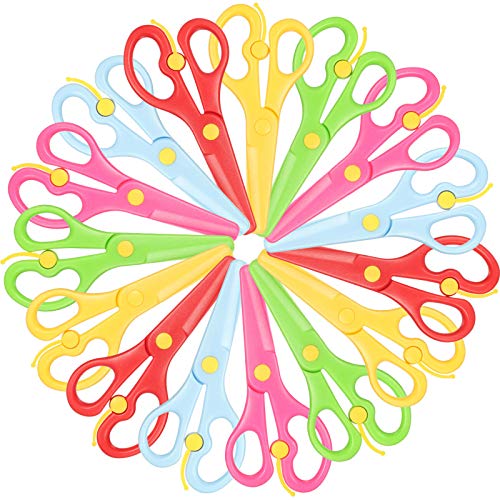
Best for classrooms or home kits requiring variety and quantity. This set includes 15 plastic safety scissors with anti-pinch features and rounded tips, engineered to cut only paper and cards. The built-in training lever helps new cutters reopen blades after each cut, which is helpful for beginners. The data suggests the option can transition to regular scissors as skills grow. Limitation: some users may prefer a more compact handle for smaller hands.
Koogel Toddler Scissors Practice Kit

Best for a complete beginner’s set with encouragement for imaginative themes. The kit includes two dual-colored safety scissors and 120 sheets of patterned paper, sized for preschool activities. Blunt tips and ABS blades ensure safety while cutting paper and dough. Limitation: all-plastic construction may have less durability over time; ensure gentle use with younger children.
LovesTown Toddler Scissors With Playful Rabbit Ears
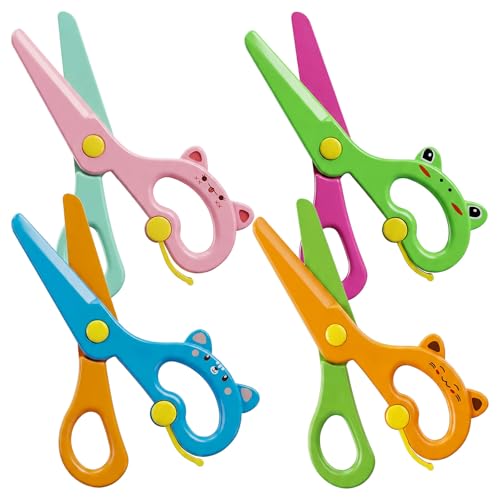
Best for kids who respond to fun designs and animal-themed handles. This 4-pack features rabbit-ear handles and vibrant colors, with ABS blades that cut only paper and function as playdough scissors. Suitable for early practice and sensory play. Limitation: the animal graphics are decorative—actual cutting performance remains similar to other plastic safety scissors.
PECULA Safety Scissors (3 Pack)

Best for parents seeking a simple all-plastic option with a robust learning lever. The set includes three colors and a spring-assisted design to reopen after each cut, aiding children in developing the open-close motion. These scissors are designed to cut paper, avoiding skin, hair, or clothing. Caution: ensure proper storage to prevent small parts from becoming a choking hazard for younger siblings.
Buying Guide: Key Considerations for Paper-Only Scissors
- Safety features: Look for blunt tips, rounded blades, and all-plastic construction to minimize injury risk. ABS blades are common in affordable options.
- Cutting scope: Confirm the scissors are intended to cut paper only, not fabric or hair, to align with your activity needs.
- Age and grip: Choose sizes and handle designs that fit small hands. Some sets include training levers to ease the open-close motion for beginners.
- Durability vs. cost: All-plastic models are lightweight and inexpensive but may wear faster with heavy use. Consider sets with a mix of color-coded handles for easy identification in a classroom.
- Variety vs. simplicity: If you want edge-pattern variety (straight, zigzag, wavy), consider sets that include multiple blade styles. For basic practice, a single-style, blunt-tip option may suffice.
- Storage and safety: Prefer sets with color-coding or clear labeling to avoid mix-ups among multiple children. Ensure blades remain away from skin when not in use.
FAQ
- What makes these scissors safer for toddlers? They feature blunt tips, rounded blades, and plastic construction to minimize risk during initial cutting practice.
- Are these scissors suitable for playdough or only paper? Many options double as playdough scissors, thanks to soft blades and non-metal construction, but always verify product details for each model.
- How many scissors should I buy for a small classroom? A multi-pack (4–15 pieces) is practical for small groups to ensure every child has access during activities.
- Can these scissors transition from learning to regular use? Some sets include a training lever that can be disabled to convert them into standard craft scissors as children grow confident.
- Do these sets come in multiple colors? Yes, many include color-coded handles to help kids identify their own scissors and foster color recognition.
- What should I store to prevent safety issues? Keep blades out of reach when not in use, store in a designated caddy or bin, and supervise young children during cutting activities.
Add a Comment