Find the right silicone-to-silicone adhesive for repairs that last. This guide highlights five products well-suited for bonding silicone, silicone rubber, TPU, and related materials. Ideal buyers include hobbyists, parents repairing squishies, craft enthusiasts, and DIYers tackling kitchen seals or outdoor gear. Read on to compare strengths, best-use scenarios, and practical cautions for each option.
| Product | Best For | Notes |
|---|---|---|
| Meuvcol Silicone Glue 100g | General-purpose silicone repairs; outdoor and bathroom items | Fast-set, waterproof, connectors in seconds |
| ALECPEA Silicone Glue 30g | Multi-surface silicone joins (silicone to plastic/metal/glass) | Clear finish; flexible after set |
| Permatex 80050 Clear RTV | General purpose sealing and bonding; indoor/outdoor | Sensor-safe; broad material compatibility |
| INSOIA Super Silicone Glue 20g | Toys, squishies, phone cases | Four precision tips; fast cure |
| Bondtech Silicone Glue 30g | Bonding silicone to silicone and rubber | Anti-clog caps; three droppers |
Meuvcol Silicone Glue 100g
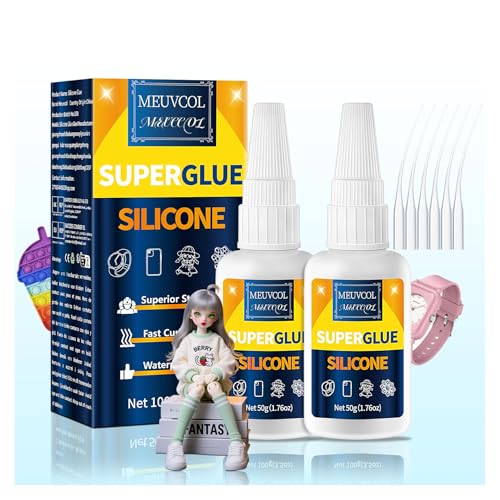
Meuvcol’s formula is engineered specifically for silicone, silicone rubber, liquid silicone, and related materials like TPU, TPE, and TPR. It promises a seamless, invisible bond with high durability. The product sets quickly—about 10 to 45 seconds—then fully cures in 24 hours. It’s designed to withstand moisture and weather, making it a strong choice for kitchen seals, bathroom repairs, outdoor gear, and automotive components. Best for: quick, strong bonds on silicone-focused projects where water exposure is common. Caution: bond strength and flexibility may vary on very thick applications; apply in thin layers for best results.
The emphasis on silicone compatibility and rapid initial set helps users avoid long downtime. The 100 g size plus six applicator nozzles adds versatility for different seam widths and repair scales. It’s particularly strong where silicone needs to stay flexible after curing, such as on seals or gaskets.
ALECPEA Silicone Glue, 30g

ALECPEA focuses on silicone bonding with several substrates, including plastic, metal, glass, and ceramic. It gives a flexible finish and clear appearance after curing. This makes it a solid option when you need a discreet repair that remains flexible—ideal for toy repairs or assemblies where movement occurs. Best for: projects requiring a clear, flexible seal that can bridge silicone to non-silicone materials. Caution: performance may vary when bonding non-compatible plastics or porous surfaces; test a small area first.
Permatex 80050 Clear RTV Silicone Adhesive Sealant

Permatex’s clear RTV silicone adhesive sealant is a general-purpose option for indoor and outdoor use. It bonds and seals with glass, metal, plastics, vinyl, fabric, and weather-stripping among other materials. The formula is designed to resist water and weather, offering flexibility across application environments. Best for: repair tasks that require a broad material range and weather resistance. Caution: not all silicone-to-silicone bonds will be equally strong in high-flex applications; verify movement needs before use.
INSOIA Super Silicone Glue Clear, 20g

INSOIA offers a clear, flexible bond with fast-setting times. The bottle includes four precision tips to reach tight seams, squishies, and small gaps. It emphasizes easy repair for kids’ toys, silicone phone cases, and rubber items. Best for: users who need precise application in small, intricate areas or who value user-friendly tools to help control the glue flow. Caution: the quick set time requires careful alignment before pressurized contact to avoid misalignment.
Bondtech Silicone Glue 30g

Bondtech’s formula is a clear, strong adhesive designed for bonding silicone to silicone, as well as silicone to rubber and other materials. It includes three droppers with small nozzles for accurate application, and an anti-clog cap helps keep the tips usable over time. Best for: projects requiring direct silicone-to-silicone bonds, including toys, phone cases, and DIY crafts where precision matters. Caution: keep tips clean and avoid excessive pressure to prevent drips from clogged tips.
Buying Guide: Key Considerations for Silicone-To-Silicone Adhesives
What to evaluate when choosing a silicone-to-silicone adhesive:
- Bonding targets: Confirm the materials you’ll join (silicone, silicone rubber, TPU, TPR, TPE, plastic, glass, metal). Some formulas excel on silicone but may underperform on other surfaces.
- Set time vs. full cure: Decide if you need a fast initial grip or full strength after cure. Quick-set formulas minimize downtime but may require careful alignment.
- Water and temperature exposure: For bathroom, kitchen, or outdoor use, select a waterproof and weather-resistant adhesive.
- Finish and visibility: If you need a clear, invisible repair, prioritize transparent cures with smooth finishes.
- Application tools: Consider included tips, droppers, or nozzles for precision work, especially on small gaps or seams.
- Flexibility after cure: Some repairs benefit from a flexible bond that accommodates movement and stretching.
Frequently Asked Questions
- Are these adhesives safe for food-contact surfaces? Some formulations are; always check product specs for food-safe claims and usage guidelines.
- Can these adhesives bond silicone to metal or glass? Yes, several products claim multi-surface bonding, but results vary by material pair.
- Do I need to pre-clean surfaces before applying? Yes. Clean and dry surfaces to maximize adhesion. Some formulations tolerate mild moisture reduction, but dry surfaces yield better results.
- How long until full cure? Most list full cure in 12–24 hours, though initial handling grip can occur within seconds to minutes. Refer to each product’s specifics.
- Should I clamp or hold items during curing? For best results, hold steady until the adhesive begins to set, then avoid disturbing the bond until fully cured.
- What is the best way to prevent clogging tips? Use the anti-clog cap if provided, keep tips clean, and slightly tap or vibrate the bottle as needed to release residual adhesive.
Add a Comment