The best stuffed bunny sewing patterns are designed to help crafters create soft, lovable toys for gifting, display, or pretend play. This guide highlights five strong choices across beginner-friendly to more advanced patterns, so you can pick the right fit for your skill level and project goals. Each option is summarized for quick comparison, followed by detailed sections that cover what makes it a good match, practical limitations, and who should consider it. Perfect for hobby sewers, teachers, and parents seeking DIY gift ideas.
Summary table of selected products:
| Product | Best For | Notes | Pattern Type |
|---|---|---|---|
| Simplicity 8044 Bear, Dog & Rabbit | All-around beginners | One-size, simple shapes | Printed tissue pattern |
| Topapfo 18 Inch Bunny Patterns | Beginner to intermediate | Includes templates, pins, eyes, nose | Reusable plastic templates |
| Simplicity S9441 Jointed Plush Animals | Intermediate sewists | Jointed for poseability | Printed tissue pattern |
| McCall’s M8422OS Plush Bear, Bunny, Mouse | Gift projects with clothing | One-size designs with outfits | Pattern packet |
| Kullaloo Dress Me Bestie | Creative kids’ companions | Removable outfits, video tutorials | Paper pattern with QR videos |
Simplicity Crafts 8044 Bear, Dog & Rabbit Stuffed Animal Toys
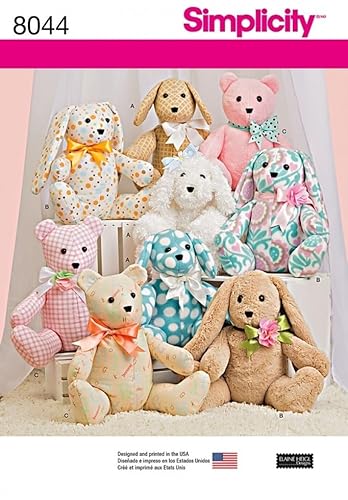
Best for: Beginner crafters who want a simple, multi-animal pattern in one kit. This one-size pattern focuses on easy-to-cut pieces and straightforward assembly to create charming bear, dog, and rabbit plush toys. The included instruction style aligns with standard Simplicity patterns, making it a solid first project for sewing enthusiasts.
Why selected: It offers a compact, low-risk entry into stuffed-animal sewing with clear guidance and familiar Simplicity shaping. It’s easy to complete for a weekend project and adaptable for basic fabric substitutions.
Limitation: The data notes a single size, so variations in final toy dimensions depend on fabric choice and seam allowances. Check envelope sizing before cutting if you need a specific toy scale.
Topapfo 18 Inch Memory Bunny Patterns Templates

Best for: Beginners and crafters who want reusable templates and guided tutorials. The 18-inch bunny project is friendly to new sewists who benefit from a clear, step-by-step approach and a complete tool kit (templates, pins, eyes, nose).
Why selected: The pattern set comes with multiple components and a detailed beginner-friendly tutorial, including pictorial and video guidance. Reusable plastic templates support consistent shaping and easier alignment on fabric.
Caution: Templates are pre-cut on durable plastic vinyl, but you should verify your fabric’s compatibility with the included seam allowances and ensure you have basic sewing equipment ready for the project.
Simplicity S9441 Jointed Plush Animals

Best for: Intermediates seeking a jointed design to add poseability and character to their stuffed animals. The kit spans a dragon, dinosaur, bear, and bunny with a cohesive style.
Why selected: The pattern emphasizes precise sizing and illustrated instructions, helping sewists achieve consistent joints and structure. It reflects a long-standing pattern heritage from a trusted brand.
Limitation: The emphasis on jointed construction can be more challenging than non-jointed patterns, requiring patience and careful fabric handling.
McCall’s M8422OS Plush Bear, Bunny & Mouse Kit

Best for: Makers who enjoy adding clothes and accessories to plush toys. This one-size kit includes patterns for a 15-inch bear, bunny, and mouse with appliqued features and coordinating outfits.
Why selected: It combines plush toy construction with clothes patterns, offering a complete dressed-look option in a single package. The bibs and pinafores add versatility for display or gifting.
Limitation: The single-size approach means final dimensions are fixed; consider fabric thickness and finishing to ensure the outfit fits as intended.
Kullaloo Dress Me Bestie: Bunny, Bear & Elephant Patterns

Best for: Creative kids’ companions and families who want removable outfits and options for personalized play. The set includes patterns for a bunny, bear, and elephant with removable clothes.
Why selected: The added outfit options and QR video tutorials support varied creativity and step-by-step learning. The Canadian design inspiration and European manufacture emphasize a quality production approach.
Limitation: This pattern relies on QR video access; ensure you have a reliable internet connection to view the tutorials during assembly.
Buying Guide
What should you consider when choosing a stuffed bunny sewing pattern?
- Skill level and project scope: Start with simple shapes for beginners and progress to jointed or multi-animal sets as confidence builds.
- Pattern format: Printed tissue patterns are traditional and easy to follow; reusable templates or QR video tutorials can be more helpful for complex builds.
- Size and proportions: Check finished dimensions to ensure the toy fits your fabric and intended use (display vs. play).
- Fabric and notions: Plain woven fabrics are easiest for beginners; plan for stuffing type, safety eyes, nose, and any clothing accessories if included.
- Clothing and accessories: If you want outfits, assess whether the pattern provides complete garments and closures for secure wear.
- Support and instructions: Clear, illustrated steps reduce guesswork; video tutorials add an extra learning layer for visual learners.
- Project flexibility: Look for patterns that allow alternative fabrics or sizes so you can customize the final toy.
FAQ
What is the best pattern for a first stuffed bunny?
A simple, one-piece or two-piece pattern from a trusted brand with clear instructions, like Simplicity 8044, is well-suited for beginners.
Are jointed patterns harder to sew?
Yes, jointed designs require careful alignment of limbs and more precise sewing, making them better for intermediate sewists.
Can I use non-traditional fabrics for these patterns?
Yes, but choose stable fabrics and test fabric weight before cutting large areas to avoid distortion.
Do patterns come with outfits?
Some patterns include outfits or suggest coordinating garments, such as McCall’s M8422OS, which features clothes for the plush toys.
Is video help important for learning these patterns?
Video tutorials can significantly ease the learning curve, especially for beginners and for complex steps.
What safety features should I look for in making toys for kids?
Use safety eyes and secure attachments, and avoid small parts for very young children; follow pattern instructions for safe assembly.
Add a Comment