Find the right white screen printing ink for your projects. This guide highlights five top picks suited for hobbyists and professionals, covering plastisol and water-based options. Whether you print on cotton, blends, or paper, these inks offer clear opacity, smooth handling, and reliable curing. Choose based on fabric type, curing temperature, and cleanup preferences. The selections below are ideal for beginners needing easy setup and for seasoned printers pursuing bold, opaque white prints.
| Product | Brand | Format | Best For |
|---|---|---|---|
| Speedball Fabric Screen Printing Ink, White | Speedball | 8 oz | Versatile on cotton, blends, linen |
| Speedball 004603 Fabric Screen Printing Ink, White | Speedball | 32 oz | Large runs, broad color range, easy cleanup |
| Rapid Cure® Screen Printing Ink White (Quart) | Screen Print Direct | 32 oz | Fast curing on cotton and blends |
| Rapid Cure® Screen Printing Ink White (Pint) | Screen Print Direct | 16 oz | Smaller batches, quick turnaround |
| Speedball 004660 Acrylic Screen Printing Ink, White | Speedball | 128 oz | High-volume needs, acrylic versatility |
Speedball Fabric Ink, 8-Ounce White

Best for: general fabric printing, small runs, beginners. This 8-ounce white ink offers vibrant coverage and consistent workability across a range of fabrics, including cotton, polyester blends, linen, and synthetics. It also performs on paper and cardboard. The ink yields a soft hand once properly heat set. Caution: ensure complete curing to achieve permanence on textiles.
Speedball 004603 White Fabric Ink, 32 Fl. Oz

Best for: larger projects and color variety. This 32-ounce bottle is part of a broad color family, including fluorescents and glow inks. It promises richer coverage, smoother workability, and a softer handle compared with many alternatives. It’s suitable for cotton, polyester blends, linen, and synthetics but not recommended for nonporous materials like nylon. Great for paper and cardboard as well. Caution: keep away from heat sources before curing to avoid early setting.
Speedball 004620 Acrylic White Ink, 8 oz

Best for: acrylic-based screen printing on paper, wood, and cardboard. This ink is designed for high-quality results for both professionals and hobbyists, with 30 color options including process tones and fluorescents. It delivers rich color and is easier to work with on various substrates. Caution: suitable primarily for porous surfaces; avoid nonporous materials for best results.
Speedball Acrylic White Ink, 32-Ounce

Best for: substantial runs and versatile use across paper, wood, and cardboard. This 32-ounce acrylic white ink follows the same color range philosophy, delivering deep opacity and crisp prints. It suits both print shops and solo artists. Caution: acrylic inks may require specific curing conditions and proper ventilation during the setup process.
Rapid Cure White (Quart) Plastisol Ink

Best for: quick-cure plastisol printing on cotton and blends. This quart bottle cures as low as 270°F, enabling faster production and potentially simpler heat setup. It has a long shelf life and supports multiple fabric types. Caution: ensure compatible equipment and ventilation for curing at lower temperatures.
Rapid Cure White (Pint) Plastisol Ink
Best for: smaller studios and test runs. The pint size matches quick-turnaround projects and insulation for testing colors and curing processes. It shares the same low-temperature cure benefit as the quart version. Caution: smaller volume requires more frequent handling and potential waste if not used promptly.
Speedball 004660 Acrylic White Ink, 128 oz
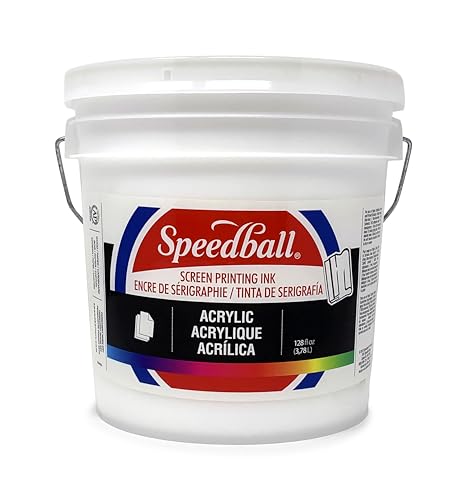
Best for: high-volume projects and longer production runs. At 128 ounces, this acrylic white ink supports extensive screen printing tasks on paper, wood, and cardboard with the same color depth and satin-like finish. Caution: ensure proper storage to prevent drying and clumping over time.
Buying Guide
What ink type should you choose? Plastisol inks offer strong opacity, durability, and vibrant prints on textiles, often requiring heat curing. Acrylic screen printing inks provide versatility for paper and porous surfaces, with a different texture and curing profile. Consider fabric type (cotton, polyester blends, linen), final garment feel, and available curing equipment.
How important is curing temperature? Plastisol inks typically cure around 320°F, though Rapid Cure variants can cure as low as 270°F. Accurately matching your heat press or flash cure system to the ink prevents cracking and peeling. For acrylic inks, follow the manufacturer’s recommended drying and setting guidelines to achieve the best results.
What about cleanup and odor? Water-based inks are easier to cleanup with soap and water and often have milder odors. Non-flammable formulations reduce hazard concerns. If you work in a shared space, select inks with lower VOCs and safer cleanup processes.
Which product suits beginners vs. professionals? Starter kits or smaller bottles (8 oz or 16 oz) are ideal for learners building consistency. Larger volumes (32 oz or more) suit ongoing projects and small studios. For high-volume shops, consider 128 oz containers where applicable for cost efficiency.
Frequently Asked Questions
- What white ink should I use for cotton shirts?
Plastisol whites are typically recommended for cotton due to durability and opacity, with Rapid Cure variants offering lower curing temperatures.
- Can I print white ink on dark fabrics?
Yes, white acts as a base layer to improve opacity on dark fabrics. Ensure proper curing to prevent cracking.
- Are acrylic white inks good for paper posters?
Yes, acrylic whites provide strong coverage on paper and cardboard and are common in poster art workflows.
- Do I need a special setup for high-volume white ink printing?
Yes, consider a dedicated curing method, ink viscosity control, and a reliable auto-press workflow to maintain consistency.
- Is cleanup easier with water-based inks?
Typically yes, water-based inks clean with water; plastisol inks require solvent-free cleanup and proper disposal of sticky residues.
- Which white ink is best for glow effects?
Some Speedball and other lines offer glow-in-the-dark variants in the same color family; verify compatibility with your substrate and curing method.
Add a Comment