For quick, durable wood bonding, an active-accelerator CA glue kit can dramatically speed up projects and reduce clamping time. This guide highlights five top options, explaining who each is best for and why. If you’re a woodworker, hobbyist, or DIY crafter tackling repairs, these products help achieve professional results with minimal mess and precise bonding.
The following table summarizes the recommended picks and their ideal use cases. Use this at a glance to choose the best glue with activator for your needs.
| Product | Best For |
|---|---|
| MITREAPEL CA Glue with Activator (2×0.80oz) | Small, quick-assembly projects; fine detail work |
| FastCap 2P-10 SoloKit | Beginner to intermediate users needing a complete starter kit |
| MITREAPEL CA Glue with Activator (0.80oz-3.30fl oz) | Mid-size projects; versatile for ceramic, glass, plastic repairs |
| MITREAPEL CA Glue with Activator (2×4.5 oz) | Medium to heavy-duty bonding; larger wood projects |
| FastCap 80208 2P-10 Professional 2 Oz Thick Wood Adhesive Glue | Wood filling and durable finishes; clear glue lines |
MITREAPEL CA Glue With Activator Kit (2×0.80oz)

The kit pairs CA glue with an activator to deliver fast cures on a variety of substrates, including wood, ceramic, and plastic. It is best for small, precise joints where rapid handling is important. Bonding time ranges from 5 to 12 seconds with activator use, versus longer without activator. Suitable for DIY projects and light industrial tasks where clean, quick results are valued. A limitation is that very porous surfaces may require surface prep for optimal adhesion.
Best for: small repairs, model making, and projects requiring rapid turnaround. Choose this if you need a compact kit with reliable speed for tight tolerances. Caution: avoid very flexible or oily substrates where bonding may weaken.
FastCap 2P-10 SoloKit – Instant Adhesive & Activator Set

This starter kit includes a 12 oz activator and a 2 oz thick adhesive designed for instant bonding. It bonds in about 10 seconds and cures to a high bond strength quickly (30 seconds to reach around 4,000 psi when used with activator). It’s especially good for gap filling and vertical applications where drips are a concern due to its thicker adhesive formulation. Better for: beginners or DIYers who want an all-in-one solution. Caution: not ideal for glossy non-porous surfaces that have oil residues; surface prep improves results.
Best for: complete beginner to intermediate projects requiring fast, strong adhesion with a portable kit. Choose this if you want a ready-to-use setup with a built-in activator for quick turnarounds. Limitation: the thicker adhesive may not spread as smoothly on very tight joints.
MITREAPEL CA Glue With Activator (0.80oz-3.30fl oz)

This option mirrors the 2×0.80oz kit but with a slightly broader size range for the bottle. It maintains fast cure times and a similar two-part approach to achieve strong bonds quickly. It’s best for projects with limited space or where you need a quick fix without buying a larger quantity. A caveat is that performance is highly dependent on clean surfaces and proper activator application.
Best for: quick, on-demand repairs with a compact, controllable amount. Choose this if you prefer a smaller kit for travel or tight workspaces. Caution: activate only on clean, dry surfaces to maximize bond strength.
MITREAPEL CA Glue With Activator (2×4.5 oz)
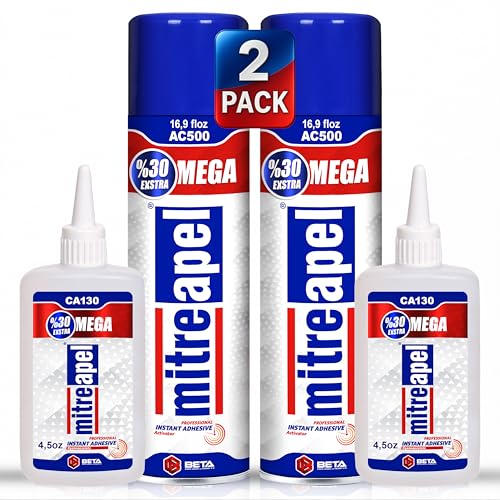
This larger bundle delivers more adhesive and activator for medium to large woodworking projects. The stronger volume is favorable for frequent use in a workshop setting where consistency and reduced replenishment are priorities. The same rapid cure principle applies, with full bonding typically achievable within seconds when used correctly. Best for: serious hobbyists or small shops needing reliable, high-volume bonding. Limitation: larger quantity may be less convenient for casual, single-use tasks.
Best for: bigger projects or regular use in a workshop. Choose this if you want fewer reloads and consistent results on multiple assemblies. Caution: ensure proper ventilation when using CA glues and activators in enclosed spaces.
FastCap 80208 2P-10 Professional 2 Oz Thick Wood Adhesive Glue

Designed for woodworkers, this thick adhesive emphasizes filling capabilities and a crystal-clear dry finish. It’s ideal for filling small cracks and achieving a seamless appearance after curing. Best for: professional woodworkers or DIYers who want a clear, durable bond with minimal visible glue lines. Caution: thicker formulations may require careful application to avoid squeeze-out and to ensure level bonding on uneven surfaces.
Best for: filling and durable joints in wood projects with a clean finish. Choose this if you value a clear, wipe-clean result and strong long-term bonding. Limitation: may require more time to position the joint before the adhesive sets fully.
Buying Guide: How to Choose the Right Wood Glue With Activator
What to consider before purchase
Bond strength and cure time are the primary considerations. If you need instant handling, activator-assisted CA glues offer rapid bonding, often within seconds. For larger projects or higher bonding demands, consider larger bottle sizes or a kit that includes both the adhesive and activator to minimize delays.
Surface compatibility
CA glues with activators perform well on clean, dry surfaces like wood, ceramic, glass, and many plastics. Avoid nonstick or polyethylene materials and ensure surfaces are free of oil, dust, and moisture for best results. Porous surfaces may require a longer cure time or multiple steps for a stronger bond.
Application and control
Thicker adhesives provide gap-filling capabilities but can be more challenging to spread evenly. Gel-like formulations with higher viscosity offer better control in tight joints. For delicate details or small assemblies, smaller bottles with precision tips help prevent over-application.
Safety and handling
Use in well-ventilated areas and avoid skin contact. CA glues bond skin instantly; wearing gloves is prudent. Activator sprays may irritate eyes or skin in sensitive individuals, so follow product instructions and keep away from children and pets.
Packaging and value
Kit formats (adhesive plus activator) save time and reduce mis-purchases. Larger bottle options are cost-effective for frequent users. Consider whether you need a compact set for on-site work or a larger supply for a shop.
Versatility across materials
While designed for wood, CA glue with activator also bonds ceramics, glass, plastic, metal, and some fabrics. If your projects involve multiple materials, select a product that specifies cross-material compatibility and test on scrap pieces before committing to a full project.
FAQ: Quick Answers For Buyers
- What is the fastest cure time for CA glue with activator? – Many products claim bond times in the 5–12 second range when the activator is used, depending on surface preparation and materials.
- Can I use CA glue on porous wood? – Yes, but prep and a proper activator help improve adhesion on porous surfaces; some projects may still require longer cure times.
- Is a starter kit better than buying individual components? – For beginners, a kit simplifies the process and ensures compatible adhesive and activator; for experienced users, individual larger bottles may offer better value.
- Are activators safe for fabric or leather? – Activators work on many materials but test on a small area first to avoid discoloration or unwanted reactions.
- Should I clamp joints after applying CA glue and activator? – Clamping is often recommended in the first seconds of bonding, especially if the joint is load-bearing or intricate.
- Can I remove excess CA glue after it cures? – Dried CA glue is difficult to remove; acetone may help in some cases, but test compatibility with your material first.
Add a Comment