Direct answer: For reliable plastic repairs, choose an epoxy or urethane adhesive that cures hard and bonds quickly. This guide highlights five top plastic glues best for different plastics, strengths, and project needs. The right pick depends on your material (PVC, ABS, polycarbonate, or fiberglass), the surface area, and whether you need gap filling, fast set time, or a clear finish. Below, you’ll find whom each product suits best, plus clear pros and limitations to help you decide at a glance.
Buyer summary table of chosen products:
| Product | Best For | Material Compatibility | Notes |
|---|---|---|---|
| J-B Weld PlasticBonder (Tan) | Strong bond repair gaps | Versatile plastics | Two-part urethane, 15 min set |
| Gorilla Max Strength Construction Adhesive | Outdoor and indoor projects | Most surfaces, including wet | Crystal clear finish |
| Super Glue All-Purpose Gel (KRAFTPROTZ) | Overhead and vertical repairs | Many plastics | Mess-free, high-volume tube |
| WoldoClean Plastic Glue | Fast bond on PVC and acrylic | PVC, ABS, acrylic | Clear, quick set |
| J-B Weld PlasticWeld | Fast setting, versatile plastics | Plastic, PVC, fiberglass | 1:1 syringe mix |
J-B Weld PlasticBonder Body Panel Adhesive
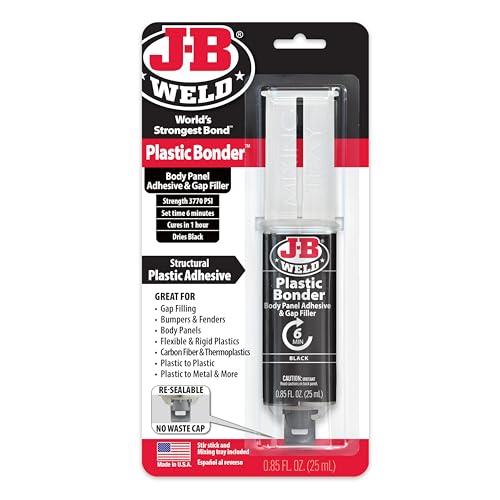
Best for: DIYers repairing automotive trim, interior panels, or other thermoplastics where a strong, durable bond is required. J-B Weld PlasticBonder is a quick-set, two-part urethane adhesive that forms a hard, permanent bond with plastics, coatings, and even some metals. It sets in about 15 minutes and cures to a strong bond in hours. Its 1:1 mix ratio and sandable finish support precision repairs on panels, bumpers, and fabrications. The formula offers a tensile strength of 3770 psi, making it a solid choice for high-stress areas.
Why chosen: This product is widely favored for its durability, smooth consistency, and ease of use in controlled applications. The syringe delivery reduces waste and ensures consistent mixing. It works well when gaps must be filled and the bond must endure vibration and temperature variations common in automotive environments. Best for serious repairs where a professional-grade bond is needed, with clear advantages in tack time and finish quality.
Limitations: Not ideal for surfaces that experience continuous immersion in water over long periods. Sanding after cure is recommended for a refinished surface, which adds a step in finishing.
Gorilla Max Strength Construction Adhesive, Clear

Best for: Projects requiring a clear, discreet bond that can withstand indoor and outdoor conditions, including exposure to water. This Gorilla adhesive is claimed to be two times stronger than previous Gorilla Heavy Duty options and leaves a crystal-clear finish, making it suitable for visible joints on furniture, trim, or decorative builds.
Why chosen: It is a versatile, “all-purpose” glue designed for nearly every project. The waterproof formula provides a robust bond in a range of environments, including wet or submerged scenarios. The clear finish helps maintain the aesthetics of light-colored or transparent surfaces while delivering a reliable cure.
Limitations: While highly versatile, it’s best used on compatible substrates and larger installation surfaces. Some very flexible plastics may require a different adhesive form for maximum energy absorption at the joint.
Super Glue All-Purpose Gel 1.75 oz

Best for: Quick, gap-filling repairs on overhead and vertical surfaces where a non-messy, gel-based application is advantageous. This gel formula minimizes drips and runs, making it suitable for fixes on models, plastics around fixtures, and other vertical surfaces where precision matters.
Why chosen: The high-volume 50 g bottle provides ample material for repeat use in workshops or hobby spaces. The gel formula allows controlled application with reduced waste, and the 1:1 mix approach makes measuring straightforward for quick projects. It bonds a wide range of plastics with rapid strength gains.
Limitations: As with many cyanoacrylate adhesives, long-term exposure to moisture or high heat can impact performance on certain plastics. Cure times can vary with temperature and humidity.
WoldoClean Plastic Glue for Plastic 50g

Best for: Clear, quick-bonding solutions for PVC, acrylic, and polycarbonate plastics. If you need a fast-set, transparent finish on lightweight plastic items, this WoldoClean adhesive is a practical choice for hobby projects, model builds, or quick fixes on PVC and acrylic components.
Why chosen: This glue provides a reliable, waterproof bond with a transparent cure that minimizes visible glue lines. The formula is suitable for a variety of plastic types including PVC, ABS, and acrylic, and works well on small-to-medium surface areas that require precise alignment and accuracy.
Limitations: It is not recommended for heavy structural loads or high-flex applications, where a stronger two-part system might be preferable.
J-B Weld PlasticWeld Quick-Setting Epoxy

Best for: Quick-setting two-part epoxy that bonds a wide range of plastics and composites, including fiberglass and vinyl. Ideal for repairs where a fast initial grab is helpful and a stronger overall cure is required for items that endure stress.
Why chosen: PlasticWeld sets in about 5 minutes and cures in about 1 hour, offering a fast workflow for project timelines. The 1:1 syringe mix ensures precise ratio without separate measuring cups, reducing mess and waste. It’s versatile for DIY plastic repairs and bumper or trim restorations.
Limitations: The epoxy is translucent yellow when cured, which may be a consideration for visible repairs or aesthetic-sensitive projects where color matching is important.
J-B Weld 33120H SuperWeld Glue

Best for: General purpose bonding where a strong instant bond is needed. This professional-grade super glue bonds quickly on multiple surfaces and remains a reliable option for repair tasks that require precision and fast setting, including smaller plastic components and hobby projects.
Why chosen: It’s a trusted option among builders and repair professionals for quick, strong bonds on challenging plastics. The applicator enables pinpoint placement, reducing mess and waste on small joints, corners, or edge repairs.
Limitations: Like other cyanoacrylates, performance may vary with moisture and heat exposure. It’s less ideal for larger surfaces without supports or for parts that flex significantly.
Buying Guide: Choosing the Right Plastic Adhesive
What material are you bonding?
Plastics differ (PVC, ABS, polycarbonate, fiberglass composites). Some adhesives handle all plastics, while others excel on specific types. For gaps, urethane or epoxy systems often perform best. For small, precise bonds, cyanoacrylates (super glue) work well.
How important is cure time?
If you need a quick fix, look for fast-setting epoxies or gels. For longer-term strength, choose a two-part system with a sturdy cure. Consider surface prep and clamping requirements for best results.
Do you need a clear or color-matched bond?
Clear or tan formulations are preferable when aesthetics matter. Some products cure translucent yellow, which can affect visible joints. Color-matching may influence your final appearance.
Is water or outdoor exposure a factor?
Waterproof or weatherproof formulas are essential for exterior projects or items near moisture. A clear, weather-resistant bond helps maintain function and appearance over time.
What’s the surface area and load?
Large surface areas or high-stress joints may benefit from two-part epoxies or urethane bonds for better load distribution. Smaller repairs often succeed with gel or fast-set super glues.
Application and cleanup considerations
Mixing accuracy matters. Syringe-based systems reduce waste and ensure consistent ratios. Mess-free gels minimize drips; be mindful of packaging and cap design for repeated use.
Safety and handling
Always work in a well-ventilated area. Follow the manufacturer’s safety guidance, particularly for cyanoacrylates and isocyanates. Use gloves and avoid skin contact with uncured adhesives.
FAQ
- What is the best plastic glue for automotive repairs? For automotive panels and trim, a two-part polyurethane or epoxy (like PlasticBonder or PlasticWeld) is typically preferred due to strength and gap-filling capability.
- Can I use regular super glue on plastics? Yes for small, non-structural repairs, but note that some plastics may stress crack or not bond well to cyanoacrylates; use gel formulas for vertical surfaces to reduce drips.
- Is a clear adhesive important for visible joints? Yes. Clear formulations reduce visible glue lines and maintain the visual appeal of translucent or light-colored plastics.
- Do these adhesives bond PVC effectively? Many do, including WoldoClean and J-B Weld options. Check the product features to confirm PVC compatibility for best results.
- How long should I wait before handling a repaired plastic part? Set times vary; typically allow 15–30 minutes for initial set and several hours to reach full cure, per product directions.
- Should I clamp or brace parts during curing? Yes. Clamping or bracing helps ensure an even bond and prevents misalignment while curing.
Add a Comment