Answering the common buyer question: which plastisol ink options deliver fast curing, strong opacity, and versatile textile use? This guide highlights five standout choices from reliable brands, showing who each product is best for and why. Ideal for hobbyists, small shops, and professionals seeking durable prints with easy handling. The selected picks cover multiple sizes and configurations to fit different workflows and budgets.
| Product | Best For | Size | Key Benefit |
|---|---|---|---|
| Rapid Cure White Plastisol Ink – Pt | Small batches, hobbyists | Pt (pint) | Low curing temperature, long shelf life |
| Rapid Cure White Plastisol Ink – Qt | Mid-size projects, workshops | Qt (quart) | Same low-heat cure with larger volume |
| Rapid Cure White Plastisol Ink – 8 oz | Starter kits, quick-turn projects | 8 oz | Compact package with easy handling |
| Rapid Cure Black Plastisol Ink – Pt | Dark fabrics, high-contrast designs | Pt | Bold opacity at lower heat |
| Rapid Cure Plastisol Ink Set – 6 Color 8 Oz | Color experiments, teaching environments | 6 x 8 oz | Versatile starter color kit |
Rapid Cure White Plastisol Ink – Pt

Features: Easy to Use – cures as low as 270°F, longer shelf life over 12 months. Low bleed and versatile for cotton, polyester blends. Works for plastisol heat transfers and cold peel transfers. Bold, vibrant, highly opaque color with a short body.
Who it’s best for: Ideal for individual artists and small shops doing limited runs on cotton and poly blends. Why selected: low-temperature cure reduces heat exposure to fabrics and equipment while maintaining strong color density. Cautions: check fabric compatibility for very dark garments and ensure proper mixing to avoid pigment settling.
Rapid Cure White Plastisol Ink – Qt
Features: Easy to Use – Cure at 270°F with long shelf life. Low Bleed and versatile for various textiles, including cotton and polyester blends. Suitable for plastisol heat transfers and cold peel transfers. Richly opaque, bold on light and mid-tone fabrics.
Who it’s best for: Mid-size studios and crafters expanding from small to larger runs. Why selected: same dependable low-temperature cure as the pint size with more volume for ongoing projects. Cautions: workflow adjustments may be needed when integrating with existing inks in large batches.
Rapid Cure White Plastisol Ink – 8 oz
Features: Easy to Use – low temperature cure at 270°F, long shelf life over 12 months. Low Bleed and versatile for textiles including blends. Works for plastisol heat transfers and cold peel transfers. High opacity with a short body for clean prints.
Who it’s best for: Beginners and hobbyists who prefer a ready-to-use 8 oz package for personal projects. Why selected: compact size reduces waste and makes it easy to learn screen printing fundamentals. Cautions: best results when screen tension and squeegee conditions are optimized for the ink’s viscosity.
Rapid Cure Black Plastisol Ink – Pt

Features: Easy to Use – Cures at 270°F with long shelf life. Low Bleed and versatile on textiles such as cotton and blends. Also suitable for plastisol heat transfers and cold peel transfers. Strong black opacity for high-contrast designs.
Who it’s best for: Designers working on dark garments requiring solid black coverage. Why selected: helps achieve crisp lines and even coats on dark fabrics. Cautions: ensure pigment dispersion before use to avoid streaking on very dark fabrics.
Rapid Cure Plastisol Ink Set – 6 Color Kit
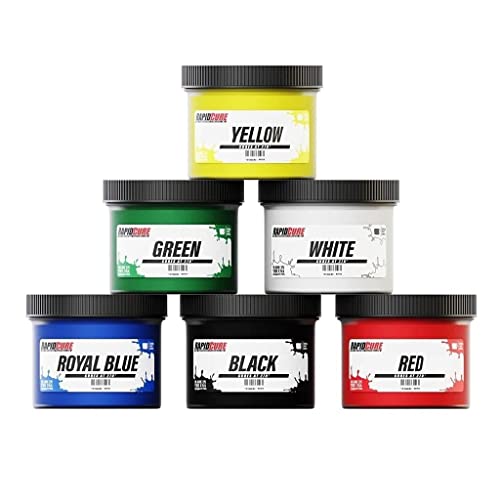
Features: Fabric, Paper, or Vinyl – Wide range of fabrics, ideal as a silk screen printing starter kit. Permanent Fabric Printing – Vibrant finish that remains after curing. Safe for home use with low odor and non-toxic formulation.
Who it’s best for: Instructors, small studios, and beginners who want a complete color palette and a safe, home-friendly option. Why selected: offers a ready-to-use color set that supports basic color mixing and learning. Cautions: may require careful color matching when building a full color workflow; ensure color consistency across batches.
Buying Guide
What to consider when choosing plastisol ink:
- Temperature and cure method: Look for inks labeled as low-heat cures (around 270°F) to protect fabrics and reduce energy use.
- Opacity and color range: Higher opacity helps maintain visibility on dark fabrics; consider kits for color variety and blending.
- Texture and body: A short body ink is easier to print on a standard screen; consider the “feel” after curing for your garment hand.
- Shelf life and storage: Longer shelf life reduces waste; store away from heat and moisture.
- Transfer compatibility: If you plan transfers, ensure the ink is suitable for plastisol heat transfers and cold peel transfers.
- Safety and clean-up: Low-odor, non-toxic options help in home setups; verify cleanup requirements for screen and tools.
Practical workflow considerations
- Screen preparation: Ensure proper emulsion, emulsion drying times, and mesh counts suitable for the ink’s viscosity.
- Print sequence: Start with lighter colors, then add darker colors to prevent bleeding and color mixing on the mesh.
- Curing setup: Use a reliable heat source with a calibrated thermometer; verify the fabric reaches the recommended cure temperature throughout the print.
Frequently Asked Questions
- What is the benefit of Rapid Cure plastisol ink? The main advantages are lower curing temperatures, longer shelf life, and strong opacity for bold prints.
- Can I use plastisol ink on cotton and polyester blends? Yes, the featured inks are described as versatile for cotton, polyester blends, and other textiles.
- Is plastisol ink safe for home use? Some kits are marketed as safe with low odor; check each product’s safety data and ventilation needs.
- Do I need special equipment for curing plastisol ink? A heat source capable of reaching the ink’s cure temperature and a thermometer is recommended for consistent results.
- Can I mix colors from a kit? Kits enable color blending; follow recommended mixing guidelines and test swatches before large runs.
- Is there a difference between low-bleed and standard plastisol inks? Low-bleed inks reduce color migration on certain fabrics; consider fabric type when choosing.
Add a Comment